
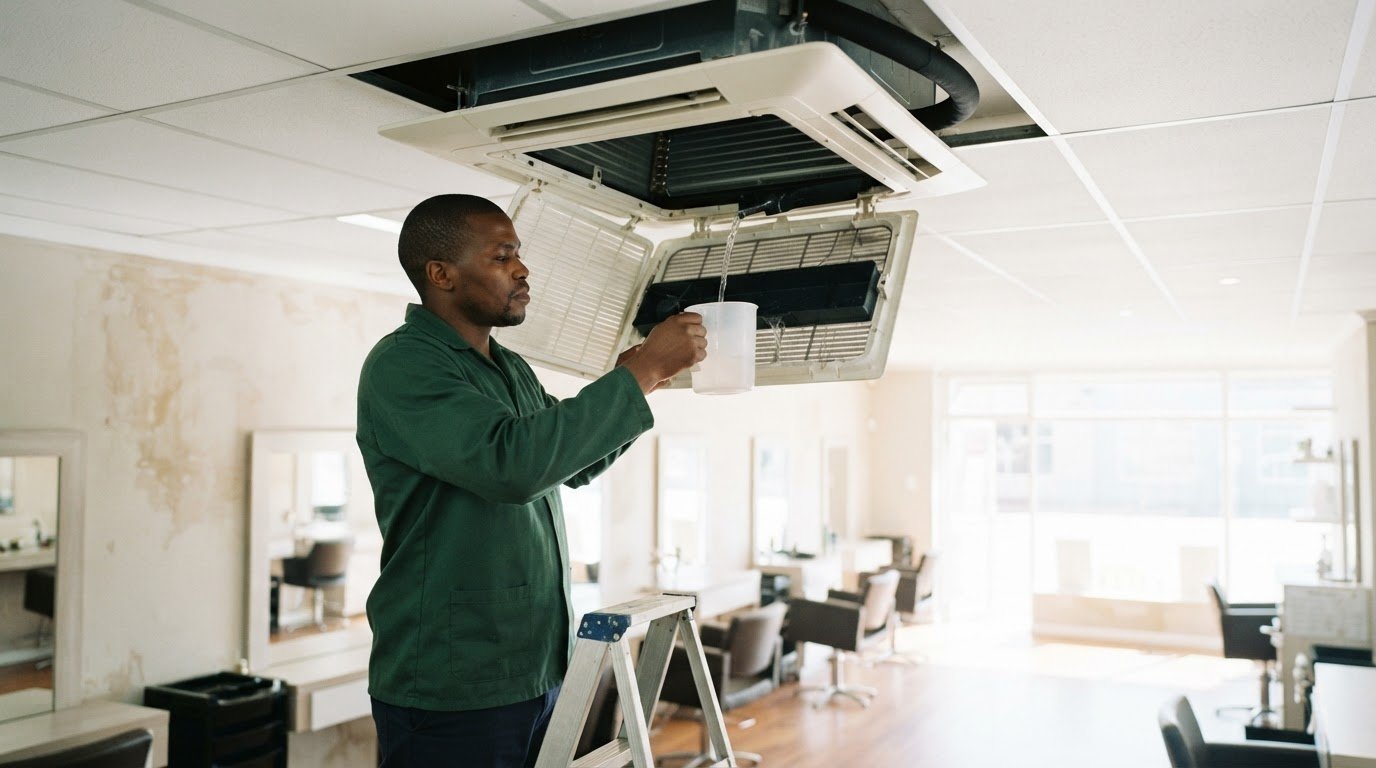
A standard aircon service checks both performance and cleanliness. To understand what is included in a standard aircon service, expect airflow and temperature tests, filter and coil cleaning, condensate drain checks, and inspections of refrigerant pressure, electrical connections and components. Together, these checks can reveal issues affecting how the unit operates.
It’s also useful to know when to arrange a service. If your air conditioner has gone more than 12 months without a tune-up, a service is recommended. Regular attention can help identify developing problems before they affect comfort or drainage.
This guide explains what each check involves, what the results can tell you and when routine servicing is useful. You’ll also learn how airflow and temperature testing fit into the assessment, and why clearing the condensate drain and inspecting electrical components matter.
Key Takeaways
- Airflow and temperature tests help show whether an air conditioner is delivering the expected cooling performance.
- A clear condensate drain supports proper water removal, while a blockage can contribute to leaks or drainage problems.
- Electrical connections, fans and other components are checked for faults or wear that may affect operation.
- Arrange a tune-up if the unit has gone more than 12 months without one, and use its performance or drainage changes as reasons to consider servicing sooner.
Airflow and temperature testing
A service test run checks whether air moves through the unit and reaches the room effectively. The technician observes airflow at the supply outlet and considers whether the return-air path is clear. For example, weak airflow from a wall-mounted unit may point to a restricted filter, dirty coil or obstruction. The test helps distinguish an airflow problem from a cooling problem.
Temperature testing adds another part of the picture. The technician measures air entering and leaving the system while it runs, then considers those readings alongside airflow and operating behaviour. A cool outlet reading alone does not prove the unit is performing properly if airflow is weak. Assessing both measurements helps identify whether the issue involves heat transfer, air movement or another fault that needs investigation.
The technician may consider adjusting the blower if airflow suggests an unsuitable setting or uneven delivery. They check the fan’s operation and settings, then assess whether an adjustment suits the system. For example, a fan set too low may deliver limited airflow, while an excessively high setting can affect air distribution. The aim is to assess the blower in context, not simply increase its speed.
South African aircon technicians do not have one universal certification that can be inferred from an airflow test alone. Relevant qualifications depend on the work being done: measuring airflow differs from handling refrigerant or carrying out electrical repairs. This distinction matters if a performance test reveals a separate technical issue.
During testing, the technician can record airflow observations, temperature readings and blower behaviour, then explain what the results indicate. A blocked return grille, for instance, can restrict air movement even when the blower is running. These checks help determine whether cleaning, adjustment or further diagnosis is appropriate.
Condensate drain clearing
During cooling, moisture collects on the indoor unit’s evaporator coil and drains into a condensate tray. A drain line carries the water away from the air conditioner. If debris or biological growth narrows the line, water may collect in the tray instead of draining. A leak near the indoor unit can be a sign of restricted drainage.
The technician examines the tray, drain opening and accessible pipework for standing water, residue or visible blockages. They may also inspect the outlet to see whether water flows freely. For example, a slow or interrupted flow can indicate an obstruction in the drain line. These observations help locate the problem before flushing.
Flushing removes loose material from the condensate drain and helps restore water flow. The technician introduces water through an appropriate access point, then checks whether it travels through the pipe and exits correctly. If flow remains restricted, the blockage may need further clearing rather than another flush alone. The method depends on the drain layout and inspection findings.
Clearing the drain is different from cleaning the air filter or evaporator coil. Each part has a separate role: the filter catches airborne particles, the coil transfers heat, and the drain removes condensate. A clean filter will not resolve a blocked drain. Likewise, a successful flush does not show whether the coil or filter needs attention.
After clearing the drain, the technician checks that the tray empties and water flows through the outlet without backing up. If water still collects, they can trace the drainage path for a remaining obstruction, damaged section or installation-related gradient issue. A recurring leak needs investigation, because repeatedly removing visible water does not address its cause. Routine drain inspection and flushing are part of a standard service, while persistent drainage faults may require repair.
Electrical connections and component checks
A standard service includes checking electrical connections, fans and other components for faults or wear. It may also include thermostat calibration and refrigerant pressure checks. These inspections help relate the air conditioner’s operating behaviour to the condition of its parts, rather than treating each symptom in isolation.
The technician examines accessible connections for looseness, visible damage or signs of deterioration. They check the fan for correct operation, unusual noise or inconsistent movement. For example, an irregularly running fan may affect air circulation, while a damaged connection can interrupt a component’s operation. The findings guide any further diagnosis.
Thermostat calibration is another useful check. The technician compares the thermostat setting with the system’s response, including whether the unit starts, runs and stops as expected. If the room remains warm despite a cooling setting, the reading and operating response can help distinguish a control issue from another performance fault.
Refrigerant pressure may also be checked during the service. Pressure readings help assess the refrigerant circuit, but they need to be interpreted alongside the unit’s condition and performance. Low refrigerant levels can indicate a leak. Simply adding refrigerant would not address the source of the loss, so the cause needs investigation.
Leak detection focuses on finding where refrigerant may be escaping. The technician considers pressure readings and checks relevant parts of the circuit for signs of leakage. A low level is a warning sign, not a complete diagnosis on its own. Locating the leak helps determine the appropriate next step before the system is recharged.
These checks answer a common question: what checks are performed during an aircon service? They include inspecting electrical connections, fans and components, assessing thermostat calibration, and checking refrigerant pressure. The results show whether routine servicing has revealed wear or a fault that needs further attention.
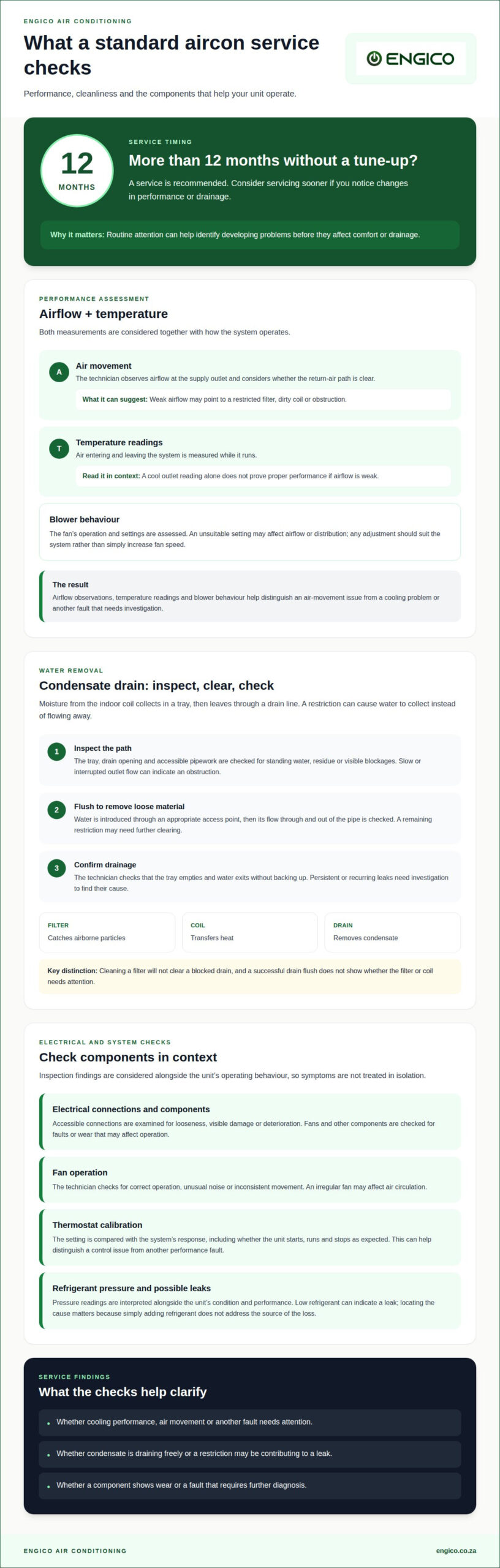
Annual service timing
Arrange an aircon tune-up if the unit has gone more than 12 months without one. This annual interval gives a practical point for reviewing its condition, cleaning and performance. In South Africa, note the last service date and plan the next one before another full year passes. A unit used regularly may also show changes that call for attention sooner.
Timing matters because servicing is preventive, while a repair addresses a fault. During routine servicing, the technician inspects and cleans components, then tests the system. A repair involves diagnosing and correcting a specific problem, such as a failed part or refrigerant leak. If a service check identifies a fault, additional repair work may be needed beyond routine maintenance.
Does a standard aircon service include cleaning filters and coils? Yes, cleaning air filters and coils can be part of standard servicing. Cleaning supports airflow and heat transfer, while the wider service checks drainage and operating condition. A clogged filter or dirty coil can affect performance, but cleaning alone will not correct a separate mechanical fault.
What isn’t included in a standard service? Repairs, replacement of failed parts and fixing a refrigerant leak are not automatically included. These are corrective tasks, rather than routine inspection and cleaning. For example, a technician may identify low refrigerant as a possible sign of a leak, then investigate the cause before repair or recharge work.
How long does a standard aircon service take? A complete maintenance visit usually takes 1-2 hours. The time depends on the checks required and the condition of the unit; a fault requiring diagnosis or repair can extend the work. If your system is due for its annual tune-up, arrange an air conditioner service to have its condition and performance assessed.
Engico Air Conditioning: Service of Air Conditioners
Engico Air Conditioning services air conditioners that need routine attention or a performance assessment, including wall-mounted split, multi-split and ceiling cassette systems. A service can assess airflow, temperature, condensate drainage and component condition, giving you a clearer picture of how the unit is operating.
Arrange servicing when your unit is due for its annual tune-up, or when changes in cooling, airflow or drainage suggest it needs attention. If an inspection identifies a fault that requires corrective work, air conditioner repairs address that separate need. The findings and the system’s condition determine the next step.
For routine servicing or an air conditioner performance concern, contact Engico Air Conditioning.
Plan your next aircon service
Knowing what a standard aircon service includes helps you make an informed decision about maintaining your system. Before arranging a service, note the unit type and any changes in its operation. This context helps focus the discussion on your system and the attention it needs.
Engico Air Conditioning offers wall-mounted split, multi-split and ceiling cassette air conditioners, alongside service of air conditioners. Whether you manage one unit or several, the system type is a practical starting point for discussing maintenance. If your air conditioner is due for attention, or its operation has changed, take the next step and contact Engico Air Conditioning to discuss servicing. A considered maintenance plan can help you stay ahead of your system’s needs and make informed decisions about its care.
Frequently Asked Questions
What exactly happens during a standard air conditioner unit service?
A technician assesses the unit’s condition, runs it and checks whether it operates consistently. This may involve inspecting filters, coils, drainage, electrical parts and refrigerant pressure. The benefit is a clearer distinction between routine cleaning needs and symptoms of a fault. For example, continued poor cooling after cleaning calls for diagnosis, not repeated filter attention.
What does a standard aircon service include?
A useful checklist covers both the indoor and outdoor sections, not just the visible unit. The technician considers cleanliness, airflow, condensate removal, controls and component condition, then tests the system. This broader view matters when one symptom has several possible causes. For instance, a unit that runs but cools unevenly needs an overall performance assessment, rather than an assumption that one part is responsible.
How much does AC maintenance cost?
The price depends on the work required and is provided after a quote request. Cost factors include the air conditioner’s type and condition, access to the equipment, and the scope of work. A routine visit for one unit differs from work involving several units or an identified fault. A quote reflects the actual job, rather than an assumed price for every system.
What does professional AC maintenance include?
Professional maintenance combines cleaning and inspection with a review of how the system operates. The technician can assess whether an observation calls for routine attention or separate corrective work. This distinction helps avoid treating every concern as a repair. For example, a dirty component may need cleaning, while a damaged part needs diagnosis and repair beyond preventive maintenance.
What maintenance does an air conditioner need?
An air conditioner needs clean filters and coils, a clear condensate route, and inspected controls and components. The attention required depends on the system and its condition. If a filter becomes dirty again quickly, the technician can consider the unit’s surroundings and operating pattern. Recurring drainage problems also need investigation to find the cause, not just clear visible water.
What exactly is involved?
Servicing involves assessing the equipment, carrying out appropriate maintenance and testing how the system runs afterwards. For aircon servicing in Pretoria, Johannesburg, Centurion, Menlyn, Farie Glen, Silverton, Waterkloof, Gezina, Doringkloof, Midrand, Waterfall, Sunninghill, Woodmead, Sandton, Randburg, Roodepoort, Fourways, Gauteng Province and Hyde Park, the unit type and condition help determine which checks are relevant. The findings guide any next steps.
Recent Comments