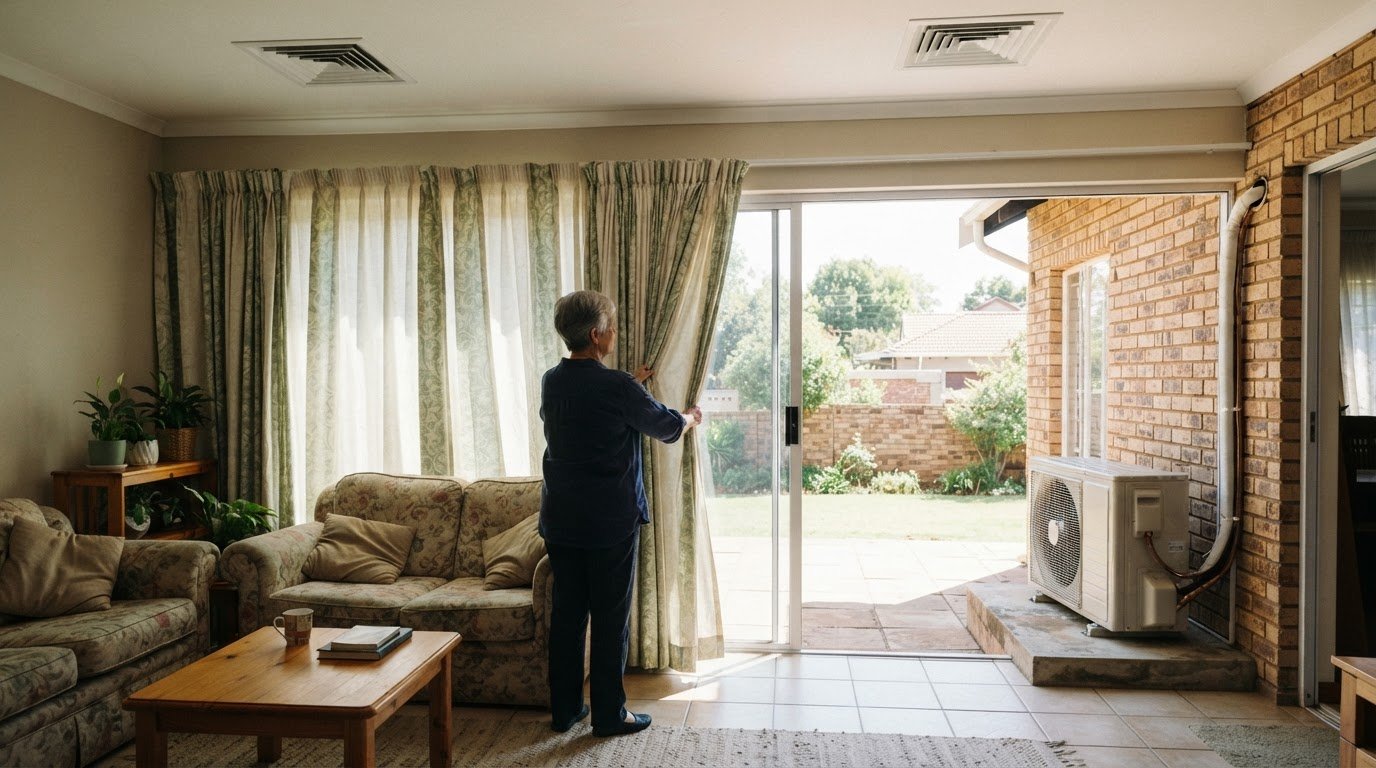
The unit’s cooling capacity alone doesn’t determine your electricity bill. The cost of running ducted air conditioning in South Africa depends on how much electricity the system uses and the tariff for your property. Capacity, equipment type, operating hours and energy efficiency all affect consumption. Longer or more frequent use generally means more electricity is used.
It’s reasonable to want a clear estimate before choosing a system, but two ducted installations can have different running costs even when they serve similar spaces. Look beyond system size and consider how the equipment will operate in your building.
This article explains how capacity, equipment type, daily use and efficiency affect running costs, and how installation scope shapes the overall decision. These factors help you assess whether a ducted system suits your space and expected use.
Key Takeaways
- Cooling capacity and equipment type affect how much electricity a ducted system uses, so focus on the needs of the space rather than capacity alone.
- Operating hours and energy efficiency both influence consumption; understanding how the system will be used helps you assess its likely running cost.
- To estimate an hourly cost, relate electricity use in kilowatt-hours to the applicable electricity tariff.
- Installation quotations may cover equipment, installation or both, so compare their scope as well as the system’s expected energy use.
Cooling capacity and equipment type
Cooling capacity describes how much heat a system can remove from a space. It is not the same as the electrical power the equipment draws. Electricity use depends on the system’s input, operating conditions and how long it runs, so capacity alone cannot establish the running cost.
Residential electricity tariffs aren’t set at one South Africa-wide rate per kWh. The applicable rate depends on the municipality and the household’s tariff category. Use the rate that applies to your property when estimating electricity costs.
Capacity selection matters: an undersized system may struggle to meet demand, while excessive capacity may not suit the space or its use. Cooling requirements depend on factors such as room layout, insulation, glazing, sun exposure and occupancy. A ducted system distributes conditioned air through ducts, so its design must account for the areas being served. Matching the system to the building is more useful than treating its capacity label as a bill estimate.
Equipment type also affects energy use. Systems can have different electrical inputs and efficiencies, even when their cooling capacities are similar. Compare rated energy performance and electrical input, not cooling capacity alone. An input rating indicates the power a system may draw under stated conditions, but actual use varies with demand and operation.
Installation scope affects the project estimate as well as equipment choice. South African quotations may cover equipment only, installation only, or a complete supply-and-install package, so compare what each includes. Longer pipe runs require additional copper pipe, insulation, cable, trunking and labour. The electrical supply and circuit should also be assessed for the selected equipment.
A system or installation quote depends on capacity, equipment type, pipe-run length and the work included. Your project’s exact figure is provided in a quote based on its requirements.
Operating hours and energy efficiency
Electricity use depends on how long a system runs and how much power it draws. Efficiency and conditions in the home affect total consumption.
Inverter and non-inverter running costs
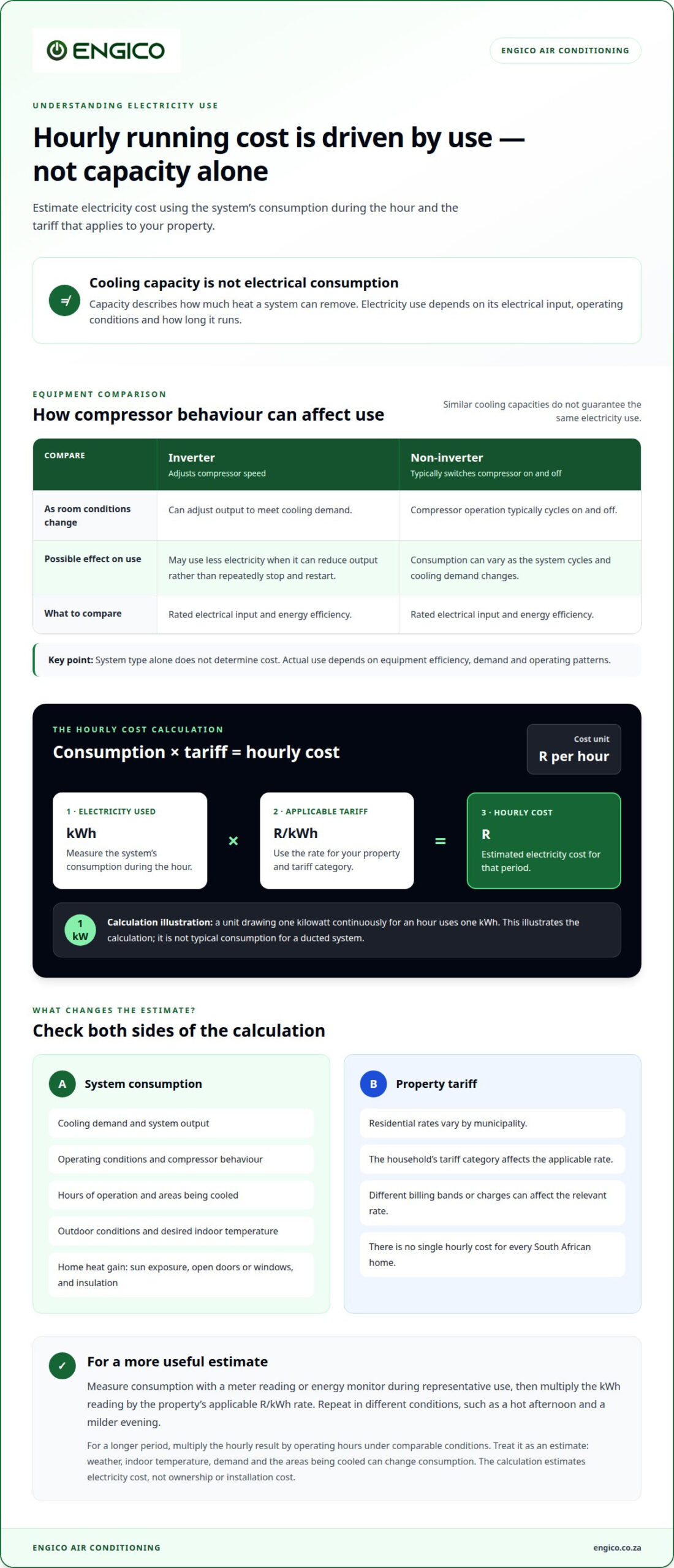
An inverter adjusts compressor speed to meet cooling demand, while a non-inverter system typically switches its compressor on and off. This affects how each system uses electricity as room conditions change. An inverter may use less electricity when it can reduce output rather than repeatedly stop and restart, but actual costs depend on equipment efficiency, demand and operating patterns. Compare rated input and efficiency, not system type alone.
Hourly running cost
The hourly running cost is the electricity consumed in an hour multiplied by the applicable tariff per kilowatt-hour. There is no single average for every South African home because consumption and municipal tariffs differ. For a useful estimate, use the system’s actual or rated input alongside the property’s tariff. The result changes with demand, operating conditions and system output.
Hourly electricity consumption
Hourly electricity consumption is measured in kilowatt-hours, or kWh, and depends on the system’s electrical input over that period. A unit drawing one kilowatt continuously for an hour would use one kWh. This illustrates the calculation, not typical consumption for a ducted system. In practice, output may vary or the system may cycle, so hourly use changes with cooling demand.
Factors affecting home energy use
In South African homes, consumption varies with operating hours, outdoor conditions, the desired indoor temperature and the home’s heat gain. Sun-exposed rooms, open doors or windows, and limited insulation can increase cooling demand. Occupancy and the areas being cooled also matter. Cutting unnecessary operating time can reduce use, while a suitable temperature setting helps avoid demanding more cooling than the space needs.
For a system matched to a home’s layout and usage, explore ducted air conditioning systems as part of your assessment.
Hourly cost of ducted air conditioning in South Africa
There isn’t one hourly running cost for every South African home. The amount depends on the system’s electricity consumption during that hour and the property’s applicable tariff.
Use this calculation: electricity used in kWh × tariff in R/kWh = hourly cost in R. Take the system’s measured hourly consumption and multiply it by the rate charged for the home. This estimates electricity costs for that period, not the cost of owning or installing the system.
The calculation requires actual consumption, not cooling capacity alone. A unit’s electrical input can help estimate use, but demand changes as the compressor responds to indoor conditions. An inverter system may vary its output, while a system that cycles on and off can also draw different amounts over time. The rated input is a reference, not necessarily the system’s constant hourly draw.
The tariff matters just as much. Residential electricity rates vary by municipality and tariff structure, so the same consumption can result in different charges from one home to another. Use the applicable rate for the property rather than assuming a national average. If the household tariff has different billing bands or charges, the relevant rate for that consumption period affects the calculation.
For a practical estimate, use a meter reading or energy monitor to measure consumption during representative use. Multiply the kWh figure by the household’s applicable R/kWh rate. Repeat the calculation in different conditions, such as a hot afternoon and a milder evening, because cooling demand and compressor operation can change.
To estimate a longer period, multiply the hourly result by the hours the system operates under comparable conditions. Treat this as an estimate, not a fixed daily charge: operating time, weather, indoor temperature and the areas being cooled can all change consumption. A monthly estimate is more useful when it reflects representative use across the household’s normal routine.
Ducted air conditioner electricity use per hour (kWh)
There is no single kWh figure for every ducted air conditioner. Hourly electricity use depends on the equipment’s electrical input and operation. A rating indicates the system’s input under stated conditions, but not its actual consumption in every home. The compressor may adjust its output or cycle, changing the energy used during an hour.
One kWh represents energy use over time. It is not the same as cooling capacity, which describes heat removal. A kilowatt rating describes power, while a kWh reading records energy consumed. This distinction matters because electricity bills reflect energy use, not the cooling capacity printed in equipment specifications.
For a useful household figure, measure consumption while the system runs under normal conditions. An energy monitor can show kWh over a chosen period; a meter reading can also track total electricity use, although other appliances affect that total. Record the reading before and after operation, then account for household loads running during that interval.
Compare readings under different conditions rather than treating one hour as representative. A hot afternoon may create greater cooling demand than a mild evening. The selected indoor temperature, rooms served, occupancy, sun exposure and insulation can also affect how hard the system works. An inverter’s compressor output can vary, while cycling equipment can draw different amounts as it switches between operating states.
Use the measured kWh figure and the home’s applicable tariff to estimate electricity costs. Keep the measurement period and conditions consistent when comparing readings. If consumption rises, consider whether outdoor heat, longer operating time or increased demand explains the change. A maintenance issue can also affect performance, so recurring unusual consumption merits attention.
For a clearer consumption baseline, arrange a ducted air-conditioning assessment that considers the system and the spaces it serves.
Engico Air Conditioning: Ducted Air Conditioning Systems
Engico Air Conditioning supplies, installs and maintains ducted air conditioning systems for homes that need cooling distributed across connected rooms. Turn to Engico when assessing how a system can suit your building, expected use and energy requirements. Careful system selection helps clarify the relationship between cooling needs, equipment input and likely electricity consumption.
If a ducted layout isn’t the best fit, Engico also offers wall-mounted split, multi-split and ceiling cassette air conditioners. The right system depends on the spaces being cooled and how the building is used. Engico can help you assess these options against your requirements, rather than relying on a generic hourly estimate for every home.
Contact Engico Air Conditioning to discuss ducted air conditioning for your space.
Plan a system around your home’s needs
Use your expected operating pattern and the spaces you want to cool to guide your decision. The cost of running ducted air conditioning in South Africa is best assessed alongside how the system will serve your home, not as an isolated hourly figure. A system suited to the building and its use gives you a more relevant basis for estimating ongoing electricity consumption.
If you’re considering alternatives to ducted cooling, Engico Air Conditioning also offers wall-mounted split, multi-split and ceiling cassette air conditioners. These options can help frame a discussion about which system type suits the rooms and cooling requirements involved.
For guidance on selecting a suitable air-conditioning system for your space, contact Engico Air Conditioning. A clear understanding of your requirements is a practical starting point for moving forward with confidence.
Frequently Asked Questions
How much does it cost to run ducted air conditioning for 8 hours a day in South Africa?
Calculate the cost by multiplying the system’s electricity use over eight hours by the home’s applicable tariff per kWh. Use a meter or energy monitor to measure consumption during a representative operating period, then apply the household’s tariff. The cost of running ducted air conditioning in South Africa varies with actual system use and municipal tariffs, so eight hours alone cannot determine a single amount.
How do ducted air conditioning running costs vary by system size and cooling capacity?
System size affects running costs through the equipment’s electrical input and the cooling demand it serves. A higher capacity rating doesn’t automatically mean proportionally higher electricity use, because operating conditions and efficiency matter too. For example, a home with several connected spaces may need a different capacity from a compact open-plan area. Compare each system’s energy input while it meets that building’s cooling needs.
How can homeowners reduce ducted air conditioning running costs in South Africa?
Reduce avoidable cooling demand and unnecessary operating time. Close external doors and windows while cooling, use curtains or blinds to limit direct sun, and avoid setting the indoor temperature lower than comfort requires. Schedule operation around room occupancy rather than cooling unused areas continuously. Maintain the system so restricted airflow or neglected components don’t undermine its operation, and review usage during milder weather.
Recent Comments