

Did you know that the lowest quote for a new cooling system often leads to the highest expenses over its decade of service? When you begin researching the wall mounted split air conditioners price, it’s easy to be swayed by the hardware costs listed on retail websites. However, the sticker price is merely one component of a much larger financial picture. You likely recognise that a cheap unit is no bargain if it results in soaring electricity bills or a voided warranty due to poor workmanship. It’s frustrating when online estimates ignore the technical realities of a professional installation in the Gauteng region.
This guide promises to demystify the total cost of ownership by highlighting the variables that truly matter for South African property owners. We’ll explore how hardware selection, professional commissioning, and long-term energy efficiency converge to determine your final investment. By the end, you’ll have the confidence to select a system that delivers genuine value; you’ll also know how to identify a reliable partner for your project in Pretoria or Johannesburg.
Key Takeaways
- Distinguish between basic retail costs and comprehensive professional quotes to ensure your budget covers the entire scope of the installation.
- Compare the initial wall mounted split air conditioners price with projected energy savings to determine the most efficient technology for your property.
- Learn how to calculate the necessary BTU capacity to prevent the performance issues and high running costs of an incorrectly sized unit.
- Recognise the importance of professional commissioning by Gauteng specialists to ensure your system is optimised for the local climate.
- Maximise the lifespan of your equipment through structured maintenance programmes that protect your warranty and preserve efficiency.
Breaking Down the Wall Mounted Split Air Conditioners Price
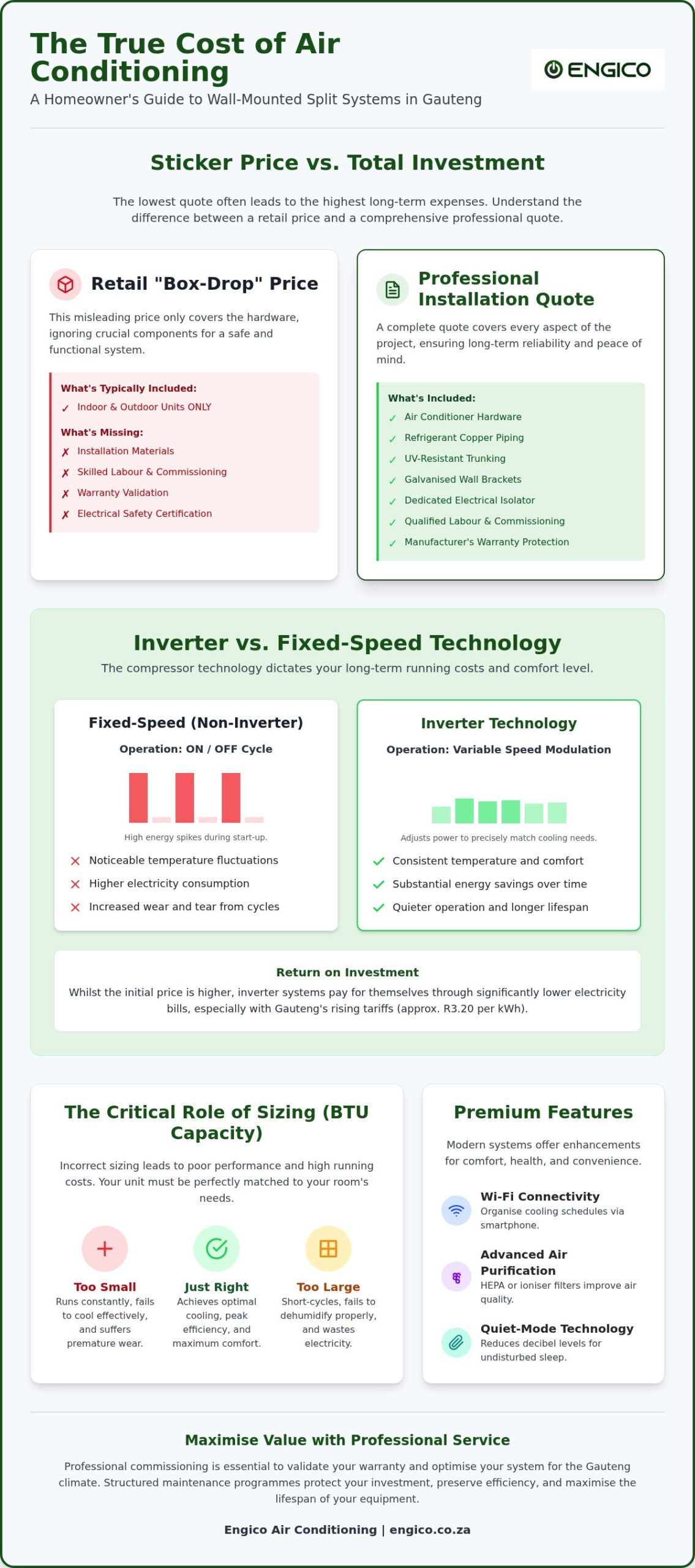
Understanding the total wall mounted split air conditioners price begins with distinguishing between a “box-drop” retail price and a comprehensive professional quote. Retailers often display the cost of the hardware alone, which can be misleading for property owners in Gauteng. A professional solution includes the unit, the necessary installation materials, and the skilled labour required to commission the system according to manufacturer standards. Relying solely on a retail sticker price ignores the logistical reality of getting the system operational.
Brand reputation plays a significant role in the initial purchase price. Established manufacturers invest in superior build quality and rigorous testing, ensuring their systems adhere to the fundamental principles of air conditioning technology. Whilst a budget-tier unit might seem attractive, it often uses thinner materials and less durable components. This choice frequently leads to higher repair costs within the first three years of operation as inferior parts fail under the stress of the Johannesburg heat. Investing in a reputable brand is a strategy for long-term reliability.
Budgeting must also account for VAT and delivery fees. These are frequently excluded from initial online estimates but add a substantial percentage to the final bill. Working with a dedicated provider ensures these costs are transparent from the outset, preventing unexpected financial strain during the project. A grounded approach to budgeting considers every variable from the warehouse to your wall.
Hardware vs Professional Installation
Professional installation is a non-negotiable requirement for protecting your warranty. Manufacturers typically won’t honour claims if the system wasn’t commissioned by a qualified specialist. A standard installation package includes essential materials such as:
- Refrigerant grade copper piping
- UV-resistant trunking to protect external lines
- Galvanised or powder-coated wall brackets
- Dedicated electrical isolators
The distance between the indoor evaporator and the outdoor condenser unit also influences the labour price. Longer pipe runs require more material and additional refrigerant, which increases the complexity of the task. A “safe pair of hands” ensures these components are fitted correctly to prevent gas leaks and electrical faults.
The Premium for Advanced Features
Modern systems offer features that enhance comfort but influence the final wall mounted split air conditioners price. Wi-Fi connectivity allows you to organise your cooling schedules via smartphone, whilst advanced air purification filters like HEPA or ionisers improve indoor air quality. For residential bedrooms, quiet-mode technology is a valuable addition, reducing decibel levels to ensure undisturbed sleep. These features represent a higher upfront investment but contribute significantly to long-term satisfaction and health.
Inverter vs Fixed Speed: Calculating the Cost of Efficiency
The compressor is the heart of any split system, and its operation dictates the long-term cost of ownership. Fixed-speed units operate on a binary principle; the compressor is either running at full capacity or it’s completely off. To maintain a set temperature, these systems cycle frequently, leading to noticeable temperature fluctuations and high energy consumption. Conversely, inverter technology uses a variable-speed compressor that modulates its output to match the cooling load of the room precisely. While this sophisticated engineering increases the initial wall mounted split air conditioners price, it eliminates the inefficient start-stop cycles that plague older technology.
Temperature stability is a primary benefit of this modulation. Inverter systems provide a consistent flow of air, avoiding the “cold blast” effect associated with fixed-speed models. This precision not only enhances comfort but also aligns with sustainable building practices by reducing total energy demand. When evaluating the wall mounted split air conditioners price, it’s essential to factor in these operational efficiencies. For property owners in Pretoria and Johannesburg, where electricity tariffs continue to rise, moving towards new efficiency standards is a practical necessity rather than a luxury.
Energy Savings and Return on Investment
The power draw of a fixed-speed unit is highest during its start-up phase, often requiring a massive surge of current to get the motor turning. Inverter units avoid this spike by starting slowly and ramping up only as needed. For Gauteng residents paying approximately R3.20 per kWh in 2026, these savings accumulate rapidly. The Seasonal Energy Efficiency Ratio (SEER) is the benchmark used to measure the cooling efficiency of an air conditioner over a typical cooling season. High SEER ratings directly correlate with lower operational costs, making the inverter unit a sound financial choice for those prioritising long-term value.
Longevity and Component Wear
Mechanical stress is the primary cause of equipment failure in HVAC systems. The smoother, more gradual operation of an inverter compressor reduces the wear and tear on internal components, extending the overall equipment lifespan. While the upfront investment is higher, the reduced frequency of repairs and the extended replacement cycle justify the cost. Businesses looking to optimise their infrastructure can also explore smart HVAC control for commercial buildings to further refine their energy usage. If you’re unsure which technology fits your specific environment, our specialists at Engico can provide a tailored assessment of your needs.
BTU Capacity: Sizing Your Unit for the Right Price
BTU, or British Thermal Units, serves as the standard measurement for an air conditioner’s cooling capacity. It represents the amount of heat energy the system can remove from a room in one hour. Naturally, the wall mounted split air conditioners price scales with this capacity; a unit designed to cool a large open-plan living area requires more robust components and a larger compressor than one meant for a study. Selecting the correct BTU rating is perhaps the most critical decision in the budgeting process, as it dictates both the upfront cost and the long-term efficiency of the system.
Attempting to save money by purchasing an under-sized unit is a common mistake that leads to higher expenses later. If a system’s capacity is too low for the space, it’ll run constantly at maximum power without ever reaching the desired temperature. This continuous operation causes premature mechanical failure and results in excessive electricity bills. Conversely, an over-sized unit is also problematic. It’ll cool the room so quickly that it cycles off before it can effectively remove humidity from the air, leaving the environment feeling cold and clammy despite the high initial investment.
Room Size and Thermal Load Factors
Matching square metreage to BTU capacity is a helpful starting point for most homeowners. For example, a 9000 BTU unit is typically sufficient for a standard bedroom, whilst a medium-sized lounge might require 12000 or 18000 BTU. However, simple floor area isn’t the only variable. In Johannesburg, north-facing rooms with large windows experience significant solar heat gain, which increases the required cooling capacity. Ceiling height and the quality of roof insulation also play vital roles; a room with high-volume ceilings contains more air that needs to be treated, necessitating a more powerful system to maintain comfort.
Commercial vs Residential Capacity Needs
Commercial environments present unique challenges that differ from residential settings. An office with high occupancy levels, computers, and server equipment generates a substantial amount of internal heat. This often requires heavy-duty units with higher BTU ratings compared to a residential mid-wall split of the same physical size. The price difference between these systems reflects the enhanced durability and cooling power needed for constant commercial use. Ultimately, a professional site survey is the only way to guarantee correct sizing and ensure your investment delivers the performance you expect.
Local Installation Factors in Gauteng
Gauteng’s unique environmental and logistical profile significantly influences the final wall mounted split air conditioners price. Choosing a specialist based in Pretoria or Johannesburg ensures that your installer understands the specific challenges of the Highveld. For instance, a project in a Sandton high-rise often involves complex accessibility requirements and extended pipe runs that differ greatly from a standard installation in a suburban Pretoria home. Local providers are equipped to manage these logistics efficiently, whereas nationwide retailers often overlook these site-specific variables in their generic quotes.
The value of local support becomes evident during the post-installation phase. When a system requires a service or a minor repair, having a partner nearby reduces response times and travel costs. A grounded, solution-oriented approach prioritises this long-term accessibility. It’s about finding a “safe pair of hands” that stays available long after the initial commissioning is complete. Reliable contractors understand that the Gauteng climate, with its intense summer heat and dry, dusty winters, demands a specific approach to equipment placement.
Compliance and Safety Standards
In South Africa, electrical work associated with HVAC installations must be accompanied by a Certificate of Compliance (CoC). This document is a legal necessity that confirms the installation meets national safety standards; it’s also vital for insurance purposes. Professional mounting is equally important to prevent structural damage to common Gauteng building materials like face brick or reinforced concrete. Correct anchoring ensures the outdoor condenser remains stable and vibration-free. To protect your investment after the initial setup, you should consider structured HVAC maintenance services for Gauteng properties.
Environmental Resilience
The harsh South African sun and the pervasive dust of the Highveld winters place immense strain on outdoor units. UV-resistant trunking and high-quality brackets are essential to prevent the degradation of exposed lines. In certain industrial zones within the East Rand, units may require specialised anti-corrosion coatings to withstand chemical pollutants in the air. These additions ensure the external hardware doesn’t perish prematurely under local conditions.
Load shedding remains a critical factor for any electronic system in Gauteng. Frequent power interruptions and the resulting voltage surges can damage sensitive inverter boards. Integrating surge protection into your installation is a methodical way to safeguard the electronics. This proactive step might slightly increase the initial wall mounted split air conditioners price, but it prevents catastrophic component failure during grid instability. If you need an expert assessment of your site requirements, contact Engico for a professional consultation.
Maximising Value with Professional Maintenance
Budgeting for a climate control system shouldn’t end once the installation is complete. The real wall mounted split air conditioners price includes the structured programme required to keep the hardware running at peak performance. Neglecting this aspect leads to a gradual decline in output and a sharp increase in operational costs. Routine cleaning is essential; it prevents a documented 15-20% drop in cooling efficiency that occurs when dirt obstructs the airflow. By maintaining the system, you ensure that every Rand spent on electricity translates into actual comfort rather than wasted energy.
Proactive servicing allows technicians to spot minor issues before they escalate into catastrophic failures. A small refrigerant leak or a loose electrical connection is inexpensive to rectify during a scheduled visit. If left unaddressed, these faults can lead to compressor burnout or control board damage, which are amongst the most expensive repairs an owner can face. Positioning yourself as a conscientious owner ensures that your system remains a reliable asset rather than a financial burden. Engico serves as a dependable partner in this regard, providing the technical expertise needed for long-term climate reliability.
The Cost of Neglect
The financial impact of a clogged evaporator coil is substantial. When dust accumulates on the internal fins, the system must work significantly harder to achieve the same cooling effect, which directly increases electricity consumption. Beyond the monthly bill, regular servicing is a mandatory requirement for preserving the manufacturer’s warranty. Most brands will reject a claim for a failed component if there’s no evidence of professional upkeep. For those managing business premises, our guide on commercial HVAC maintenance in Sunninghill provides specific advice for high-usage environments.
Choosing a Reliable Service Partner
When evaluating a service contract, look for a comprehensive checklist that covers more than just a basic filter rinse. A professional maintenance visit should include deep cleaning of both coils, refrigerant pressure checks, and thorough electrical testing. This methodical approach provides the peace of mind that comes from a “safe pair of hands” managing your equipment. It ensures that your initial investment in the wall mounted split air conditioners price is protected for its entire ten-year lifespan. If you’re ready to secure the performance of your system, contact Engico for a professional quote and experience a standard of service built on precision and reliability.
Securing Long-Term Value for Your Gauteng Property
Investing in a high-quality cooling system is a significant decision that impacts your daily comfort and utility expenses for years to come. You now understand that the wall mounted split air conditioners price represents an investment in both sophisticated hardware and professional expertise. Selecting the correct BTU capacity and opting for energy-efficient inverter technology are essential steps for managing your monthly running costs effectively. However, the most critical factor for success remains the quality of the initial installation and your commitment to a structured maintenance programme.
Engico acts as a dependable partner for property owners who value precision and reliability. Our methodical, solution-oriented HVAC specialists provide expert installation across Johannesburg and Pretoria, ensuring every system is commissioned to the highest professional standards. We also offer comprehensive maintenance and repair services designed to extend the lifespan of your equipment whilst protecting your manufacturer’s warranty.
If you’re ready to enhance your environment with a reliable cooling solution, Get a Professional Quote from Engico Air Conditioning. Our team is dedicated to helping you achieve a perfect balance between upfront value and long-term operational efficiency. We look forward to providing the stable, high-standard climate control your property deserves.
Frequently Asked Questions
How much does it cost to install a wall-mounted split air conditioner?
Installation costs vary based on the complexity of the project and the distance between the indoor and outdoor units. A professional quote includes high-quality materials such as refrigerant piping, UV-resistant trunking, and galvanised wall brackets. Labour rates depend on the technical requirements of the site, such as high-rise accessibility in Sandton or complex mounting in Pretoria. Investing in a comprehensive installation ensures the system operates at peak efficiency from day one.
Is an inverter air conditioner worth the extra price?
Investing in inverter technology is highly beneficial for the long-term wall mounted split air conditioners price. Whilst the upfront cost is higher than fixed-speed models, the energy savings are substantial due to the variable-speed compressor. This technology avoids the power surges associated with frequent start-stop cycles, resulting in lower monthly electricity bills. For residents in Johannesburg and Pretoria, the improved temperature stability and reduced mechanical wear provide a significant return on investment.
What BTU size do I need for a standard bedroom in South Africa?
A standard bedroom in South Africa usually requires a 9000 BTU unit to maintain a comfortable temperature. However, the specific thermal load of your Gauteng property influences this requirement. North-facing rooms with large windows or homes with high-volume ceilings often need a 12000 BTU unit to compensate for increased heat gain. A professional site survey is the most reliable method to determine the exact capacity needed to prevent energy wastage and ensure performance.
Does the price of an air conditioner include the installation kit?
Retail prices for air conditioners often represent the cost of the hardware alone, excluding the essential installation kit. A professional quote from a specialist like Engico provides a more accurate reflection of the total investment. This includes necessary components such as copper piping, electrical isolators, and drainage kits. Relying on a “box-drop” price can lead to hidden expenses, as these secondary materials are vital for a safe and compliant installation in your home.
How often should I service my split unit to avoid expensive repairs?
We recommend a professional service at least once a year to maintain optimal performance. In the dusty environments of Pretoria and Johannesburg, bi-annual servicing is often necessary to prevent the build-up of debris in the evaporator coils. Regular maintenance allows technicians to identify minor faults before they escalate into expensive repairs. This proactive approach ensures your unit remains energy-efficient and preserves the validity of your manufacturer’s warranty over its decade of operation.
Will a cheap air conditioner increase my electricity bill significantly?
A lower initial wall mounted split air conditioners price often masks higher long-term running costs. Budget-tier units frequently lack advanced inverter technology, meaning they consume maximum power every time the compressor cycles on. These systems struggle to maintain consistent temperatures, leading to excessive electricity usage. Over three to five years, the cumulative cost of higher energy bills and frequent repairs often exceeds the price of a premium, energy-efficient model from a reputable manufacturer.
Can I install a wall-mounted unit myself to save on the price?
You should not attempt to install a split system yourself. DIY installation is technically complex and immediately voids the manufacturer’s warranty. South African regulations require a Certificate of Compliance (CoC) for any electrical work, which only a qualified professional can provide. Specialist installers in Gauteng ensure that refrigerant gases are handled safely and that the system is commissioned correctly to prevent gas leaks, electrical hazards, and premature equipment failure.
What factors influence the price of commercial vs residential units?
Commercial units are engineered for high-occupancy environments and constant operational cycles, which necessitates more robust components than residential models. The price is influenced by the cooling capacity, the complexity of building management system integration, and the need for advanced air handling units. Whilst residential mid-wall splits focus on individual room comfort, commercial systems are built for durability and large-scale efficiency, often requiring specialised industrial ventilation fans and customised climate control infrastructure.
Recent Comments