

Choosing the right air-conditioning system starts with the property, not just the room that feels warm. Aircon repair services in Pretoria help homes and businesses address faults in existing systems, while servicing and maintenance support reliable operation. The size and requirements of a property also shape which system is suitable, and regular maintenance can help keep an air conditioner working at its optimum and electricity bills low.
When cooling performance changes, unusual operation or uneven temperatures can make it difficult to know whether the unit needs repair, routine maintenance or a different system arrangement. The right next step depends on the equipment and the building’s needs, not a one-size-fits-all answer.
This guide explains what repair and maintenance can involve, how property size and use influence air-conditioning choices, and why energy consumption matters to electricity bills. It also outlines the factors that shape repair costs and how to approach the next step for a home or business in Pretoria.
Key Takeaways
- Match the air-conditioning system to the property’s size and requirements, rather than choosing by room alone.
- Learn how the type of system and the fault affect the repair approach, and which symptoms can help describe the problem.
- Understand what can influence a technician’s response to a repair request and how to explain the impact on your home or business.
- Know what to look for in repair terms covering parts and labour before work begins.
- See how system use and maintenance can affect energy consumption and electricity bills.
What air conditioner brands and types do Pretoria repair services work on?
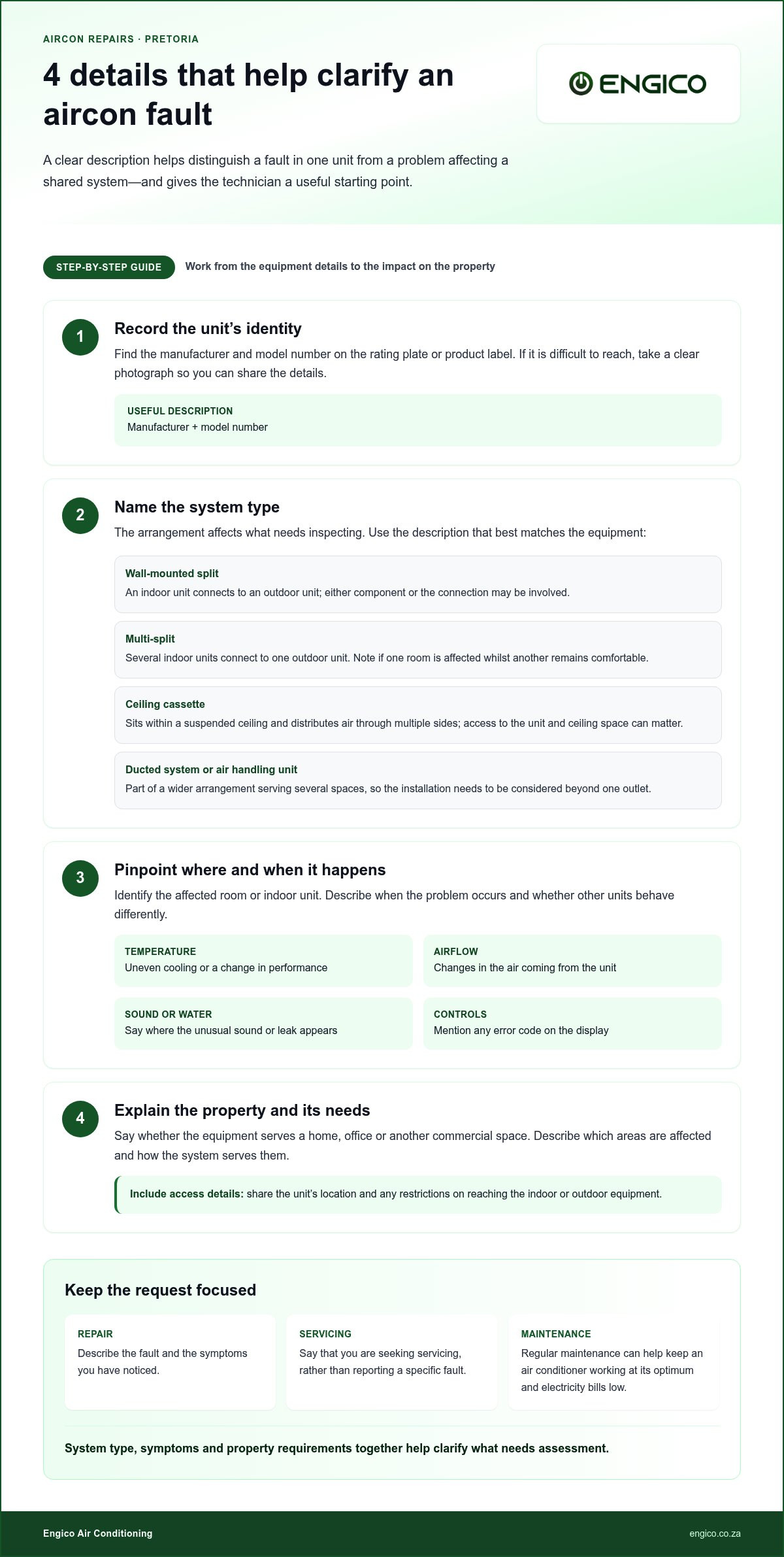
Repair suitability depends on the unit’s manufacturer, model and fault, not simply its location in Pretoria. The rating plate or product label usually identifies the manufacturer and model number. Share these details, along with the unit type, when describing the problem. For example, “wall-mounted split unit, cooling unevenly” gives a clearer starting point than “the aircon is faulty”.
Brand names alone don’t show how a system is configured. Units from the same manufacturer can have different controls, components or installation arrangements. Identifying the model helps the technician assess the fault. If the label is difficult to reach, take a clear photograph so you can share its details when arranging the repair.
System type also affects the inspection. A wall-mounted split system has an indoor unit connected to an outdoor unit, so a fault may involve either component or their connection. A multi-split system connects several indoor units to one outdoor unit. If one room loses cooling while another remains comfortable, report that difference.
Ceiling cassette units sit within a suspended ceiling and distribute air through multiple sides, so access to the unit and ceiling space can matter during inspection. Ducted systems distribute conditioned air through ducts to several spaces, while an air handling unit forms part of a larger air-conditioning arrangement. These systems need to be assessed in the context of the wider installation, not just one outlet.
Domestic and commercial settings have different operating requirements. A home may rely on one split unit for a living area, while an office may have several indoor units serving separate rooms. When arranging aircon repair services in Pretoria, describe which spaces are affected, when the problem occurs and whether other units behave differently.
- Record the identification details: note the manufacturer and model from the unit label.
- Describe the system: say whether it is wall-mounted, multi-split, cassette or part of a ducted arrangement.
- Locate the symptoms: identify the affected room or indoor unit, and note any difference across spaces.
- Explain the setting: tell the technician whether the equipment serves a home, office or another commercial space.
These details help distinguish a fault in one unit from a problem affecting a shared system. They also clarify which parts of the installation need assessment before a repair plan is considered.
The Pretoria service company says regular maintenance helps keep an air conditioner working at its optimum and keeps electricity bills low. This is relevant when comparing systems with different configurations: maintenance can support reliable operation without changing the unit’s type or the spaces it serves. When requesting help, describe whether you are seeking a repair, servicing or ongoing maintenance, as well as the symptoms and equipment details already identified. That gives the company a clearer picture of the work being considered.
The Pretoria company says repairs, servicing and maintenance cost a fraction of the cost of a new air conditioner. It also advises choosing an air conditioner according to the property’s requirements and size. These points make the property context useful not only when describing a fault, but also when discussing equipment and its care. Explaining how the system serves the home or commercial space can help keep the assessment focused on the installation’s needs.
How quickly can Pretoria aircon technicians provide emergency repairs?
Repair response time in Pretoria depends on the fault, its impact and the work already scheduled. A complete loss of cooling across a business affects more spaces than one noisy unit at home. Calling a problem an “emergency” describes its urgency, but does not establish an arrival time or repair duration.
Diagnosis also affects how soon a repair can be completed. A blocked filter or control issue calls for a different inspection from a system that has stopped cooling altogether. At a multi-unit site, the technician needs to establish whether one indoor unit or the wider system is affected. A clear description helps indicate the scale of the fault before an appointment is arranged.
Access and equipment details can influence the visit. A wall-mounted unit in an accessible room presents a different inspection task from a ceiling cassette above a busy workspace. Share the property address in Pretoria, the unit’s location and type, and any access restrictions. For commercial premises, explain which rooms or operations are affected.
Before reporting an urgent fault, note when the issue began, what the air conditioner does now and whether the display shows an error code. If the system makes an unusual sound or leaks, describe where the sound or water appears. Don’t dismantle the unit to investigate, as this can complicate diagnosis and cause further damage.
- Describe the impact: explain whether the fault affects one room, several areas or essential business operations.
- Identify the unit: provide its type, location and manufacturer or model details if available.
- Report the symptoms: mention changes in airflow, temperature, sound or the control display.
- Arrange access: clarify how the technician can reach the indoor and outdoor equipment.
These details help clarify the fault and the diagnostic steps to consider. They can also help distinguish an air-conditioning problem from an interruption to the property’s power supply. If other equipment has lost power too, include that information rather than assuming the air conditioner is the only cause.
A request for aircon repair services in Pretoria is easier to assess when it includes the system type, symptoms and effect on the building. For urgent faults, explain the practical impact first, then provide the equipment details. This gives a clearer picture of the problem and helps the team respond about the next steps.
Are aircon repair technicians in Pretoria licensed, certified, and insured?
Licensing, certification and insurance are separate matters. A claim of technical experience does not, by itself, establish all three. For a repair in Pretoria, consider what each document covers and how it relates to the work. A training certificate, for example, is not the same as evidence of insurance.
“Licensed” can refer to permission or registration for a defined activity. “Certified” usually refers to training, assessment or competence in a particular field. “Insured” concerns financial cover for specified risks. The terms aren’t interchangeable, so a general statement that a technician is qualified doesn’t answer every question about credentials or cover.
Start by identifying the technician or business responsible for the repair. Match the name on any paperwork to the person or company carrying out the work. Then note the document’s issuer, scope and validity details. These points help distinguish a relevant credential from one related to a different trade or activity.
Consider insurance according to its stated scope. A document may identify the insured party, type of cover and conditions. Those details matter when work takes place in a home, office or shared commercial building. For example, equipment above a ceiling may involve different access and property considerations from a wall-mounted indoor unit.
- Record the responsible party: note the technician’s or company’s name on the job paperwork.
- Read the credential: check the issuer, subject and scope shown on the certificate.
- Review insurance details: identify the insured party and the work or risks described.
- Keep the repair record: retain the quotation, work description and any documents supplied.
For a commercial property, keep these records with the maintenance file. Homeowners can store them alongside the unit’s model details and repair history. This creates a clear record of who attended, what work was described and which documents related to the job.
Credentials should be relevant to the task. A certificate for a different discipline doesn’t explain competence in air-conditioning diagnosis, while insurance paperwork doesn’t demonstrate technical skill. Treat each as a distinct part of the assessment. This helps homeowners and businesses understand claims about licensing, certification and insurance without confusing one type of evidence with another.
What warranties do Pretoria aircon repair companies offer on parts and labour
A repair warranty sets out what follow-up support applies after specific work. In Pretoria, the written terms are the useful reference because a replaced component and the labour to fit it are separate parts of a repair. For example, a replacement control board may have different coverage from the work involved in installing it.
Part coverage concerns the component named on the job record. It should identify what was supplied or replaced, such as a fan motor, sensor or control board. Labour coverage concerns the repair work itself. Clear terms explain whether a return visit for the same diagnosed fault is covered and what steps apply if the component fails again.
A warranty is not a blanket promise covering every future problem with an air conditioner. If a unit receives a new sensor, later poor airflow caused by a separate blockage is a different issue. The written terms should identify the repair, part and fault they cover. This distinction helps prevent confusion between a recurring fault and a new one.
Before approving work, read the quotation and warranty wording together. Check the component description, labour covered, start point and process for reporting a problem. Note any stated conditions, such as keeping the invoice or providing access to the unit. Terms recorded with the repair paperwork are easier to refer to later than a verbal explanation.
- Match the part: compare the warranty description with the component listed on the invoice.
- Separate part and labour: look for wording that explains coverage for the component and its installation.
- Understand the scope: identify the specific fault and repair covered, rather than assuming all system faults are included.
- Keep records: retain the quotation, invoice, service notes and any warranty document together.
For a business with several air-conditioning units, record the room or area linked to each repair. An office with a cassette unit and a separate wall-mounted unit needs distinct service records. Those details help identify which equipment was repaired if another issue arises. At home, noting the room and unit location serves the same purpose.
Repair terms should distinguish completed work from routine maintenance or unrelated faults. A warranty covering a replaced fan motor, for instance, does not describe work on a separate drainage issue. Clear documentation gives both parties a shared record of the agreed repair and its coverage. Keep that record accessible for the period stated in the warranty terms.
What are common air conditioner faults in Pretoria homes and businesses
A unit that runs but barely cools may have restricted airflow, a control issue or another system fault. Compare the affected room with another served by the same multi-split arrangement. If only one room is warm, report that contrast. If every area is affected, say so, as that indicates a different scope for diagnosis.
Weak or absent airflow is another noticeable symptom. A wall-mounted unit may switch on while moving little air, while a ceiling cassette may distribute air unevenly. Note whether the change affects one outlet or the whole unit. A blocked filter can restrict airflow, but the symptom alone doesn’t establish the cause. Avoid taking the equipment apart to investigate.
Water near an indoor unit can indicate a drainage problem or another fault requiring inspection. Record where it appears, such as beneath a wall-mounted unit or near a ceiling cassette. Damp patches around ducted system outlets are also useful to report. Keep people clear of wet areas and describe whether the leakage continues while the unit is running.
Controls that don’t respond can make a working system seem faulty. Note whether the remote control display changes, whether the indoor unit responds and whether an error message appears. A unit that starts and stops unexpectedly may have a control or operating issue. Record when this happens, such as immediately after switching on or during normal use.
- Unusual sound: describe whether you hear rattling, buzzing or scraping, and locate the sound.
- Unusual smell: note whether it comes from the indoor unit when cooling starts.
- Weak cooling: identify the affected room and whether other units cool normally.
- Water leakage: record where water collects and whether the unit is operating.
- Repeated stopping: note what the controls display and when the unit stops.
In a Pretoria office, a cassette unit serving one meeting room may behave differently from units elsewhere. At home, one split unit may lose cooling while another continues to operate. These comparisons help describe the fault’s pattern without guessing at its cause. Include the unit type, affected area and symptoms when arranging an assessment.
A repair assessment can distinguish an obstruction from a component or control fault. It can also establish whether the problem affects one unit or a connected system. Describe observable symptoms rather than attempting repairs yourself. This gives the technician clearer information and helps focus the inspection on the affected equipment.
Engico Air Conditioning: Wall-mounted Split Air Conditioners
Engico supplies and installs wall-mounted split systems for individual spaces, as well as options for different property layouts. A multi-split system can serve several indoor areas, while ceiling cassette units fit suitable suspended ceilings. Air handling units support larger air-conditioning arrangements. The right system depends on the building’s size, room layout and cooling requirements, not equipment type alone.
If you’re assessing an existing setup or planning air conditioning for a home or business, these system categories offer a starting point for matching equipment to the space. Share the property’s requirements to guide a discussion about suitable options.
For information about air-conditioning options for your property, contact Engico Air Conditioning.
Plan the next step for your property
Use the symptoms you’ve noticed and the building’s cooling needs to decide what to address first. A repair assessment can help distinguish a fault in one unit from an issue affecting a wider system. For homes and businesses, matching equipment to the rooms it serves also supports a more considered approach to comfort and energy use.
Engico supplies and installs wall-mounted split, multi-split and ceiling cassette air conditioners. These options suit different layouts, from a single room to several indoor spaces. If you’re weighing repair needs against your property’s requirements, share the system type and affected areas when enquiring about aircon repair services in Pretoria.
With the relevant details in hand, you can discuss a practical next step for your home or business. Contact Engico Air Conditioning about your air-conditioning needs and move forward with a clearer understanding of the options.
Frequently Asked Questions
Which aircon repair companies serve Pretoria and nearby suburbs?
Engico Air Conditioning provides air conditioner repairs in Pretoria and nearby Gauteng locations. Its stated service areas include Centurion, Menlyn, Farie Glen, Silverton, Waterkloof, Gezina, Doringkloof, Midrand, Waterfall, Sunninghill, Woodmead, Sandton, Randburg, Roodepoort, Fourways and Hyde Park, as well as Johannesburg. If your property is in one of these areas, share its location and the affected system when enquiring about repair services.
Do Pretoria aircon repair services also offer maintenance, cleaning, and refrigerant recharging?
Yes. Engico provides maintenance and servicing for domestic and commercial air conditioners in Pretoria.
Recent Comments