

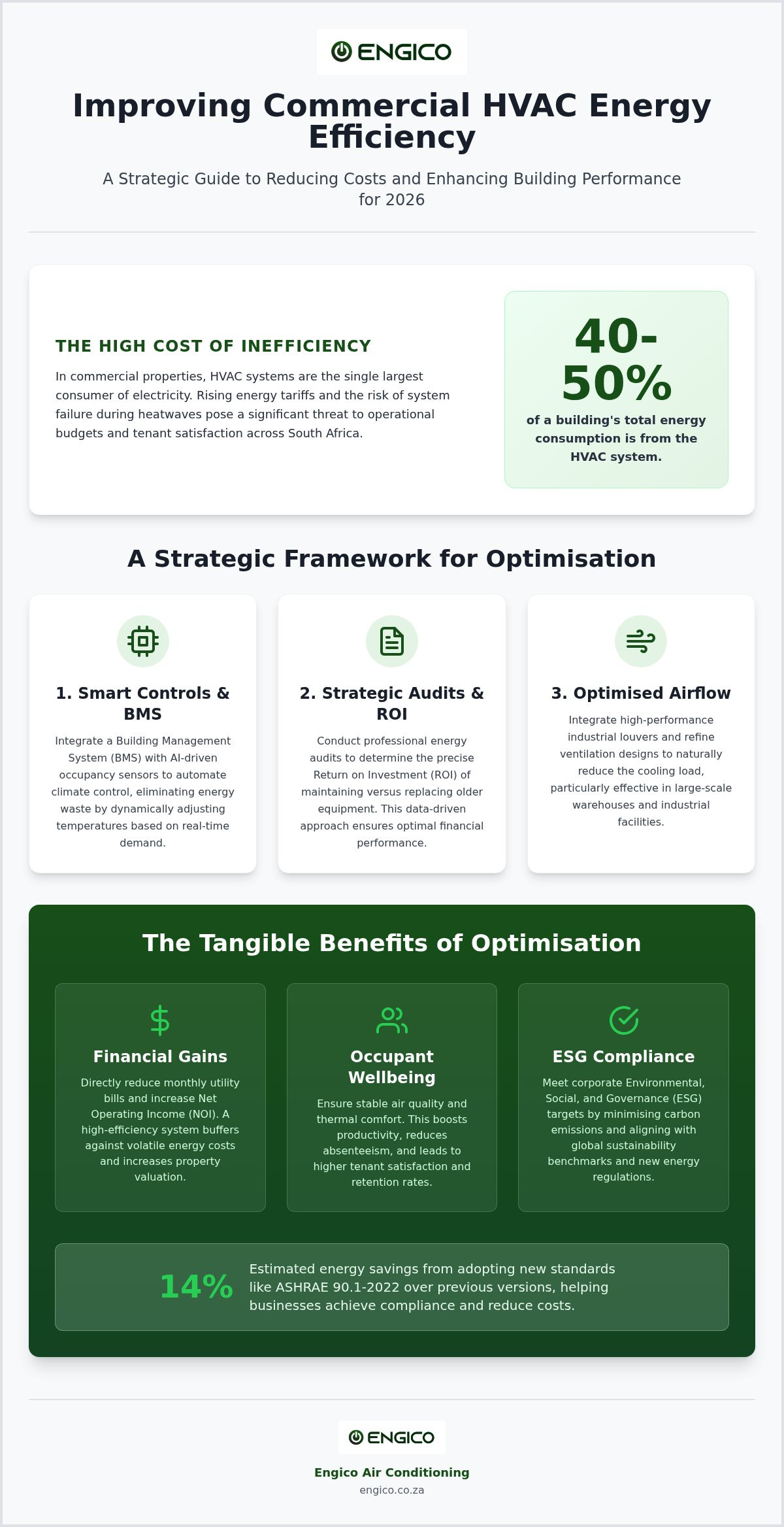
Did you know that HVAC systems typically account for 40 to 50% of a commercial building’s total energy consumption? In South Africa, where electricity costs continue to rise and peak summer temperatures often lead to system downtime, this represents a significant portion of your operational budget. Effectively improving commercial HVAC energy efficiency is no longer a choice for the environmentally conscious; it’s a vital strategy for protecting your bottom line as we enter 2026.
It’s likely you’ve already felt the pressure of inconsistent indoor temperatures affecting tenant satisfaction or the worry of equipment failure during a Gauteng heatwave. We agree that managing these overheads whilst maintaining a high-performance environment is a complex, ongoing challenge. This guide will help you discover how to reduce operational costs and carbon emissions through advanced HVAC optimisation and smart building technology. We’ll preview the latest 2026 energy standards, the benefits of BMS integration, and the precision maintenance routines that extend equipment lifespan and ensure compliance with the newest efficiency metrics.
Key Takeaways
- Understand why HVAC systems remain the largest energy consumer for Gauteng businesses and how to mitigate the impact of rising electricity costs.
- Discover the role of Building Management Systems (BMS) and AI-driven occupancy sensors in automating climate control and eliminating energy waste.
- Learn a strategic framework for conducting energy audits to determine the precise ROI of maintaining versus replacing older ducted or rooftop units.
- Explore how integrating high-performance industrial louvers and optimised airflow designs can naturally reduce the cooling load in large-scale warehouses.
- Identify a methodical, climate-aware approach to improving commercial HVAC energy efficiency through professional system auditing and tailored retrofits.
The Business Case for Improving Commercial HVAC Energy Efficiency
In the professional management of commercial property, Heating, ventilation, and air conditioning (HVAC) systems are no longer viewed merely as background utilities. They are central to a building’s financial performance and long-term viability. Technical efficiency in this context is the precise balance of maintaining superior indoor air quality whilst using the absolute minimum energy input required. For commercial buildings across Gauteng, these systems remain the single largest consumer of electricity, often accounting for 40 to 50% of total energy use. As we enter 2026, the necessity of improving commercial HVAC energy efficiency has shifted from an operational preference to a critical financial mandate.
Enhancing system performance directly impacts a building’s Net Operating Income (NOI). Every Rand saved on utility expenses through technical optimisation is a Rand added to the bottom line. This direct correlation makes HVAC upgrades one of the most effective ways to increase the overall valuation of a commercial asset. Property owners who prioritise these improvements are better positioned to handle the evolving 2026 energy regulations that demand higher compliance standards for commercial spaces.
Financial and Environmental Benefits
The most immediate advantage of a high-efficiency system is the direct reduction in monthly utility bills. With South African energy tariffs continuing to follow an upward trajectory, optimised systems provide a vital buffer against volatile operational costs. Beyond the balance sheet, reducing energy consumption is a primary method for meeting corporate Environmental, Social, and Governance (ESG) targets. In 2026, HVAC energy efficiency is defined as the achievement of peak thermal comfort through systems that adhere to the latest SEER2 metrics whilst minimising carbon emissions. By early 2026, the adoption of standards like ASHRAE 90.1-2022 is estimated to provide up to 14% energy savings over previous versions, helping businesses align with global sustainability benchmarks.
Impact on Occupant Comfort and Productivity
Technical efficiency also dictates the quality of the internal environment. Inconsistent thermal conditions often lead to “sick building syndrome” and a steady stream of employee complaints, both of which hamper workforce performance in busy office centres. When a system is properly calibrated, it ensures stable air quality and ventilation, which is linked to improved cognitive function and reduced absenteeism. For property owners, this translates to higher tenant satisfaction and retention rates. Superior climate control is a compelling selling point that ensures commercial spaces remain occupied by high-value clients who prioritise a healthy and productive working environment.
Implementing Smart HVAC Controls and BMS Integration
A Building Management System (BMS) acts as the central nervous system of a modern facility. It automates climate control by synchronising various mechanical components into a single, manageable interface. This technology eliminates the inherent inefficiencies of manual thermostats, which often rely on human intervention or rigid, outdated schedules. The shift toward AI-driven occupancy sensors represents a significant leap in operational precision. These sensors detect real-time presence and adjust temperatures dynamically, ensuring that energy isn’t wasted on empty zones. This level of automation is a core component of smart HVAC control for commercial buildings, as it optimises cooling cycles based on actual demand rather than theoretical load.
Data analytics play an equally vital role in improving commercial HVAC energy efficiency. Modern control platforms provide granular insights that help facility managers identify energy leaks or minor equipment malfunctions before they escalate into costly failures. When Purchasing Energy-Efficient Equipment, it’s essential to consider how these units will integrate with your data network. A system that can report its own performance metrics allows for predictive maintenance, ensuring the hardware operates at peak efficiency throughout its entire lifecycle. If your current infrastructure lacks these automated features, Engico can assist with professional BMS integration to modernise your facility’s climate strategy.
The Power of Demand-Controlled Ventilation
Demand-Controlled Ventilation (DCV) utilises CO2 sensors to monitor indoor air quality and adjust airflow based on real-time room occupancy. In large Gauteng office blocks, this technology prevents significant fan energy waste during periods of low occupancy, such as lunch hours or staggered shifts. By integrating industrial ventilation fans into the central control network, managers can maintain a healthy environment whilst drastically cutting down on unnecessary motor operation. This targeted approach ensures that ventilation is provided exactly where it’s needed, rather than running at a constant, high-energy baseline.
Variable Frequency Drives (VFDs) and Inverter Technology
Variable Frequency Drives (VFDs) are now a critical requirement for modern air handling units (AHUs). Unlike traditional “on/off” systems that operate at full capacity regardless of the required load, VFDs allow motors to vary their speed to match current needs. This variable output results in substantial energy savings and reduces the mechanical stress placed on the equipment. By avoiding the jarring start-stop cycles of older technology, VFDs lead to fewer mechanical repairs in Pretoria industrial sites. Inverter technology in split systems provides a similar benefit, maintaining a steady temperature with minimal energy fluctuations.
Maintenance vs. Replacement: Strategic ROI Analysis
Facility managers often reach a financial crossroads when deciding whether to continue patching an ageing system or commit to a full replacement. This decision requires a methodical approach to improving commercial HVAC energy efficiency, ensuring that capital expenditure translates into long-term operational savings. A strategic ROI analysis shouldn’t be based on guesswork. It requires a structured evaluation of your current assets against modern performance benchmarks. To determine the most cost-effective path forward, property owners should follow five clear steps:
- Step 1: Conduct a comprehensive energy audit to identify specific system inefficiencies and airflow bottlenecks.
- Step 2: Evaluate the “Age vs. Efficiency” ratio. Replacing a unit older than 10 years with a modern high-efficiency model can cut heating and cooling costs by up to 20% according to industry data.
- Step 3: Implement a structured commercial HVAC maintenance Sunninghill program to restore baseline performance and extend the life of viable components.
- Step 4: Compare the cost of targeted retrofits, such as installing new high-performance coils or variable-speed fans, against the expense of a complete system overhaul.
- Step 5: Calculate the projected payback period. In the current economic climate, high-efficiency installations often pay for themselves through reduced utility bills within a few years.
The Cost of Reactive HVAC Repairs
Relying on a “break-fix” model is a costly strategy for any business. In Johannesburg office centres, emergency repairs typically cost three times more than scheduled servicing due to urgent labour rates and expedited parts shipping. Beyond the direct invoice, the hidden costs of system downtime include significant drops in workforce productivity and increased tenant dissatisfaction. Transitioning to a predictive maintenance model allows you to address wear and tear before it leads to a total system failure. This approach preserves your budget for planned improvements rather than wasting it on emergency crises that don’t add long-term value.
When to Choose a Full System Upgrade
There comes a point where even the most rigorous maintenance cannot overcome the physical limitations of obsolete hardware. Terminal signs include frequent compressor failures, rising refrigerant leak rates, and an inability to maintain consistent temperatures despite repairs. Moving to modern multi-split or VRF (Variable Refrigerant Flow) technology offers a substantial leap in improving commercial HVAC energy efficiency. For facility managers evaluating high-performance hardware, AirConService24.com provides a detailed showcase of modern equipment that aligns with global energy-saving benchmarks. These systems provide precise zone control, ensuring energy is only used where needed. Whilst some international tax credits expired at the end of 2025, local utility rebates and the 2026 energy standards make high-efficiency upgrades a sound investment for future-proofing your commercial property.
Industrial facilities present a unique set of thermal challenges due to their expansive volumes and high internal heat gains from machinery. In these environments, improving commercial HVAC energy efficiency requires more than just efficient chillers; it necessitates a sophisticated approach to warehouse ventilation design South Africa. By prioritising airflow dynamics, facility managers can significantly reduce the mechanical cooling load. High-performance louvers play a critical role here, facilitating natural ventilation that exhausts hot air whilst drawing in cooler ambient air during the evening. This natural exchange prevents heat build-up before the mechanical system even engages.
Strategic placement of industrial fans is equally essential to eliminate “hot spots” that often develop in large-scale factories. These stagnant pockets of heat force HVAC systems to work harder to maintain a baseline temperature. For sensitive environments like data centres, the focus shifts to precise air pressure and humidity management. Maintaining a positive pressure environment prevents the ingress of contaminants, which is vital for hardware longevity and performance. If you operate in this sector, our guide on HVAC for data centres South Africa provides a more detailed look at these specialised infrastructure requirements.
Industrial Air Handling and Filtration
Air Handling Units (AHUs) are the workhorses of industrial climate control. However, their efficiency is heavily dependent on the condition of their coils and filters. In Gauteng’s industrial zones, high levels of dust and particulate matter can quickly clog filtration systems, forcing fans to consume more power to move the same volume of air. Regular maintenance of these components ensures unobstructed airflow and prevents the unit from over-operating. This methodical upkeep is a cornerstone of improving commercial HVAC energy efficiency in dusty or high-pollution environments, ensuring that the system doesn’t waste energy fighting its own internal resistance.
Passive Cooling Strategies for Large Volumes
Passive cooling uses natural elements to supplement mechanical systems. Integrating natural ventilation louvers allows for effective night-time purging of building heat, which reduces the starting temperature for the HVAC system the following morning. In congested commercial precincts like Sandton, smart exhaust placement can help mitigate the “heat island” effect, where buildings trap and re-radiate heat. The goal is to balance fresh air intake with energy conservation targets, ensuring the facility remains comfortable without excessive utility spend. To optimise your facility’s airflow, consider Engico’s range of industrial ventilation fans and louvers designed specifically for the South African climate.
Partnering with Engico for High-Efficiency HVAC Solutions
Engico Air Conditioning provides a methodical approach to auditing and improving commercial HVAC energy efficiency across Gauteng. We understand that every facility has unique requirements, particularly when dealing with the high-altitude climate and temperature fluctuations of Pretoria, Johannesburg, and Sandton. Our team specialises in designing custom ducted air conditioning systems and high-capacity split units that provide reliable performance whilst adhering to strict energy conservation goals. By integrating Building Management Systems (BMS) with your climate hardware, we ensure your infrastructure remains efficient and adaptable for years to come.
Our expertise in BMS integration is a core component of our future-proofing strategy. We don’t just install hardware; we create a unified network that allows for automated precision and real-time monitoring. This technical depth ensures that your building’s climate infrastructure is ready for the 2026 energy standards, providing a stable environment for tenants and employees alike.
Professional Installation and Retrofitting
Minimising business disruption is a priority during any HVAC upgrade, especially in busy Johannesburg commercial centres. We’ve refined our installation processes to ensure that retrofitting new, high-efficiency equipment is handled with technical precision and minimal fuss. Whether we’re installing ceiling cassette air conditioners in a corporate office or industrial air handling units in a factory, our commitment to quality remains constant. Every installation we undertake is designed to meet or exceed 2026 South African safety and energy standards, ensuring your investment is both compliant and durable. Retrofitting modern inverter-driven components into existing systems is often a crucial step in improving commercial HVAC energy efficiency for older buildings that aren’t yet ready for a total replacement.
Reliable Support and Repairs Across Gauteng
We provide rapid response repair services for commercial clients in Midrand and Sandton, ensuring that system downtime is kept to an absolute minimum. Our “safe pair of hands” philosophy means we take full responsibility for the longevity and reliability of your HVAC assets. To support this, we offer comprehensive commercial HVAC maintenance Sunninghill and Pretoria contracts. These agreements are designed to prevent mechanical failure through methodical servicing and predictive care. Choosing a partner who values precision and transparency over short-term self-promotion is essential for long-term facility health. Contact Engico today for a professional assessment of your building’s efficiency and discover how a structured maintenance plan can protect your operational budget.
Future-Proofing Your Commercial Climate Strategy
Navigating the evolving energy landscape of 2026 requires a disciplined approach to facility management. By prioritising technical audits and smart automation, businesses can transform their HVAC systems from significant overheads into high-performance assets. We’ve explored how the synergy between Building Management System (BMS) integration and precision maintenance directly supports your building’s Net Operating Income. Whether you’re managing a corporate office in Sandton or a large-scale factory in Pretoria, improving commercial HVAC energy efficiency is the most effective way to secure long-term operational stability and compliance.
Engico is a seasoned partner for businesses across Johannesburg, Pretoria, and the wider Gauteng province. As specialists in BMS integration and industrial ventilation, we provide the technical expertise needed to manage complex retrofits without fuss. Our methodical approach ensures your climate infrastructure meets modern standards whilst reducing the risk of costly downtime during peak summer months. Contact Engico for a Commercial HVAC Efficiency Audit to begin your transition toward a more sustainable and cost-effective environment. Taking these steps today ensures your property remains competitive, comfortable, and efficient for years to come.
Frequently Asked Questions
How much can I save by improving my commercial HVAC energy efficiency?
You can typically achieve energy savings of up to 20% on heating and cooling costs by replacing equipment that is more than ten years old with modern, high-efficiency units. These savings are driven by improved SEER2 ratings and better thermal management. For many Gauteng businesses, this reduction in utility expenditure directly improves Net Operating Income. The exact figure depends on your building’s current baseline and the level of automation implemented.
What are the most cost-effective smart HVAC upgrades for 2026?
Integrating smart controls and occupancy sensors is among the most cost-effective upgrades for 2026. These devices ensure that cooling is only provided when rooms are occupied, preventing energy waste in empty boardrooms or offices. Variable Frequency Drives (VFDs) are also highly effective for air handling units. These upgrades often have a shorter payback period compared to full system replacements whilst significantly improving commercial HVAC energy efficiency through more precise operation.
Does a BMS really help with energy efficiency in smaller office buildings?
A Building Management System (BMS) is highly beneficial for smaller office buildings as it centralises control and eliminates the inefficiencies of manual adjustments. Even in compact environments, a BMS can automate schedules and monitor sensor data to prevent simultaneous heating and cooling. This level of oversight ensures that small facilities benefit from the same technical precision as large industrial sites, leading to more consistent temperatures and lower monthly electricity bills.
How often should commercial HVAC systems be serviced to maintain efficiency?
Commercial HVAC systems should generally be serviced at least twice a year to maintain peak efficiency. In Gauteng’s dusty industrial zones, quarterly maintenance is often recommended for air handling units and filtration systems to prevent airflow restrictions. Regular servicing ensures that coils remain clean and moving parts are lubricated, which reduces the electrical load on motors. This proactive approach prevents the gradual decline in performance that leads to higher energy consumption.
What is the difference between a standard AC unit and high-efficiency inverter technology?
The primary difference lies in how the compressor operates. Standard units use an “on/off” cycle, running at full capacity until the target temperature is reached and then shutting down. Inverter technology allows the compressor to vary its speed, maintaining a steady temperature with much lower energy fluctuations. This variable speed operation is far more efficient and places less mechanical stress on the system, which typically results in a longer equipment lifespan.
Can improving ventilation help reduce my cooling costs in a warehouse?
Improving ventilation is a highly effective way to reduce cooling costs in warehouse environments. By using high-performance louvers and industrial fans, you can facilitate natural air exchange to exhaust heat build-up. This passive cooling strategy reduces the reliance on mechanical HVAC systems, especially during the cooler morning and evening hours. Properly designed airflow prevents thermal stratification, ensuring that large volumes remain comfortable without requiring constant, high-energy mechanical cooling.
Are there specific energy standards for commercial buildings in South Africa for 2026?
South African commercial buildings are increasingly aligning with international efficiency metrics like SEER2 and EER2 test procedures. By early 2026, the adoption of updated standards such as ASHRAE 90.1-2022 is expected to influence local compliance requirements. Property owners should ensure that new installations meet these high-efficiency benchmarks to future-proof their assets. Adhering to these standards is essential for improving commercial HVAC energy efficiency and meeting corporate ESG targets in the local market.
How long does a typical commercial HVAC energy audit take?
A typical commercial HVAC energy audit usually takes between one and three days to complete, depending on the building’s size and complexity. During this period, technicians assess the condition of existing units, inspect ductwork for leaks, and evaluate current control settings. The resulting report provides a detailed roadmap for improving commercial HVAC energy efficiency. This timeframe allows for a thorough data collection process without causing significant disruption to your daily business operations.
Recent Comments