
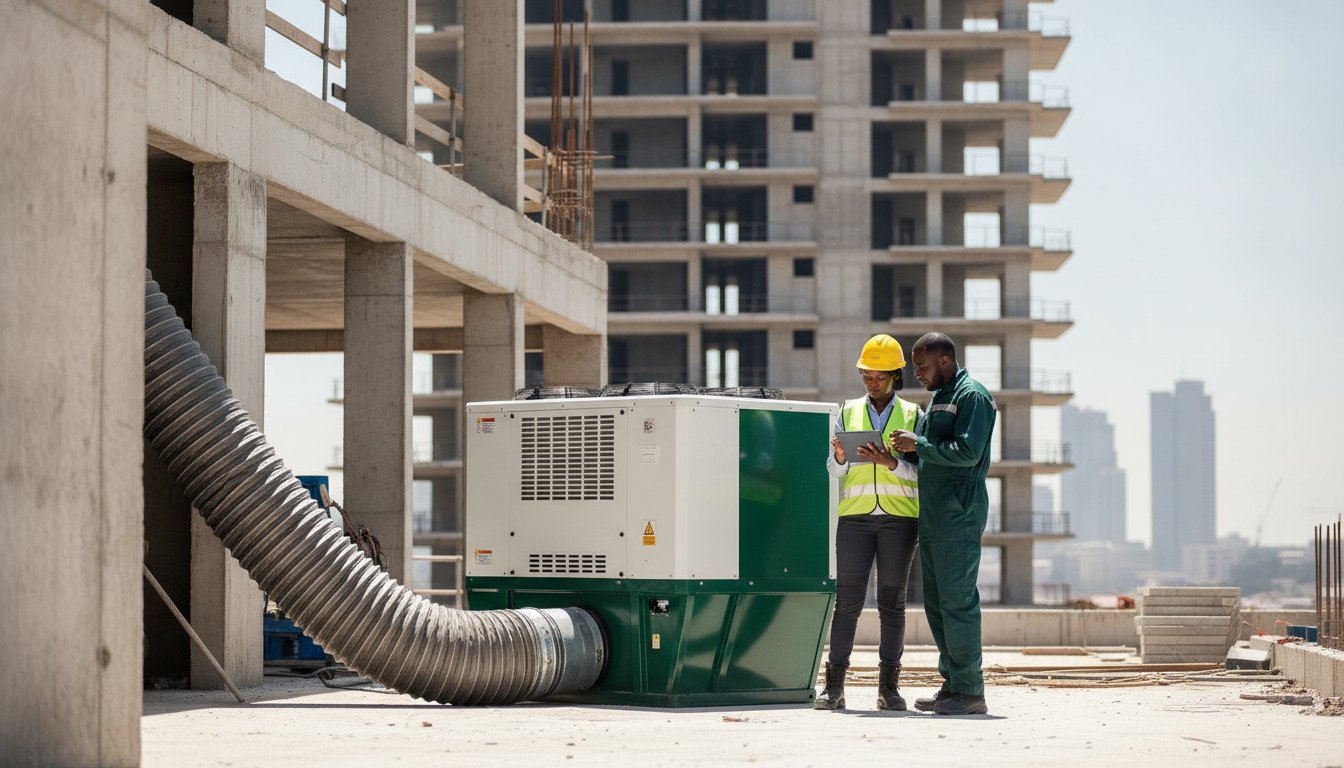
Did you know that approximately 20% of all heat-related illness claims originate from the construction sector? You’re likely already aware that managing a Gauteng construction site during a summer heatwave is more than just a matter of comfort. It’s a complex operational challenge where extreme heat can lead to equipment failure and significantly reduced worker focus. Implementing the correct temporary cooling solutions for construction sites is no longer just a luxury; it’s a vital component of project risk management.
We understand that maintaining a compliant work environment whilst keeping your project on schedule requires technical precision. This guide will help you navigate the most efficient cooling systems tailored for the unique dust and heat profiles of South African environments. You’ll gain a clear understanding of whether to hire or purchase equipment to ensure minimal downtime and maximum safety. We’ll examine everything from industrial-grade spot coolers to large-scale ventilation, providing you with a methodical approach to site climate control.
Key Takeaways
- Understand how heat stress impacts worker cognitive function and why maintaining a compliant environment is essential for project continuity.
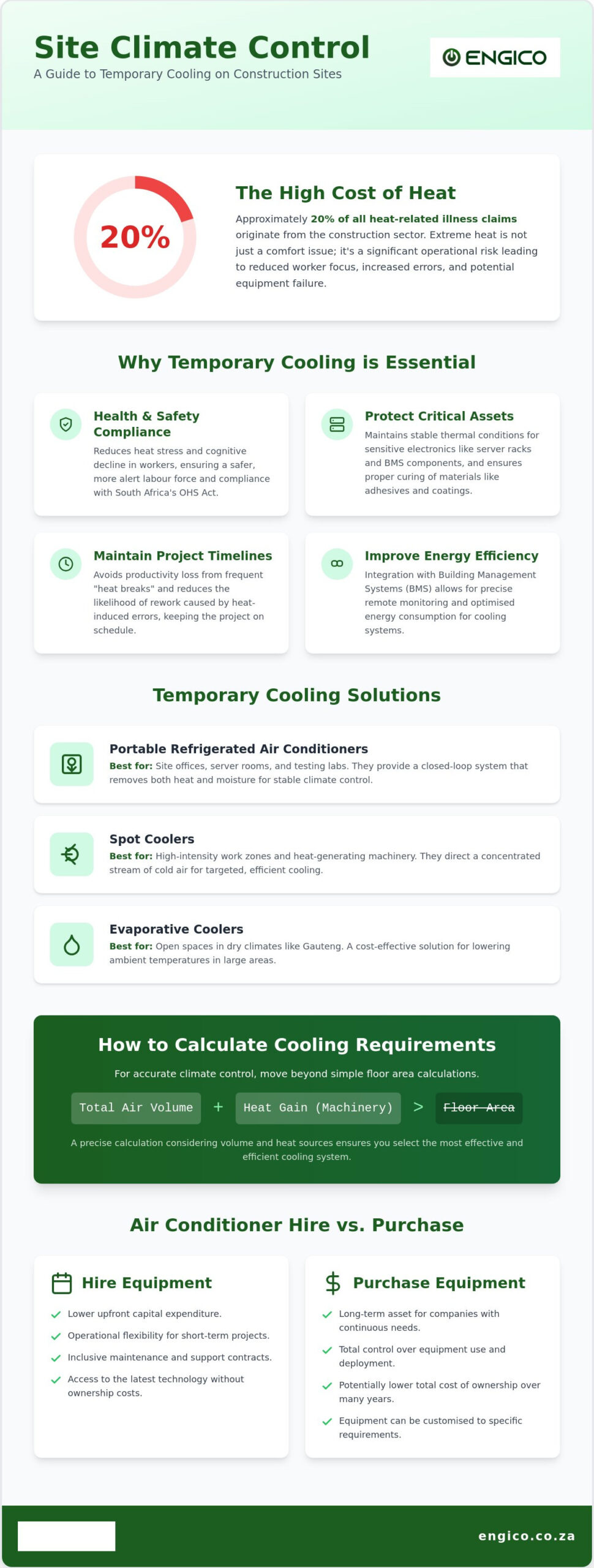
- Identify the most effective temporary cooling solutions for construction sites, ranging from portable refrigerated units for site offices to evaporative coolers suited for dry Gauteng climates.
- Learn how to accurately calculate cooling requirements by factoring in total air volume and heat gain from machinery rather than just floor area.
- Evaluate the commercial benefits of air conditioner hire, comparing upfront capital expenditure against the operational flexibility of inclusive maintenance contracts.
- Discover how integrating cooling systems with Building Management Systems (BMS) allows for precise remote monitoring and improved energy efficiency.
Why Temporary Cooling is Essential for Construction Sites
In the context of a modern building project, temporary cooling refers to mobile HVAC solutions designed to regulate environments where permanent systems aren’t yet operational or feasible. These systems include portable air conditioners, high-capacity fans, and specialised units tailored for industrial use. Implementing temporary cooling solutions for construction sites is a strategic move that addresses both human safety and technical requirements. Without these systems, the extreme temperatures common in Gauteng can quickly turn a productive site into a liability.
Heat stress is a primary concern for site managers. When ambient temperatures rise, the human body struggles to maintain its core temperature, leading to a sharp decline in cognitive function and physical stamina. Workers who are overheated make more mistakes. Their reaction times slow down, and their ability to perform complex tasks with precision diminishes. This isn’t just a matter of comfort; it’s a direct threat to the quality of the build and the safety of everyone on-site. Effective climate control ensures that the labour force remains alert and productive throughout the shift.
Beyond the human element, site electronics and sensitive materials require stable thermal conditions. Modern construction often involves the installation of sophisticated Building Management Systems and temporary server racks in site offices. These components are prone to failure if exposed to the intense heat typical of a Pretoria or Johannesburg afternoon. Additionally, certain materials, such as specific adhesives, coatings, and finishes, have strict temperature windows for application. Using Evaporative Coolers Explained as a reference for low-humidity environments, we can see how choosing the right technology helps maintain the integrity of these materials during the curing process.
The Impact of Heat on Project Timelines
High temperatures lead to increased error rates. When a team is fatigued by heat, the likelihood of rework increases, which directly impacts the project schedule. Many contractors rely on frequent “heat breaks” to protect staff. Whilst necessary for safety, these breaks represent significant lost man-hours. By investing in temporary cooling solutions for construction sites, you can maintain a consistent work pace. This allows for controlled concrete curing and ensures that material integrity isn’t compromised by rapid moisture loss or thermal expansion during the critical phases of the build.
Health and Safety Compliance in South Africa
The South African Occupational Health and Safety (OHS) Act places a clear duty on employers to provide a work environment that is safe and without risk to health. This includes managing thermal stress. Safety officers are increasingly focused on monitoring site temperatures to ensure they don’t exceed legal thresholds for safe manual labour. Documenting your climate control measures is an effective way to reduce liability. It demonstrates a proactive approach to worker welfare and ensures that your site remains compliant with national safety standards, avoiding costly shutdowns or legal challenges.
Types of Temporary Cooling Solutions for Construction
Selecting the correct equipment depends on the specific environment and the nature of the work being performed. Whilst some areas require precision temperature control, others benefit more from high-volume air movement. Implementing temporary cooling solutions for construction sites involves a strategic mix of technologies to address different zones, from the site office to the active build floor.
Portable refrigerated air conditioners are the standard choice for site offices, server rooms, and testing laboratories. These units provide a closed-loop system that removes both heat and moisture, creating a stable environment for sensitive electronics and personnel. For larger, semi-permanent structures, Air Handling Units (AHUs) can be deployed to provide more robust climate control. These systems are typically more durable than residential units and are built to withstand the rigours of a busy site.
Spot coolers offer a specialised solution for high-intensity work zones or specific equipment. These units direct a concentrated stream of cold air exactly where it’s needed, such as near heavy machinery that generates significant heat or in confined spaces where air becomes stagnant. By targeting the heat source directly, you can maintain operational efficiency without needing to cool the entire structure. For a broader understanding of how these rental solutions are applied across different industries, our industrial air conditioner rental South Africa comprehensive guide covers the full spectrum of available equipment and selection criteria.
Evaporative vs. Refrigerated Cooling
In the dry heat of Pretoria and the wider Gauteng region, evaporative cooling is often a highly efficient option. These units use the natural process of water evaporation to lower temperatures, which is significantly more cost-effective for large, open-sided structures compared to refrigerated systems. However, they’re less suitable for moisture-sensitive areas like electrical rooms. A critical consideration in our region is the high dust content on-site. Traditional systems can struggle if filters aren’t maintained, so choosing equipment with robust filtration is vital for OSHA Compliance for Heat Safety and long-term reliability.
Industrial Fans and Air Handling Units
Industrial ventilation fans and louvers are essential for maintaining air quality in large-scale projects. These systems don’t just cool; they clear fumes and stale air, ensuring a constant supply of fresh oxygen. Strategic louver placement is necessary to facilitate natural cross-ventilation, which reduces the load on motorised cooling systems. For projects with shifting requirements, professional air conditioner hire provides the flexibility to scale your cooling capacity as the build progresses. This methodical approach ensures that every zone remains within safe thermal limits without unnecessary capital expenditure.
Evaluating Your Site’s Cooling Requirements
Determining the correct scale for your installation is a critical step in ensuring efficiency and cost-effectiveness. A common mistake in the industry is relying on basic room size calculators that only account for floor area. For temporary cooling solutions for construction sites, a more methodical approach is required. You must calculate the British Thermal Unit (BTU) requirements based on the total volume of the space, especially in high-ceilinged industrial environments or open-plan temporary structures where air stratification occurs.
A thorough assessment must also account for internal heat gain. This is the heat generated within the space by machinery, high-intensity lighting, and the personnel working on-site. In a construction context, heavy equipment and power tools can significantly raise the ambient temperature, requiring a higher cooling capacity than a standard office of the same size. Additionally, the placement of your units is vital. Positioning coolers near heat-generating machinery or in areas with poor natural airflow ensures that the cooling effect is maximised where it is most needed.
Power availability is another technical hurdle that requires early planning. Portable units typically run on standard 220V power, but larger air handling units or industrial-scale chillers often require 3-phase power. It’s essential to verify your site’s electrical capacity before delivery to avoid delays. If you’re relying on site generators, you must account for the startup surge of the HVAC equipment, which can be significantly higher than the steady-state operating current.
The Technical Cooling Load Assessment
The insulation levels of temporary site offices and shipping container conversions are often lower than permanent buildings. This lack of thermal resistance means the external environment has a greater impact on internal temperatures. In Gauteng, the peak afternoon sun exposure can lead to rapid heat spikes. For the purpose of technical planning, Cooling Load is the total heat energy removed to maintain temperature. Factoring in these variables ensures you don’t underspecify the system, which would lead to equipment overworking and potential failure. For permanent installations in the region, understanding the standards behind a professional ducted air conditioning installation Sunninghill provides a useful benchmark for the level of technical rigour that should be applied to any climate control project.
Power and Logistics Planning
Logistical considerations extend beyond just power. Portable air conditioning units produce condensate that must be managed. Without a planned drainage route or regular maintenance of collection tanks, you risk water damage to site electronics or creating slip hazards. For projects requiring high levels of precision, you can find Smart HVAC Control for Commercial Buildings monitoring tips to help track performance. This methodical preparation ensures that your temporary cooling setup operates reliably throughout the duration of the project.
Air Conditioner Hire vs. Purchase: A Commercial Analysis
Deciding between capital investment and rental agreements requires a clear understanding of long-term project logistics. Whilst ownership might seem like a permanent solution, the reality of managing temporary cooling solutions for construction sites often dictates a more flexible approach. This is especially true when considering the full lifecycle of industrial HVAC equipment, from initial acquisition to eventual decommissioning and storage. A methodical financial analysis reveals that the total cost of ownership involves much more than the initial purchase price.
Purchasing industrial HVAC units involves heavy upfront capital expenditure (CAPEX), which can strain project cash flow during critical early phases. These assets depreciate quickly in the harsh, dust-heavy conditions of a Gauteng build. By contrast, a hire model converts these costs into predictable monthly operational expenses (OPEX). This shift includes the benefit of professional maintenance and repair services within the contract, ensuring that equipment failure doesn’t become a bottleneck for your site operations. You avoid the hidden costs of procuring spare parts and managing a dedicated maintenance team for equipment that may only be used periodically.
Construction projects are inherently dynamic, and your cooling requirements at the foundation stage will differ vastly from those during the final interior fit-out. A hire agreement provides the agility to scale your cooling capacity up or down as the project progresses. You aren’t stuck with oversized equipment that is expensive to run or undersized units that fail to meet safety standards. This resource management ensures that your site remains compliant without unnecessary expenditure or the burden of underutilised assets.
When Hire Makes Most Sense
Hiring is the most efficient choice for projects lasting less than six months or for managing seasonal temperature spikes during the peak of summer. It removes the logistical burden of transporting heavy machinery between different locations and eliminates the need for secure, climate-controlled storage during the off-season. Additionally, the rental market provides immediate access to the latest energy-efficient models. This allows your site to meet modern environmental standards and reduce electricity consumption without the risk of being saddled with obsolete hardware that no longer meets safety requirements. Understanding the full scope of available industrial air conditioner rental options in South Africa, including the 2026 R22 refrigerant phase-down implications, is essential for making a compliant and cost-effective procurement decision.
Financial and Operational Benefits
In the South African context, equipment hire is typically treated as a direct business expense, which can offer tax advantages over the complex depreciation schedules associated with owned assets. Beyond the financial logic, the operational reliability is a significant factor. Every agreement with Engico Air Conditioning includes access to technical support, ensuring that expert assistance is available should any issues arise. This level of service mirrors the professional standards discussed in our guide to Commercial HVAC Maintenance Sunninghill. It provides a “safe pair of hands” for your climate control needs. To explore how we can support your specific project requirements, you can view our professional air conditioner hire options.
Engico’s Temporary Cooling Solutions for Gauteng
Engico Air Conditioning provides a comprehensive suite of temporary cooling solutions for construction sites across the Gauteng region, covering everything from the Pretoria CBD to the industrial zones of Midrand and Sandton. We position ourselves as a dependable partner that manages the entire lifecycle of site climate control. Our process begins with a technical load assessment to determine the exact BTU requirements and concludes with a methodical decommission once the project is complete. This structured approach ensures that your cooling strategy is technically sound and operational from the moment the first unit is delivered.
A key differentiator for Engico Air Conditioning is our ability to integrate temporary units with Building Management Systems (BMS). For large-scale projects in Johannesburg or Centurion, remote monitoring allows site managers to track thermal conditions in real-time without leaving the site office. This capability is essential for identifying potential equipment issues before they lead to downtime and for maintaining documented proof of OHS compliance. By utilising these integrated systems, you can optimise energy usage and ensure that high-intensity work zones remain within safe thermal limits.
Reliability is fundamental to our service delivery. We understand the harsh conditions of a Gauteng construction site, where dust and vibration are constant challenges. Engico Air Conditioning provides expert repair and maintenance support as a standard part of our hire agreements. If a unit requires attention, our technicians respond promptly to perform on-site repairs, preventing any disruption to your project timeline. This proactive support cycle ensures that your climate control remains robust and effective throughout the hottest months of the year.
Specialised Industrial Equipment
We supply high-performance ventilation fans and louvers designed for the rugged environments of active builds. These systems are essential for clearing stale air and fumes in partially enclosed structures. For high-end site offices and testing laboratories, Engico Air Conditioning offers reliable split and ducted units that provide the precision temperature control needed for administrative work and the protection of sensitive electronics. Clients transitioning from temporary setups to permanent installations can also benefit from our expertise in ducted air conditioning installation Sunninghill, ensuring a seamless handover from construction-phase cooling to a long-term climate control solution.
The Engico Air Conditioning Advantage in South Africa
Our local expertise allows us to navigate the specific environmental challenges of the Highveld, such as intense solar radiation and low humidity. We follow a methodical project management approach that accounts for your site’s unique power constraints and layout. If you’re ready to secure a compliant and productive work environment, Enquire about our air conditioner hire for your site today. Our specialists will help you design a cooling package that meets your project’s specific technical and commercial requirements.
Securing Your Site for Future Heat Challenges
As construction timelines extend into increasingly unpredictable seasons, the necessity for a structured climate strategy becomes clear. We’ve discussed the technical nuances of BTU volume calculations and the commercial logic of hire models, but the ultimate goal remains the preservation of project momentum. Implementing temporary cooling solutions for construction sites is not merely a reactive measure for a single heatwave; it is a foundational safety protocol that ensures your site remains a productive environment regardless of external temperatures.
Choosing a partner that understands the specific logistical hurdles of the Gauteng Highveld is essential for long-term success. Engico Air Conditioning operates as a dependable partner, providing the technical expertise of industrial-grade ventilation specialists and expert HVAC installers in Gauteng. Our comprehensive hire and maintenance packages are designed to remove the burden of climate management from your project team. To ensure your next build is fully prepared for the thermal challenges ahead, contact Engico Air Conditioning for a professional site cooling assessment. This proactive approach will help you maintain a compliant, efficient, and stable workplace from inception to completion.
Frequently Asked Questions
How much cooling power (BTUs) do I need for a standard site office?
A standard six-metre shipping container office typically requires between 12,000 and 18,000 BTUs to maintain a stable temperature. This requirement varies based on the quality of insulation, the number of occupants, and the amount of electronic equipment generating heat. It’s essential to calculate the total volume of the space rather than just the floor area to ensure the unit isn’t underspecified for the intense Gauteng sun.
Can temporary cooling units be integrated with existing site generators?
Yes, most portable units can be powered by site generators provided the power supply is stable and has sufficient capacity. You must account for the startup surge, which can be significantly higher than the steady-state operating current. It’s advisable to have a technician verify the kVA rating of your generator to ensure it can handle the inductive load of the air conditioning compressors without tripping.
What is the difference between evaporative cooling and portable air conditioning for construction?
Evaporative cooling uses the natural process of water evaporation to lower temperatures in open or well-ventilated areas, whilst portable air conditioning uses a refrigerated cycle to remove heat from enclosed spaces. Evaporative units are highly energy-efficient in dry climates like Pretoria but aren’t suitable for moisture-sensitive areas. Portable refrigerated units are better for site offices where precise temperature and humidity control are required for electronics.
Is air conditioner hire for events different from construction site cooling?
Construction site cooling requires more ruggedised equipment designed to withstand high-dust environments and physical vibration. Whilst event cooling often prioritises aesthetics and near-silent operation, temporary cooling solutions for construction sites focus on durability and high-volume air throw. The filtration systems in construction-grade units are also more robust to prevent the internal components from becoming clogged with site debris and fine dust.
How often do temporary cooling units require maintenance on a dusty site?
Units operating on active construction sites typically require filter inspections every week and a more thorough technical service once a month. High dust levels can quickly coat condenser coils, which reduces cooling efficiency and puts unnecessary strain on the motor. Regular cleaning is a simple but effective way to prevent equipment failure and ensure that the system continues to provide reliable relief from the heat.
Does Engico provide emergency repairs for hired cooling equipment in Johannesburg?
Engico provides comprehensive repair and maintenance services for all hired equipment across Johannesburg and Pretoria as part of our standard agreements. We prioritise site uptime and deploy technical support teams to resolve issues promptly. By including these services in the hire contract, we ensure that technical faults don’t lead to project delays or compromises in worker safety during extreme weather events.
What are the OHS requirements for cooling on South African construction sites?
The South African OHS Act mandates that employers provide a work environment that is safe and without risk to the health of employees. This includes managing thermal stress by ensuring temperatures don’t reach levels that cause heat exhaustion or heatstroke. Safety officers often use the Wet Bulb Globe Temperature (WBGT) index to determine when temporary cooling solutions for construction sites must be implemented to remain compliant.
Can I monitor temporary cooling systems remotely via a BMS?
Yes, modern temporary systems can be integrated with Building Management Systems (BMS) for remote monitoring and control. This allows you to track real-time temperature data, energy consumption, and equipment health from a central dashboard. Remote monitoring is particularly useful for large-scale projects with multiple cooling zones, as it enables proactive maintenance and ensures that all areas remain within the required thermal parameters without constant manual checks.
Recent Comments