
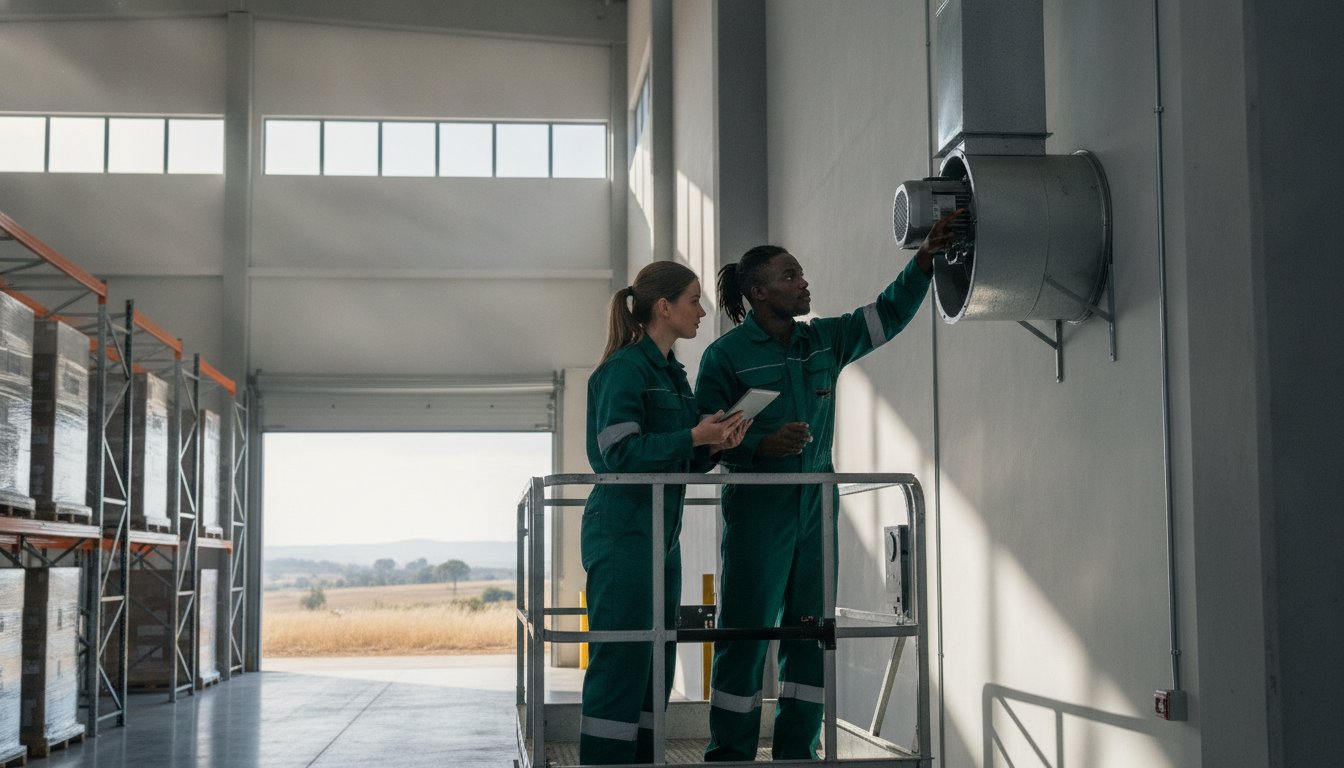
When the summer heat in Gauteng pushes indoor temperatures past 35 degrees, a poorly ventilated facility doesn’t just become uncomfortable; it becomes a significant liability for your workforce and your inventory. You’ve likely noticed how stagnant air and excessive heat lead to a sharp decline in productivity and a corresponding rise in safety risks. It’s a common challenge for facility managers who must also navigate the technical complexities of the latest SANS 10400-T:2024 fire protection standards and the Physical Agents Regulations 2024.
This guide provides a methodical look at how to optimise warehouse ventilation systems South Africa to ensure your operations remain both compliant and efficient. We’ll explore how professional solutions, ranging from industrial ventilation fans to advanced air handling units, can transform your environment into a stable, temperature-controlled space. By reading further, you’ll discover how to protect your team’s health whilst reducing high energy costs through durable, forward-thinking ventilation design. We will preview the essential technical requirements and the strategic benefits of integrating modern controls into your facility’s infrastructure to ensure long-term operational stability.
Key Takeaways
- Understand why the South African climate demands a proactive approach to airflow to maintain worker productivity and protect sensitive inventory.
- Identify the core components of professional warehouse ventilation systems South Africa, including high-performance industrial fans, louvres, and air handling units.
- Learn how to balance natural and mechanical ventilation to ensure reliable cooling, even during the stagnant heat of Gauteng’s summer afternoons.
- Ensure full regulatory compliance by aligning your facility with the latest SANS 10400-T:2024 standards for fire protection and smoke ventilation.
- Discover how a methodical approach to installation and regular maintenance can significantly extend the lifespan of your industrial ventilation equipment.
The Importance of Warehouse Ventilation Systems in South Africa’s Climate
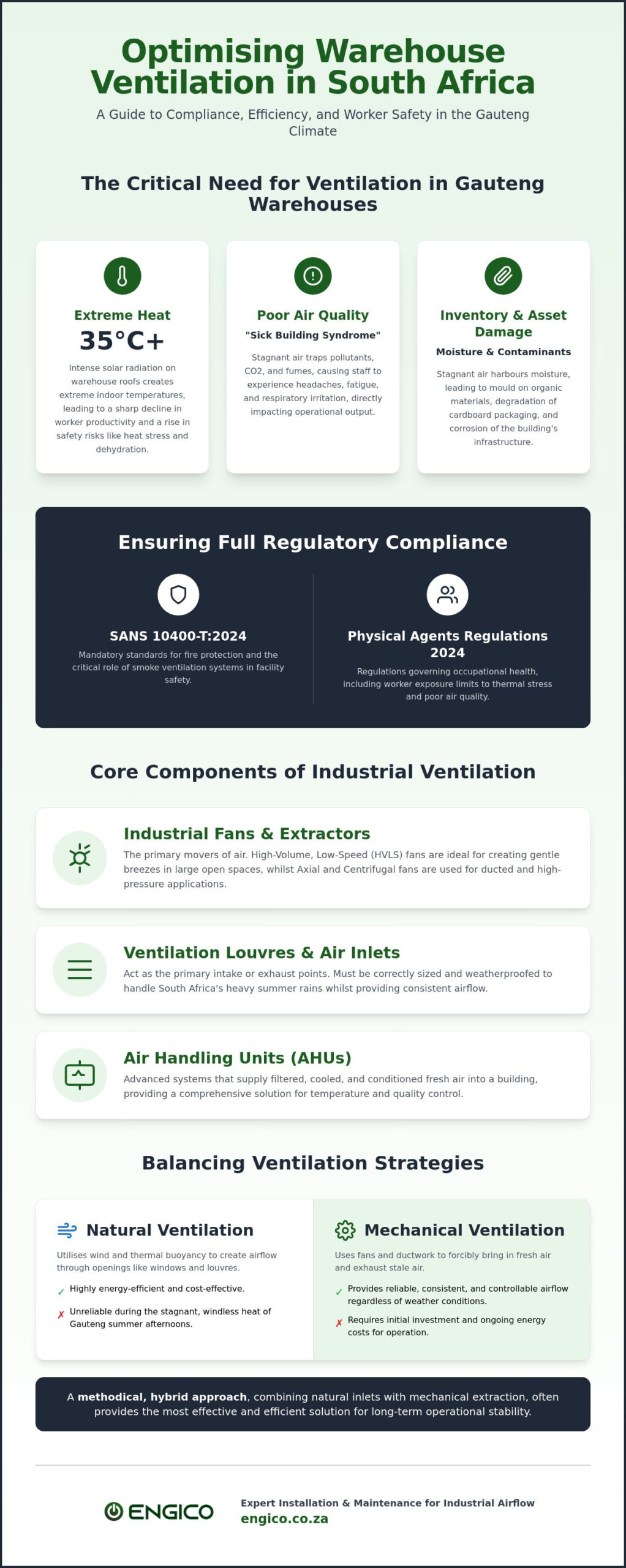
Industrial ventilation is defined as the methodical and controlled exchange of indoor air with fresh outdoor air to maintain a healthy and stable environment. In the context of warehouse ventilation systems South Africa, this process is essential for managing the significant thermal loads generated by the local climate. Without a planned approach to airflow, large industrial spaces quickly become heat traps. This stagnation often leads to “Sick Building Syndrome” amongst staff. When air isn’t circulated effectively, employees may experience headaches, fatigue, and respiratory irritation, which directly impacts your operational output. A well-engineered system follows established architectural ventilation principles to ensure that fresh air is distributed evenly, preventing the buildup of pollutants and CO2.
Combating the Gauteng Highveld Heat
The Gauteng Highveld presents a unique set of challenges for facility managers, particularly during the peak summer months. Intense solar radiation on metal-clad roofs creates a radiant heat load that can make the interior significantly hotter than the outside air. For manual labourers, these conditions aren’t just uncomfortable; they’re a serious health risk. Heat stress leads to dehydration and exhaustion, which significantly slows down picking and packing cycles. Whilst standard wall-mounted split air conditioners or multi-split systems are excellent for office blocks, they’re often impractical for cooling the massive open volumes of a warehouse. Mechanical ventilation offers a far more cost-effective way to flush out this trapped heat, ensuring the floor level remains tenable for workers.
Protecting Inventory and Infrastructure
Effective warehouse ventilation systems South Africa also serve a critical role in asset protection. Stagnant air pockets often harbour moisture, which leads to mould growth on organic materials and the structural degradation of cardboard packaging. If your facility utilises internal combustion forklifts, the accumulation of exhaust fumes can reach dangerous levels without a constant supply of fresh air. Consistent airflow prevents these contaminants from settling. It also stops the “oven effect” that occurs when heat becomes trapped under the roof pitch. By maintaining a stable internal temperature and humidity level, you’re not only protecting your inventory but also the long-term integrity of the building’s infrastructure.
Types of Industrial Ventilation Solutions: Fans, Louvres, and AHUs
Selecting the right hardware for warehouse ventilation systems South Africa requires a balanced understanding of supply and exhaust dynamics. Supply systems focus on introducing filtered, cool air into the building, whilst exhaust systems actively remove heat, smoke, and contaminants. For South African facilities, materials must be selected for their durability against high UV exposure and pervasive dust. Roof-mounted units are typically preferred for large-scale heat extraction. Wall-mounted configurations offer easier access for regular maintenance and are ideal for targeted airflow in specific zones or picking stations.
Industrial Ventilation Fans and Extractors
High-volume, low-speed (HVLS) fans are a staple in large open-plan warehouses. They move massive amounts of air at low speeds, creating a gentle breeze that significantly improves worker comfort without excessive noise. When ducting is involved, the choice between axial and centrifugal fans becomes critical. Axial fans are best for moving large volumes of air across short distances. Centrifugal fans provide the pressure necessary to push air through complex duct networks. Regular servicing ensures these fans remain balanced and efficient, preventing vibration and premature motor failure.
Ventilation Louvres and Air Inlets
Louvres act as the primary intake or exhaust points for both passive and mechanical warehouse ventilation systems South Africa. Fixed louvres provide constant airflow, whereas adjustable versions allow for greater control based on seasonal changes. In South Africa, weatherproofing is a priority. Louvres must be designed to prevent heavy summer rain from entering the facility whilst maintaining maximum air exchange. For food-grade or pharmaceutical warehouses, integrating bird and insect screens is a non-negotiable requirement for health and safety compliance.
Air Handling Units (AHUs) for Complex Environments
For facilities requiring more than just basic air movement, Air Handling Units (AHUs) provide a comprehensive solution. These units are essential in manufacturing zones where particulate filtration is necessary to maintain air quality. AHUs allow for precise regulation of temperature and humidity, which is vital for sensitive stock. Understanding the full capabilities of industrial air handling units South Africa facilities rely on can help you make a more informed decision about the right configuration for your environment. If your facility requires this level of technical integration, exploring professional industrial ventilation fans and louvres alongside a custom AHU setup is a sensible step toward long-term efficiency. These systems ensure that even the most demanding industrial environments remain stable and productive throughout the year.
Natural vs Mechanical Ventilation: Finding the Balance for Gauteng Warehouses
The choice between natural and mechanical ventilation often centres on the balance between initial capital expenditure and long-term operational reliability. Natural systems are attractive because they don’t consume electricity, yet they’re entirely dependent on external weather conditions. In the Gauteng Highveld, wind speeds frequently drop to near zero during the hottest hours of the afternoon. When this happens, natural airflow ceases, and the warehouse effectively becomes a heat trap. A methodical hybrid approach, which combines passive louvres with powered mechanical extractors, offers a resilient solution. This strategy allows for energy-efficient operation during cooler periods whilst providing the robust extraction needed during peak thermal loads.
The Limits of Natural Airflow
Deep-plan warehouses face significant challenges with natural airflow. Air rarely reaches the centre of a large floor plate through perimeter doors or windows alone. Whilst the “stack effect” is a proven principle of physics, it only functions if the building design includes high-level roof vents to allow hot, buoyant air to escape. Relying on ground-level openings also presents practical problems. Open roller-shutter doors create security vulnerabilities and allow dust, pests, and rain to enter the facility. These factors often make natural ventilation an unreliable primary source for managing warehouse ventilation systems South Africa. When assessing the cost-benefit ratio, it’s vital to look beyond the utility bill. The hidden costs of natural ventilation often manifest as decreased staff efficiency and higher rates of inventory spoilage due to stagnant heat pockets.
The Case for Mechanical Extraction
Mechanical warehouse ventilation systems South Africa offer the precision and consistency that industrial operations require. These systems maintain a programmed air change rate, ensuring the internal environment remains stable regardless of outdoor conditions. Powered fans can be strategically positioned to target high-heat zones, such as battery charging stations or packaging lines where machinery heat accumulates. For facilities operating 24/7, the predictable performance of a mechanical system is essential for maintaining worker productivity. Modern mechanical systems can be integrated with sensors to only run at full capacity when specific temperature thresholds are met, which significantly reduces long-term energy consumption. These systems are also designed to integrate with fire safety protocols. In the event of an emergency, they can be configured to switch to a dedicated smoke extraction mode, which is a critical requirement for regulatory compliance. By investing in mechanical solutions, you’re choosing a “safe pair of hands” that guarantees air quality and safety throughout the year.
Compliance and SANS 10400-T: Planning Your Ventilation Strategy
Compliance with South African National Standards (SANS) isn’t just a legal hurdle; it’s the foundation of a safe industrial operation. For those managing warehouse ventilation systems South Africa, the primary document of concern is SANS 10400-T:2024 (Edition 5). This standard dictates the deemed-to-satisfy requirements for fire protection, specifically focusing on how smoke and heat are managed during an emergency. Adhering to these regulations ensures your building isn’t just a functional workspace, but a stable environment that protects both life and property. A methodical approach to planning ensures that your daily ventilation needs don’t conflict with these critical safety mandates.
Key Regulatory Requirements
The law is clear regarding the scale of your facility. Any building exceeding 500 square metres requires a dedicated smoke ventilation system. In standard industrial buildings, the general rule is that ventilation openings should equal approximately 3% of the total floor area. However, these requirements shift based on your occupancy classification. When you’re designing warehouse ventilation systems South Africa, you must account for the specific risk profiles of moderate risk industrial buildings (D2) and low risk industrial buildings (D3). If your warehouse includes an automatic sprinkler system, the requirements for fusible link ventilators may be adjusted. It’s essential to understand these nuances to avoid costly retrofitting later. For multi-storey commercial developments and larger facilities, understanding how ducted cooling for large scale projects integrates with your compliance strategy is equally important for long-term planning.
Fire and Smoke Safety Integration
Smoke is often more dangerous than the fire itself. Effective integration involves the use of smoke curtains and automated extraction systems that trigger the moment an alarm sounds. These components work in tandem to keep escape routes clear and prevent the rapid spread of toxic fumes. A “Rational Design” by a professional engineer is often the most efficient way to achieve compliance. This process allows for a custom solution that meets the safety objectives of SANS 10400-T without over-engineering the system. Beyond the initial installation, keeping detailed maintenance logs is a legal necessity. For peace of mind and full regulatory adherence, you should schedule a regular service of air conditioners and ventilation hardware with a qualified specialist. This methodical oversight ensures that all fusible links, dampers, and extractors remain in perfect working order, ready to perform when they are needed most.
Expert Installation and Maintenance: The Engico Air Conditioning Approach to Industrial Airflow
Professional installation is the final, critical link in the chain for warehouse ventilation systems South Africa. Even the most advanced hardware will underperform if it isn’t integrated correctly into the building’s specific structural framework. A methodical approach to installation ensures that manufacturer warranties remain valid and that every component operates at its intended design capacity. Engico Air Conditioning manages this transition through a disciplined process that begins with a comprehensive site survey to evaluate thermal loads and structural integrity. Following this, the technical team oversees the installation of industrial fans, louvres, or air handling units, concluding with a rigorous commissioning phase to verify that airflow targets are met.
BMS Integration for Energy Efficiency
A significant trend for 2026 is the shift toward smarter, automated controls through Building Management System (BMS) integration. By utilising precision sensors, your facility can automate ventilation based on real-time air quality and temperature readings. This approach removes the need for manual intervention and prevents the energy waste associated with running high-powered fans during cooler periods or low-occupancy hours. Optimising fan speeds and coordinating louver positions through a centralised system can lead to substantial reductions in long-term operational costs. Remote monitoring also allows facility managers to oversee the warehouse climate from a central office, ensuring that environmental standards are maintained across multiple zones without fuss. To further enhance the professional atmosphere of these administrative spaces, elevenpast offers a range of contemporary lamps and furnishings suited for modern offices.
Maintenance and Long-Term Reliability
Sustaining the efficiency of your ventilation infrastructure requires a custom maintenance programme designed for the unique South African environment. Dust and airborne particulates can quickly accumulate on fan blades and filters, leading to increased friction and a noticeable performance drop-off. Scheduled cleaning and motor inspections are essential to prevent premature equipment failure. Additionally, the physical condition of roof-mounted vents and louvres must be checked regularly, particularly after the heavy hail storms that frequently affect the Gauteng region. These methodical inspections ensure that your system remains a “safe pair of hands” for your inventory and your workforce. To begin optimising your facility’s environment, you can organise a professional site survey for your Gauteng warehouse with Engico Air Conditioning. This proactive step ensures your operations remain compliant, efficient, and prepared for the extreme summer heat.
Optimising Your Industrial Environment for 2026
Establishing a high-performance environment isn’t just about moving air; it’s about the methodical integration of compliance, efficiency, and modern technology. By balancing mechanical extraction with passive louvres and ensuring your facility meets the latest SANS 10400-T:2024 standards, you protect both your workforce and your bottom line. Integrating warehouse ventilation systems South Africa with automated Building Management Systems ensures your facility remains responsive to the extreme seasonal shifts of the Highveld.
Engico Air Conditioning offers the technical expertise needed to manage these complex requirements. With local Gauteng-based installation and repair teams, we provide a stable partnership for long-term facility management. Our specialists understand the nuances of specialised BMS integration and maintain a deep knowledge of current fire safety regulations to keep your site fully compliant. You can Request a Professional Ventilation Assessment from Engico Air Conditioning to identify exactly how to optimise your airflow and reduce operational costs. Taking these steps today ensures your warehouse remains a productive, safe, and efficient hub for years to come.
Frequently Asked Questions
Do I legally need a ventilation system for my warehouse in South Africa?
Yes, you are legally required to provide adequate ventilation under the Occupational Health and Safety Act, 1993, and the Environmental Regulations for Workplaces. SANS 10400-O specifically outlines the requirements for lighting and ventilation to ensure a healthy working environment. Failure to comply can lead to legal penalties and increased liability in the event of worker health issues or workplace accidents.
What is the difference between natural and mechanical smoke ventilation?
Natural smoke ventilation relies on the buoyancy of hot smoke to escape through roof-mounted vents or louvres without powered assistance. Mechanical smoke ventilation utilises powered extraction fans to actively pull smoke out of the building. Whilst natural systems are cost-effective, mechanical solutions provide more predictable performance and are often required in complex or deep-plan buildings where natural buoyancy is insufficient to clear escape routes.
How often should industrial ventilation fans be serviced?
Industrial ventilation fans should generally be serviced every six to twelve months to ensure operational efficiency. In environments with high dust levels or chemical fumes, more frequent inspections may be necessary. Regular maintenance involves cleaning blades, checking motor bearings, and ensuring electrical connections are secure, which prevents unexpected downtime and extends the lifespan of your warehouse ventilation systems South Africa.
Can a ventilation system help reduce my warehouse electricity bill?
A well-designed ventilation system can significantly reduce electricity costs by lowering the overall thermal load on the building. By flushing out hot air before it accumulates, you reduce the need for high-powered air conditioning in office zones. Integrating sensors and building management systems allows fans to run only when necessary, which prevents the unnecessary energy consumption associated with constant, unmanaged operation.
This emphasis on efficiency and smart control is a global standard; those interested in high-performance climate solutions can learn more about Melbourne Hydronic Heating and their approach to energy-efficient system design.
What is SANS 10400-T and how does it affect my ventilation choice?
SANS 10400-T is the South African National Standard for fire protection. It dictates the requirements for smoke ventilation, particularly in buildings exceeding 500 square metres. This standard affects your choice by mandating specific vent sizes, fusible link triggers, and the placement of extractors to ensure that smoke is effectively managed during a fire, allowing for safe evacuation and firefighting access.
Is it better to have roof-mounted or wall-mounted exhaust fans?
Roof-mounted fans are typically more effective for general heat extraction because they take advantage of the natural tendency of hot air to rise. Wall-mounted fans are often better suited for creating cross-flow ventilation or providing targeted airflow in specific work zones. The best choice depends on your building’s height, the specific heat sources present, and whether you require general cooling or localised fume extraction.
How do I calculate the required air change rate for my warehouse?
To calculate the required air change rate, you must first determine the total volume of your warehouse by multiplying the floor area by the average ceiling height. You then multiply this volume by the recommended number of air changes per hour (ACH) for your specific industry. For standard warehouses, this is typically between 6 and 10 ACH, though high-heat or manufacturing environments may require significantly more to maintain air quality.
Does Engico Air Conditioning provide ventilation solutions for factories and manufacturing plants?
Engico Air Conditioning provides a comprehensive range of warehouse ventilation systems South Africa that are equally suited for factories and manufacturing plants. Our offerings include high-performance industrial fans, louvres, and advanced industrial air handling units South Africa manufacturers and facility managers rely on to manage complex industrial climates. We also specialise in integrating these systems with building management controls to ensure precise temperature and particulate management in demanding manufacturing environments. For larger commercial and industrial developments, our expertise extends to ducted cooling for large scale projects in Gauteng, providing engineered climate solutions across diverse and complex floor plans.
Recent Comments