
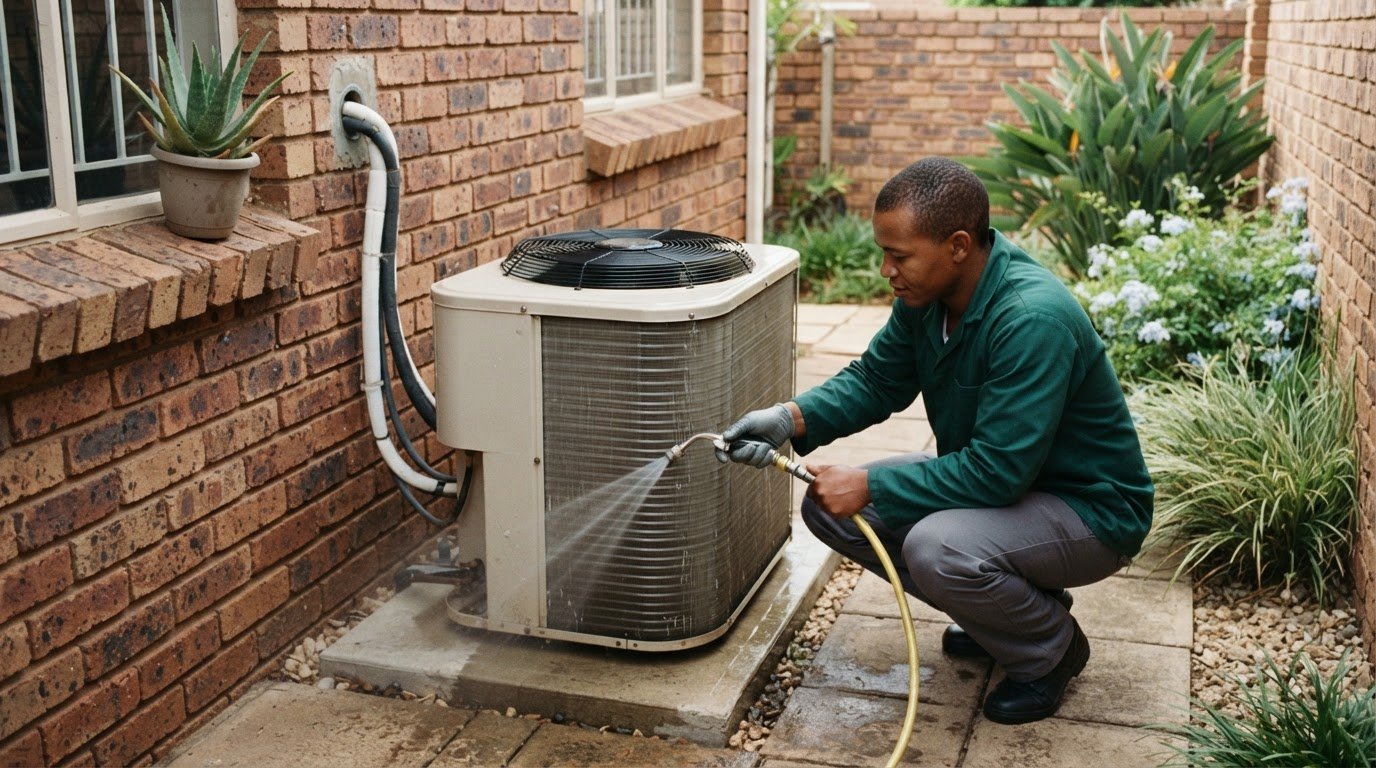
Schedule professional air-conditioning maintenance at least once a year. An aircon maintenance checklist for homeowners helps you keep track of routine checks, while an annual professional inspection can assess components and identify problems that may not be obvious during everyday use.
An air conditioner can seem fine as long as it still cools the room. But changes in thermostat behaviour, frequent starts and stops, or reduced airflow may signal a problem. A regular maintenance plan helps you track what to monitor and when to arrange a professional check.
This guide explains how to plan annual maintenance in South Africa and what to check between appointments. You’ll learn to check thermostat operation, recognise short cycling and understand why evaporator and condenser coils need attention. A practical checklist helps you organise care through the year and respond promptly to warning signs.
Key Takeaways
- Use a pre-season professional inspection to identify maintenance needs before your air conditioner is working hard.
- Compare thermostat settings with the system’s behaviour, and note repeated starts and stops as possible signs of a fault.
- Keep evaporator and condenser coils on your inspection list, since dirt can affect cooling and make the system run longer.
- Plan routine checks through the year, and use professional air-conditioner maintenance when an issue needs a closer assessment.
HVAC preventative maintenance checklist and importance
Arrange a professional air-conditioner inspection once a year, before the main cooling season. A pre-season appointment gives a technician time to assess the system before regular use increases. If your system provides heating, arrange an inspection before the heating season too. Add both appointments to your calendar alongside routine filter checks.
- Book an annual professional tune-up. Ask for the air conditioner’s controls, operation and shut-off cycles to be checked, so faults can be identified before peak use.
- Include refrigerant checks. A technician should assess refrigerant levels and inspect for leaks, because incorrect levels can reduce cooling efficiency and equipment life.
- Request an electrical inspection. Secure connections, clean terminals and intact insulation help identify faults that may affect safe operation.
- Check airflow and moving components. The technician can assess blower performance and lubricate moving parts where needed, helping airflow and reducing motor friction.
- Clear the outdoor unit’s surroundings. Keep at least 2 feet of clearance on all sides, and remove leaves or debris that restrict airflow.
You can replace filters, check thermostat settings and clear loose debris around the outdoor unit. Leave refrigerant handling, electrical connections and complex internal repairs to a professional, as these require specialist assessment—trade maintenance specialists such as Synergy Trades Group note that qualified technicians are essential for safely managing electrical wiring and system faults. Follow the equipment’s care instructions for any warranty conditions.
To support efficiency and manage electricity use in South Africa, inspect filters every 1-3 months, depending on usage, filter type and indoor air quality. Dirty filters can increase energy use by up to 15%, so clean or replace them when needed.
During humid or dusty periods, check filters more frequently for accumulated dust and watch for reduced airflow. After windy weather or storms, clear debris around the outdoor unit, while keeping the required 2 feet of clearance.
Checking thermostat operation and short cycling
Set the thermostat to cooling mode and choose a temperature below the room temperature. Once the system starts, check whether the indoor air cools and airflow remains steady. Compare the thermostat setting with the system’s response. If the display is blank or shows a low-battery warning, replace the batteries as directed in the thermostat instructions.
Repeated starts and stops after only a short run are known as short cycling. First, check whether the thermostat is near direct sunlight or another heat source, as this can distort its reading. Then inspect the filter for blockage and check that the set temperature is appropriate. A thermostat fault, clogged filter or compressor issue can also cause short cycling.
- Check the thermostat’s mode and setting. Confirm it is set to cooling, rather than fan-only, and that the target temperature matches your needs.
- Observe a full cooling cycle. Note whether the system starts, runs and shuts off normally, rather than repeatedly switching on and off.
- Check airflow at the vents. Weak airflow, especially alongside short cycling, can point to a restriction or equipment problem.
- Keep lubrication separate from thermostat care. Don’t lubricate thermostat components; a technician can assess and lubricate applicable motor parts during maintenance.
A professional check can include thermostat calibration, airflow testing and checks that the controls and equipment start, operate and shut off properly. These tests help distinguish a thermostat setting issue from a fault elsewhere in the system.
Arrange professional servicing if you notice warm air, uneven cooling, leaks, unusual sounds or odours, frequent cycling, or unexpectedly rising electricity bills. A burning smell or visible ice also needs prompt attention. Turn the system off if ice builds up or airflow drops.
If basic thermostat and filter checks don’t resolve repeated cycling, arrange air-conditioner servicing and repairs for a professional assessment.
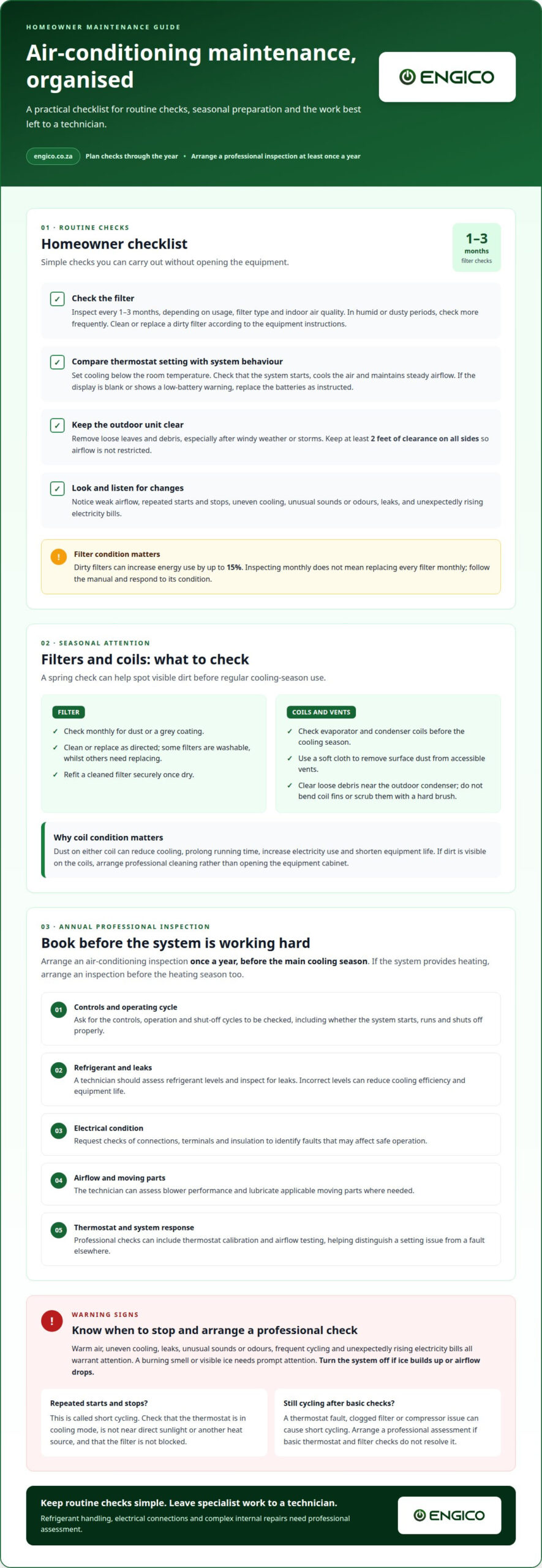
Evaporator and condenser coil cleaning
Inspect the filters monthly and check both coils before the cooling season. Dust on the evaporator or condenser coils can reduce cooling, prolong running time, increase electricity use and shorten equipment life. A spring check helps you spot visible dirt before regular seasonal use.
- Check the filter monthly. Dust or a grey coating signals that the filter needs cleaning or replacement.
- Clean or replace it as instructed. Follow the equipment manual, since some filters are washable whilst others need replacing.
- Look at accessible vents. Remove surface dust with a soft cloth to avoid pushing debris further into the system.
- Arrange coil cleaning if dirt is visible. A technician can clean the evaporator and condenser without homeowners opening the equipment cabinet.
For routine cleaning, follow the manual’s instructions to remove and clean a filter, then refit it securely once dry. Don’t dismantle the air conditioner or reach inside to clean the coils; these components need appropriate access and handling.
Check the outdoor condenser for leaves, dust and other debris that could obstruct airflow. Clear loose material around the unit, but don’t bend the coil fins or scrub them with a hard brush. These delicate surfaces can be damaged, affecting airflow and heat transfer.
Inspecting a filter monthly doesn’t mean replacing every filter monthly. The right interval depends on the filter type, its condition, household use and indoor air quality. If it looks clogged before your next scheduled check, clean or replace it according to the manufacturer’s instructions.
Ducts may need attention if dust buildup, visible debris or airflow problems point to an issue. Dusting vents is different from cleaning the system’s internal duct passages. If dirt is beyond the accessible vent area, or airflow stays weak after filter care, ask a professional to assess the ducts and coils. This helps focus cleaning on the components that need it.
Planning an HVAC maintenance schedule
Plan your aircon maintenance checklist for homeowners around when your home needs cooling, rather than waiting for a fault. Schedule a professional cooling-system check in spring, before warmer weather brings regular use. ENERGY STAR recommends checking cooling systems in spring and heating systems in autumn. In South Africa, use seasonal changes as reminders and adjust the schedule to your household’s heating and cooling needs.
Keep the aircon maintenance checklist for homeowners with your household calendar, and set a recurring reminder every 3-6 months. Use each reminder to review the system’s condition, note changes in comfort, and check whether any maintenance is due. This review complements, rather than replaces, an annual professional inspection.
- Before the cooling season: book the annual professional inspection and note any cooling issues from the previous season.
- Every 3-6 months: review your maintenance notes and check for new changes in operation or comfort.
- Monthly: inspect the air filter and clean or replace it when its condition requires attention.
- After storms or windy weather: check the outdoor unit for debris that could obstruct airflow.
ENERGY STAR also suggests using spring and autumn time changes as seasonal check-up reminders. Use seasonal changes as calendar reminders to plan maintenance around your home’s cooling and heating needs. A recurring entry makes it easier to plan around your home’s usage.
Keep a simple service record with the appointment date, your observations and the work completed. For example, note whether cooling felt uneven or the system made an unusual sound. These details help you track patterns and give a technician useful context at the next inspection.
Arrange professional air-conditioner maintenance for the annual check and for any issues that arise between visits. A planned schedule helps you address maintenance before peak cooling demand, rather than waiting for comfort to decline.
Schedule professional air-conditioner maintenance to organise your next service around your home’s seasonal use.
Engico Air Conditioning: Wall-mounted Split Air Conditioners
Engico Air Conditioning provides maintenance, servicing and repairs for air conditioners, including wall-mounted split systems. Arrange maintenance for an annual inspection or when cooling performance changes despite routine filter care.
Engico also supplies multi-split, ceiling cassette and ducted air-conditioning systems. The right system depends on your home’s layout and cooling requirements. Regular professional care helps assess its operation and maintenance needs.
If you notice recurring short cycling, unusual noises, leaks or reduced airflow, professional servicing can help identify the cause. Repairs are appropriate when an inspection identifies a fault that needs attention. Use your maintenance notes to explain changes in comfort and system behaviour clearly.
Contact Engico Air Conditioning to arrange air-conditioner maintenance, servicing or repairs for your home.
Make your next maintenance step part of the plan
Make your aircon maintenance checklist for homeowners part of your household routine, rather than a note you revisit only when cooling changes. Keep it with other home-care reminders, and record who will handle routine observations and arrange professional attention. A clear plan makes maintenance easier to keep up through changing seasons.
Use your next service appointment to discuss recurring comfort concerns and your system’s maintenance needs. Engico Air Conditioning provides air-conditioner maintenance, servicing and repairs, helping homeowners address routine care and faults identified during an assessment.
For a professional next step, contact Engico Air Conditioning about air-conditioner maintenance. A considered maintenance routine can help you care for your system with confidence and keep home comfort in view.
Frequently Asked Questions
How Often Should You Schedule Professional AC Maintenance?
Arrange professional air-conditioner maintenance at least once a year, preferably before the main cooling season. If your system provides heating, schedule a separate check before the heating season. Engico Air Conditioning provides maintenance for homeowners in Pretoria, Johannesburg, Centurion, Menlyn, Farie Glen, Silverton, Waterkloof, Gezina, Doringkloof, Midrand, Waterfall, Sunninghill, Woodmead, Sandton, Randburg, Roodepoort, Fourways, Hyde Park and Gauteng Province.
Quick Answer: What Does an AC Maintenance Checklist Include?
A practical checklist covers the filter, thermostat response, airflow, visible debris around the outdoor unit, and signs of leaks or unusual noise. A professional check should also assess the refrigerant, electrical connections, system controls and coils. Record changes, such as a room taking longer to cool, so the technician can investigate specific symptoms rather than rely on a general description.
What is Air Conditioning Maintenance?
Air-conditioning maintenance involves inspecting and caring for a system so it can operate as intended. It may include checking components, cleaning or replacing parts, and repairing faults identified during servicing. For example, a technician investigating weak cooling may assess airflow and equipment operation. The work depends on the system’s condition and any symptoms noticed between scheduled visits.
What should homeowners include in a routine aircon maintenance checklist?
Record the date of each filter check, note thermostat readings, and list unusual sounds, odours or leaks. Check whether each room cools evenly, and note when performance changes. For example, recording that one bedroom stays warm while the lounge cools describes a specific pattern. Keep service records together so previous observations and completed work are easy to review.
How often should aircon filters be cleaned or replaced?
Inspect filters monthly, then clean or replace them every 1 to 3 months, depending on usage, filter type and indoor air quality. A dusty home or frequent system use can make a filter dirty sooner. Follow the equipment manual to confirm whether the filter is washable or replaceable, and allow a washed filter to dry fully before refitting it.
How can homeowners clean an aircon outdoor condenser unit?
Switch off the air conditioner before clearing loose leaves and debris from around the outdoor unit. Keep plants and stored items away, and consult the equipment manual before cleaning accessible surfaces. Avoid opening the cabinet or bending the condenser fins. If dirt is stuck to the coils, or cooling remains weak after you clear debris, arrange a professional inspection instead of attempting internal cleaning.
Recent Comments