
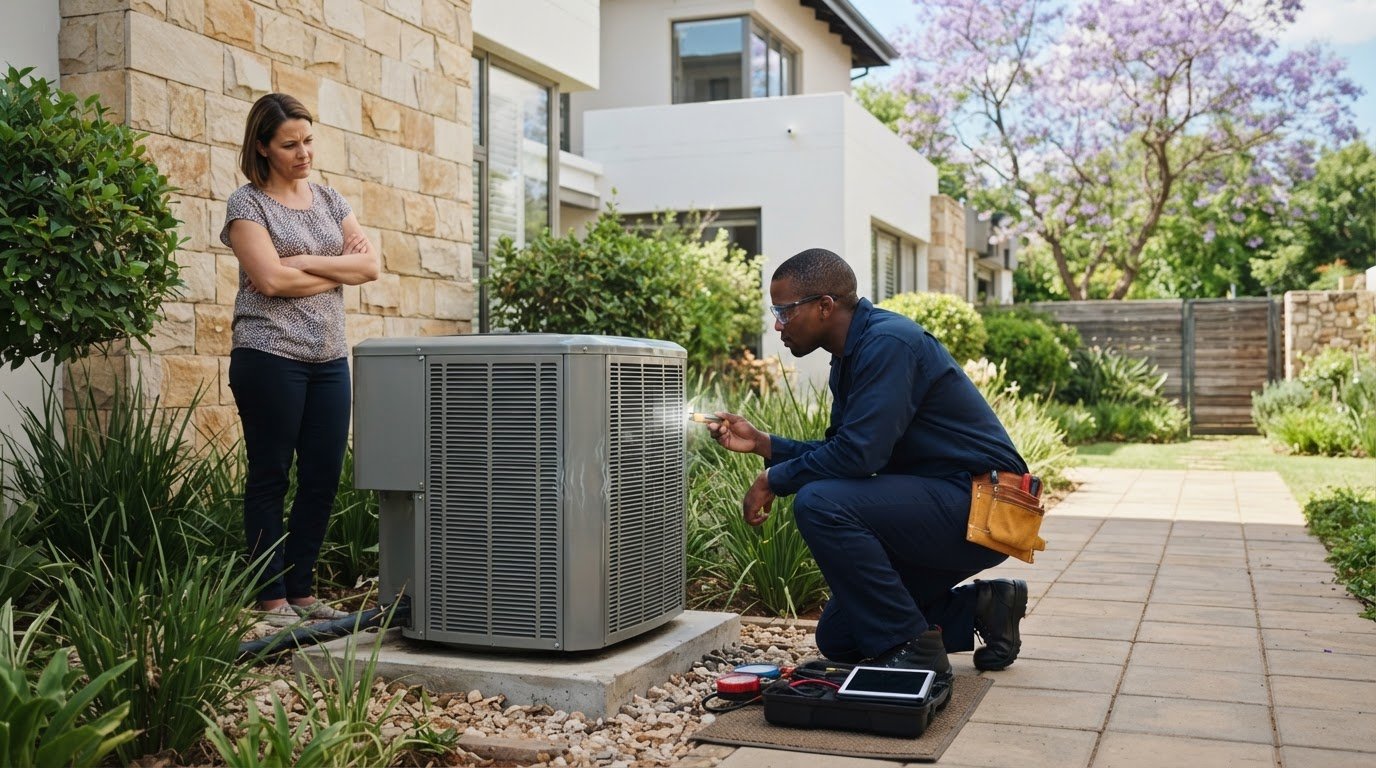
A new or worsening air-conditioner noise deserves attention, but not every sound signals a serious fault. A gentle hum and steady airflow are normal; banging, grinding, screeching or persistent hissing may point to loose parts, motor trouble or pressure problems. The right air conditioner making a loud noise fix depends on the sound and its cause.
It’s understandable to wonder whether you can keep the system running or try a simple check first. This article explains which sounds may come from dust, blocked airflow or loose components, and when to switch the unit off and arrange a professional diagnosis.
You’ll learn what to listen for, what you can safely inspect without opening the equipment, and why electrical and refrigerant problems need professional attention. These clues can help you judge when a noise is minor and when to act promptly.
Key Takeaways
- A gentle hum and steady airflow are usually normal, but new, persistent or worsening sounds deserve attention.
- Dirty filters, blocked vents or debris can contribute to whistling and rattling; inspect accessible areas without opening the outdoor unit.
- Switch off the system if it bangs or clanks loudly, and seek professional diagnosis for grinding, screeching or ongoing clicking.
- Hissing can point to a refrigerant or pressure problem, so stop the system and leave the diagnosis and repair to a professional.
Why is my Air Conditioning (AC) Unit making loud noises?
A sound’s location, pattern and timing can help distinguish restricted airflow from a component fault. To fix an air conditioner making a loud noise, start with safe checks, then clearly describe any sound that persists or worsens.
Filter, vent and outdoor-unit checks
These checks inspect accessible airflow paths and visible external surfaces. They matter because clogged filters, blocked vents, loose panels or debris can create avoidable noise. Switch off the system before checking. Clean reusable filters or replace disposable ones according to the unit’s instructions. Filters generally need replacement every 1-3 months, depending on usage. Clear leaves around the outdoor unit and look for visible loose screws or panels. Never open its casing or handle electrical components.
Meanings of loud air-conditioner noises
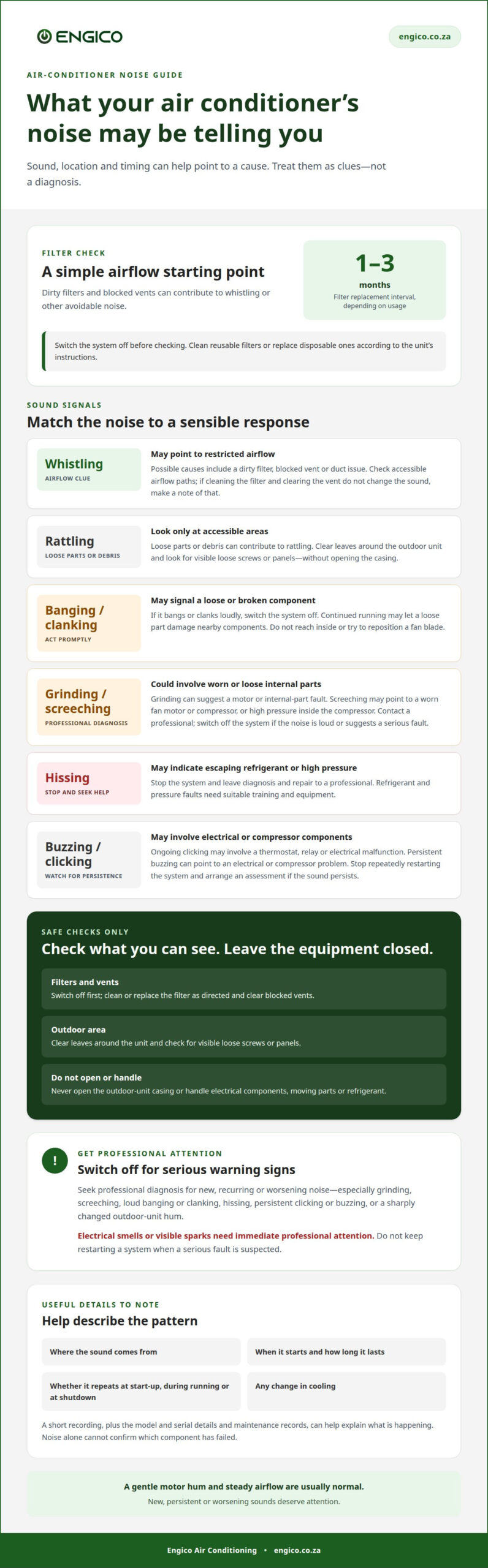
Different loud sounds can point to different faults, so note each sound and where it comes from. Banging may signal a loose or broken component; rattling can come from loose parts or debris. Buzzing may indicate an electrical or compressor problem, while grinding can suggest worn or loose internal parts. Hissing may mean refrigerant is escaping or pressure is high. These clues help assess urgency, but sound alone cannot identify the failed component.
A gentle motor hum and steady airflow are normal. Air through vents may be concerning if it sounds unusually forceful or high-pitched. Whistling often points to restricted airflow, such as a dirty filter, blocked vent or duct issue. If cleaning the filter and clearing the vent do not change the sound, note that. The right air conditioner making a loud noise fix depends on whether the sound continues, returns or worsens.
A noisy air conditioner may be covered if the fault meets its written warranty terms. Noise alone does not establish whether a repair qualifies. Before requesting service, note the date, sound, duration, operating mode and any change in cooling. Record the model and serial details, and keep maintenance records. A short recording can show whether the noise repeats during start-up, steady running or shutdown.
Why professional diagnosis and repairs are recommended
A loud sound can come from several components, and the same noise may have different causes. Professional diagnosis can identify the fault before continued operation causes further damage.
Reasons to seek professional diagnosis
Diagnosis means tracing the sound to its source rather than replacing parts based on guesswork. A trained technician can assess the motor, fan, compressor, electrical components and refrigerant system with suitable tools. These checks matter because electrical and refrigerant faults can be dangerous to handle without proper training and equipment. Experienced teams such as AK Air Conditioning & Electrical Quality Service routinely stress that thorough diagnostic testing is essential to prevent costly secondary damage to motors and compressors.
Motor or refrigerant repairs should be handled professionally. Ongoing clicking may involve a thermostat, relay or electrical malfunction, while a louder outdoor hum can point to motor, capacitor or electrical trouble. A precise diagnosis distinguishes these faults from vibrating parts and guides the appropriate repair.
When to contact an air-conditioning professional
Contact a professional for grinding or screeching, or any noise that is new, recurring or worsening. Switch the system off at the thermostat or circuit breaker if the sound is loud or suggests a serious fault. Banging or clanking also warrants prompt attention, as a loose or broken component may cause further damage while the unit runs.
Electrical smells or visible sparks call for immediate professional attention. If clicking or buzzing persists, or the outdoor unit’s hum changes sharply, stop repeatedly restarting the system and arrange an assessment. Describe where the noise comes from, when it occurs and whether cooling has changed. These details can help narrow the diagnosis.
In South Africa, look for documented training relevant to air-conditioning systems and the work required. For suspected electrical or refrigerant faults, ask what specialist competence applies to the repair, and request a clear explanation of the findings and proposed work. Avoid anyone who recommends opening sealed components or handling refrigerant without suitable training and equipment.
For a recurring noise that needs assessment, professional air-conditioner repairs provide a practical next step.
Banging or clanking and loose or broken components
A bang or clank often signals a loose, detached or unbalanced part inside the air conditioner. In an outdoor unit, a loose or broken fan or compressor component can create a heavy impact. Inside, a blower fan or fan blade may have shifted. The sound can recur as the unit runs, and continued operation may allow a loose part to damage nearby components.
A loud noise near the compressor can point to a loose or damaged component. Grinding often indicates a motor or another internal part is loose or worn; screeching can point to a worn fan motor or compressor, or high pressure inside the compressor. These sounds cannot identify the exact failed part on their own. Note whether the noise begins at start-up, continues during cooling or changes as the fan runs.
Turn the air conditioner off if it bangs or clanks loudly. Stopping operation can help limit further damage while the fault is assessed. Don’t remove panels, reach inside the unit or try to reposition a fan blade. Those actions expose you to moving parts and electrical components. From a safe position, note whether the sound comes from the indoor or outdoor unit and whether cooling has changed.
What does a loud compressor or grinding noise indicate, and is it safe to keep running? It may indicate a loose or broken component, a motor fault, worn internal parts or, with screeching, a compressor problem or high internal pressure. If the noise is loud or grinding, switch the system off rather than continuing to run it. A technician can inspect the compressor, fan and motor to locate the cause. Note the sound and when it occurs to help explain the fault during diagnosis.
Hissing and possible refrigerant leaks or high internal pressure
Hissing from an indoor air conditioner may indicate refrigerant escaping or air leaking from damaged ductwork. A refrigerant leak can reduce cooling efficiency and pose health risks. Hissing may also signal high internal pressure, so don’t treat it as routine airflow or ignore it simply because the unit still runs. Note whether it starts during cooling and whether the system’s performance changes.
These possible causes call for different checks. A specialist can assess the refrigerant circuit for a leak and inspect ductwork for an escape point. High pressure involves internal system conditions that cannot be diagnosed by listening alone. Repeatedly restarting the air conditioner will not identify or resolve the fault, and continued operation may leave the underlying problem unaddressed.
Shut the system down if hissing suggests a refrigerant leak or high pressure, then contact a certified specialist. Don’t open the unit, handle refrigerant or attempt a repair yourself. Refrigerant and electrical problems can be dangerous without suitable tools and training. Keep people away from the equipment if you notice an electrical smell or visible sparks, and seek professional help immediately.
- Record whether the hiss comes from the indoor unit or ductwork.
- Note when the sound begins and whether cooling has weakened.
- Describe any recent change in the noise when arranging professional diagnosis.
Those observations can help a specialist distinguish a refrigerant issue from escaping air or internal pressure. Avoid covering vents or tightening internal parts to silence the sound; these actions don’t diagnose its source. For suspected refrigerant faults, arrange professional air-conditioner repairs rather than attempting a DIY fix.
Engico Air Conditioning: Wall-mounted Split Air Conditioners
Engico Air Conditioning provides air-conditioner repairs and servicing when a new, persistent or worsening noise needs professional attention. A technician can investigate the sound and assess whether the system needs repair or maintenance.
For a wall-mounted split system, contact Engico when banging, grinding or hissing continues after safe, basic checks, or when you have switched the unit off because the noise seems serious. Engico also supplies multi-split, ceiling cassette and ducted air-conditioning systems for different installation requirements.
Describe where the noise comes from, when it occurs and whether cooling has changed. Contact Engico Air Conditioning to discuss your air-conditioning repair or service needs.
Choose a clear next step for your air conditioner
A repair decision is easier when you treat a persistent noise as useful information, not something to mask. Describe the sound and the conditions in which it occurs, then use a professional assessment to determine the appropriate next step. The right air conditioner making a loud noise fix depends on the fault, so don’t replace components based on sound alone.
Engico Air Conditioning offers repairs and servicing, as well as wall-mounted split, multi-split and ceiling cassette air conditioners. Whether you need help with a noisy existing unit or are considering an air-conditioning system, Engico can discuss suitable options with you.
Contact Engico Air Conditioning to discuss your air-conditioning needs and take a considered next step.
Frequently Asked Questions
When should I worry about AC noise?
Take notice when a sound is new, repeated or getting louder, especially if cooling changes at the same time. A brief click as the system starts or stops is often normal; continuous clicking is different. For example, a new grinding sound that continues during operation warrants attention. Note when it happens and whether it comes from the indoor or outdoor unit.
How can I safely troubleshoot a loud air conditioner before calling a technician?
Start with checks that don’t require opening the equipment: inspect the filter, clear leaves around the outdoor unit and make sure vents aren’t blocked. Listen for whether the noise occurs at start-up, during steady cooling or at shutdown. If it’s loud or suggests a serious fault, switch the system off instead of restarting it. Don’t reach inside either unit or touch electrical components.
How do I fix a rattling air conditioner by tightening panels or securing loose parts?
Only check for an obviously loose external screw or panel with the system switched off, and don’t remove a cover to reach it. If a panel is damaged, difficult to access or still rattles after a safe check, leave it alone. A rattle from inside may involve a fan blade or another component, which needs professional inspection rather than an attempt to secure parts by hand.
Can a dirty air filter or blocked outdoor unit make an air conditioner noisy, and how do I clean it?
Yes. A dirty filter can restrict airflow and contribute to whistling, while debris around the outdoor unit can cause rattling. Clean a reusable filter as its instructions direct, or replace a disposable one; replacement is generally needed every 1-3 months, depending on usage. Clear leaves from around the outdoor unit, but don’t open its casing or spray water into electrical areas.
What causes an air conditioner fan to make a loud noise, and when should it be repaired?
Fan noise may come from a loose or unbalanced blade, debris, dry bearings, friction between parts or a worn belt. A repeating chirp or clank is no reason to reach into the fan assembly. Arrange professional repair if the sound persists, grows harsher or affects airflow. A technician can inspect the fan and related components rather than relying on sound alone.
When should I switch off a noisy air conditioner and call a qualified HVAC technician?
Switch the system off if it bangs or clanks loudly, grinds, screeches or develops a sudden, severe noise. Use the thermostat or circuit breaker if needed, and don’t restart the system to test it. An electrical smell or visible sparks also calls for immediate professional attention. Tell the technician which unit made the sound, when it began and whether cooling changed. Homeowners in Central Florida facing persistent equipment noise can consult licensed contractors such as happyhomehvacsolutions.com for professional diagnostics.
Recent Comments