
The cost to replace a central air conditioner in South Africa depends on more than the new unit. System capacity, the property layout and the work needed to connect the replacement all affect the price. A central-system installation can take two or three days and may require two or more installers. Equipment is only one part of the project, so labour can contribute substantially to the total.
Before committing to a major replacement, it is reasonable to want a clear breakdown. This article explains the main cost factors, what professional installation involves and what to review in a quote.
The condition of existing ducts and the choice of system can change the amount of work required. Understanding these factors helps you assess the replacement scope and make an informed decision.
Key Takeaways
- Replacement costs depend on the equipment and the work needed to fit it into the property, not just the price of the unit.
- Assess the existing ductwork, system layout and required changes to understand what may affect the project scope.
- Use focused questions about equipment, installation tasks and quote inclusions to compare proposals clearly.
- Learn what a professional installation involves and which air-conditioning system types may suit different spaces.
1. Air-conditioning installation costs in South Africa
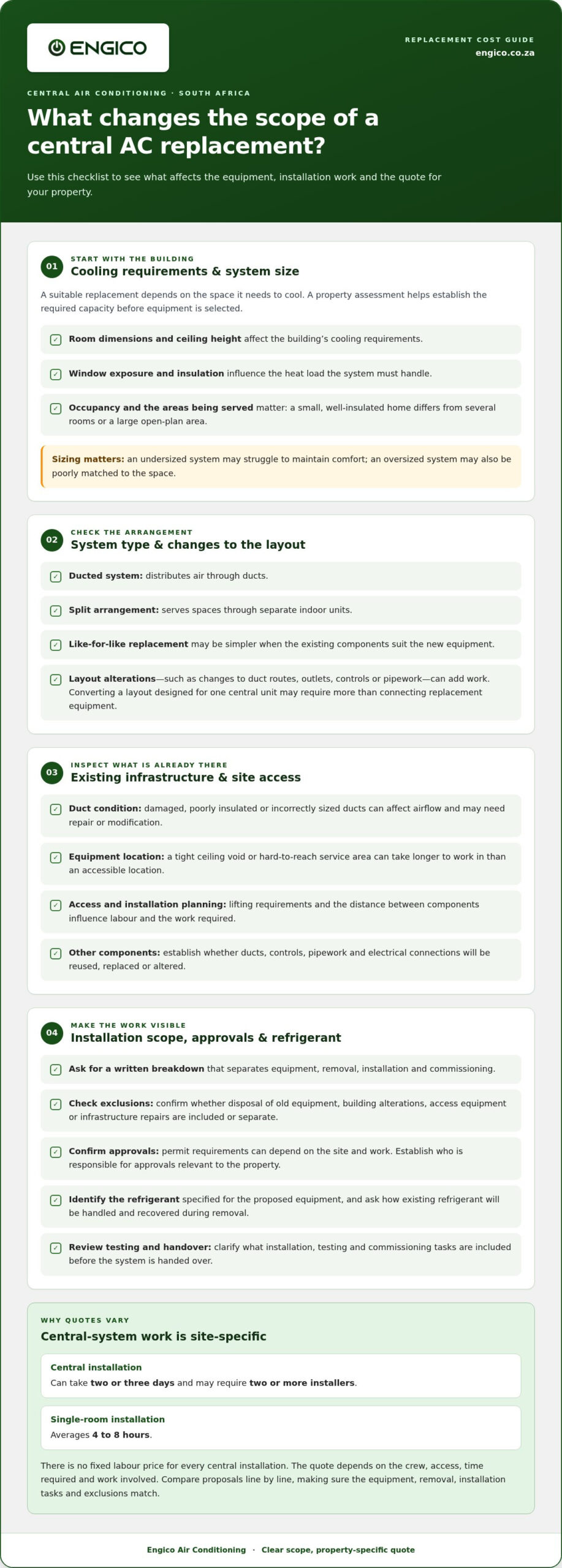
The cost to replace a central air conditioner in South Africa depends on the equipment and the work needed to integrate it with the property. Replacing a central system is more involved than replacing a single-room unit: installation can take two or three days and may require two or more installers. Labour, access, capacity and changes to existing components all affect the scope. The price is specific to the property and work required, and is provided in a quote.
For South African properties, permit requirements can depend on the site and the work involved. Replacing equipment may have different approval considerations from work that alters the building fabric. Before work begins, establish who is responsible for any approvals relevant to the property and include that responsibility in the installation scope.
Central air conditioners use the refrigerant specified for the selected equipment. Refrigerant type can affect which replacement equipment is suitable, so ask for the proposed system’s refrigerant to be identified in the quote. Phase-out and compliance requirements depend on the refrigerant and applicable rules. Handling and recovery should also be addressed in the replacement plan.
There is no single labour figure that applies to every central installation. Labour depends on the time, crew size, access and work required to connect the equipment and commission the system. A central installation can take two or three days, whereas a single-room installation averages 4 to 8 hours. The difference illustrates why a central-system labour quote needs to reflect the actual site and installation scope.
Energy savings vary by property and how the system is used. Compare the replacement system’s efficiency with the old unit, then consider operating hours, thermostat settings, maintenance and electricity tariffs. A correctly sized, efficient system may reduce electricity use, but results depend on these factors and household behaviour. Ask for an estimate based on the building’s requirements rather than relying on a general percentage. This makes it easier to assess expected running costs alongside the replacement work.
There is no fixed labour price for central air conditioner installation or replacement in South Africa. The cost is quoted for the specific job and depends on the crew, access, time required and work involved.
2. Factors affecting AC replacement costs
Start with the building’s cooling requirements. A system for a small, well-insulated home differs from one serving several rooms or a large open-plan area. Room dimensions, ceiling height, window exposure, insulation and occupancy affect the heat load. An undersized replacement may struggle to maintain comfort, while an oversized system may also be poorly matched to the space. A property assessment helps determine suitable capacity before equipment is selected.
System type also affects the scope. A ducted system distributes air through ducts, while a split arrangement serves spaces through separate indoor units. Replacing like for like may be simpler if the existing components suit the new equipment. Changes to duct routes, outlets, controls or pipework can add work. For example, converting a layout designed for one central unit may require alterations beyond connecting replacement equipment.
Check the existing infrastructure carefully. Damaged, poorly insulated or incorrectly sized ducts can affect airflow and may need repair or modification. Equipment location matters too: a unit in a tight ceiling void or hard-to-reach service area can take longer to remove and install than accessible equipment. Site access, lifting requirements and the distance between components also influence labour and installation planning. When system overhauls intersect with broader building upgrades, infrastructure and maintenance specialists such as House of Maverick can help manage wider site requirements.
For a project-specific figure, consider system capacity, equipment type, the condition of existing components, access and any necessary alterations. The exact price for your case is provided in a quote. Ask for the proposed work to distinguish equipment, removal, installation and additional building changes. This makes the scope easier to understand before approving the project. A review of central air-conditioning options can help you consider which system arrangement suits your property and its existing infrastructure.
3. Questions to ask an installation contractor
Ask for a written scope that separates equipment, removal, installation and commissioning. Then check whether each quote covers the same work. One proposal, for example, may include adjustments to existing ductwork while another excludes them. A clear breakdown helps explain price differences and reduces the risk of unexpected charges during the project.
- What system capacity and configuration does the property need, and what site conditions informed that recommendation?
- Which existing components will be reused, replaced or altered, such as ducts, controls, pipework and electrical connections?
- Does the quoted scope include removing and disposing of the old equipment, or is that separate work?
- What installation, testing and commissioning tasks are included before the system is handed over?
- Are building alterations, access equipment or repairs to existing infrastructure excluded from the quoted work?
- What refrigerant does the proposed equipment use, and how will existing refrigerant be handled during removal?
Compare quotes line by line, not just by the total. Match the equipment type and capacity, removal work, materials, installation tasks and exclusions. If one quote includes duct repairs and another does not, ask for the difference to be explained in writing. This helps identify possible extra work before you accept a proposal.
Ask how airflow will be assessed and how the installer will confirm that the system operates as intended. Request a clear explanation of any assumptions about existing ducts or controls. If the quote assumes the current ductwork is usable, for example, establish how additional repairs would be handled if inspection reveals damage.
Ask what information you will receive at handover, including system details and maintenance guidance. Keep the written quote and agreed scope together. These records help you confirm that the completed work matches the proposal and clarify which tasks were included.
4. What professional installation includes
A professional replacement starts with a site assessment. The installer reviews the existing unit, equipment locations, ductwork and controls. A central system with restricted ceiling access, for example, may need a different removal plan. This inspection helps define the work before equipment is disconnected or moved.
The installation plan should then identify the replacement system and how it will connect to the property. The installer considers the existing layout, required capacity and condition of components intended for reuse. Ducts, pipework, drains, controls and electrical connections each need attention. If a component is unsuitable, the necessary alteration should be explained before work proceeds.
- Prepare the work area: protect access routes and identify where equipment will be removed and installed.
- Remove the old unit: disconnect it and handle its components and refrigerant as part of the planned work.
- Position replacement equipment: place indoor and outdoor units to suit the system layout and service access.
- Connect system components: join the relevant pipework, drains, ducts, controls and electrical connections.
- Test operation: check system functions and airflow, then address installation issues before handover.
Commissioning involves more than switching the system on. The installer should test that controls respond, air reaches the intended outlets and the equipment operates as designed. With a ducted system, airflow problems in particular rooms can indicate issues with ducts or connections. Clear handover guidance helps occupants understand the controls and routine care.
Before work starts, compare the agreed scope with the completed installation. Check that listed tasks, such as removing the old equipment or modifying ductwork, were addressed. Ask for the system details and operating instructions at handover. To discuss the requirements for your property, arrange an air-conditioning installation conversation.
Engico Air Conditioning: Wall-mounted Split Air Conditioners
Engico Air Conditioning supplies and installs air-conditioning systems suited to different properties and replacement needs. Options include ducted systems for spaces needing a centralised approach, as well as wall-mounted split, multi-split and ceiling cassette systems. The right configuration depends on the building layout, cooling requirements and existing infrastructure.
If your current central system needs replacing, the next step is to discuss the property and the work involved. This helps clarify which system type may suit the space and what the installation scope needs to address. For a smaller or differently arranged area, another system type may be more appropriate than a ducted solution.
Contact Engico Air Conditioning to discuss your replacement requirements.
Plan your next step with confidence
Before arranging a replacement assessment, gather details about how the current system serves the property. Note which areas feel uncomfortable, when the issue occurs and whether rooms or ceilings have been altered. Keep the existing unit’s model information and any installation documents together. These details can make the discussion more specific and help shape a practical plan for the building.
The cost to replace a central air conditioner in South Africa is best considered alongside how the system needs to perform in your home or premises. A suitable replacement should reflect the space, its use and the existing setup, not just the equipment. Understand the proposed approach before proceeding so your decision is grounded in the property’s needs.
For a considered discussion about your air-conditioning requirements, contact Engico Air Conditioning. A clear next step can help you move towards a replacement that suits your space.
Frequently Asked Questions
Why is replacing an AC unit so expensive?
Replacement involves more than buying a unit: the equipment must suit the building and connect correctly to existing systems. A central system may require removal, access to plant areas, ductwork, controls and commissioning. Adapting existing ducts, for example, involves different work from replacing a compatible component. The scope and labour contribute to the overall cost.
What is the average cost to replace a central air conditioner in South Africa?
There is no single average figure that reliably describes every central-system replacement in South Africa. The total depends on system capacity, equipment selection, the condition of existing components and installation work. The price for an individual project is provided in a quote and depends on the property and scope. Compare what each quote includes rather than relying on an average alone.
How much do central air conditioner units cost in South Africa by capacity and brand?
Unit pricing varies with capacity, system type and selected brand, but a unit-only figure does not show the full replacement cost. Capacity should match the building’s cooling requirements, which are affected by room size, insulation, windows and occupancy. Compare equipment specifications and suitability for the property instead of choosing the largest unit or comparing brands without considering installation scope.
How much does it cost to replace a central air conditioner in Johannesburg and surrounding Gauteng areas?
There is no single area-wide replacement price for Johannesburg or surrounding Gauteng locations. The property’s system, equipment choice, access and required alterations shape the quote. The city or suburb alone doesn’t establish the work involved. For an accurate comparison, consider how each proposal addresses the site, existing components and installation requirements across areas such as Pretoria, Centurion, Midrand and Sandton.
What warranty, maintenance, and installer qualifications should buyers check in South Africa?
Review the written equipment warranty terms, including which components and conditions they cover, and keep the documents for future reference. Ask what routine maintenance the system needs and what records are provided after installation. Engico Air Conditioning’s installation process includes an on-site visit, design and quote, project management, installation and training, providing a clear sequence from assessment to handover.
Recent Comments