
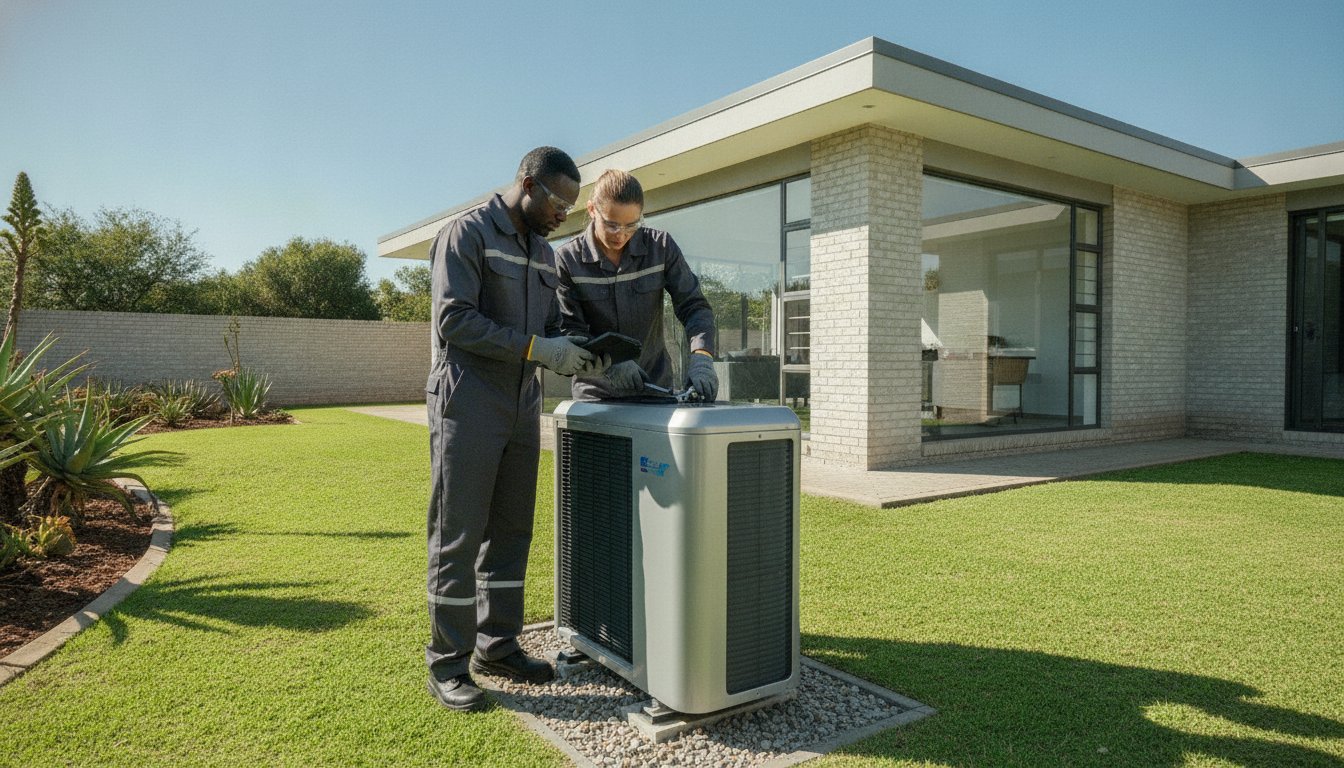
In 2026, choosing residential hvac systems South Africa is no longer just about luxury; it is a critical step towards energy independence and household resilience. Most homeowners in Gauteng are understandably weary of the cycle: escalating electricity tariffs, the constant threat of load shedding surges, and the abrasive Highveld dust that settles into every mechanical component. It’s frustrating to invest in your home’s comfort only to have the national grid or the environment undermine your system’s performance.
This guide will show you how to select, optimise, and maintain a system specifically tailored to our unique climate and energy constraints. You will discover how the latest SANS 10400-XA efficiency standards and the transition to eco-friendly refrigerants like R-290 are reshaping the market. We will also provide a methodical overview of how to integrate your cooling and heating with solar or backup power, ensuring your home remains a sanctuary of thermal comfort regardless of external pressures.
Key Takeaways
- Match system capacity and type to your home’s architecture to ensure year-round thermal comfort and operational efficiency.
- Explore how modern inverter technology and solar integration provide a reliable buffer against load shedding and rising energy tariffs.
- Discover why professional installation of residential hvac systems South Africa is mandatory for compliance with the latest SANS 10400-XA standards.
- Implement a methodical maintenance strategy to protect sensitive components from the abrasive Highveld dust and frequent power surges.
The South African Climate Challenge: Why Modern HVAC is Essential
The term heating, ventilation, and air conditioning (HVAC) encompasses the integrated technologies that manage our indoor living conditions. Within the South African residential context, these systems have evolved from perceived luxury items into essential infrastructure. This transition is largely due to the changing nature of home life. As remote work becomes standard, a stable indoor environment is now a prerequisite for productivity and health. Modern residential hvac systems South Africa provide the stability required to manage our increasingly volatile weather patterns.
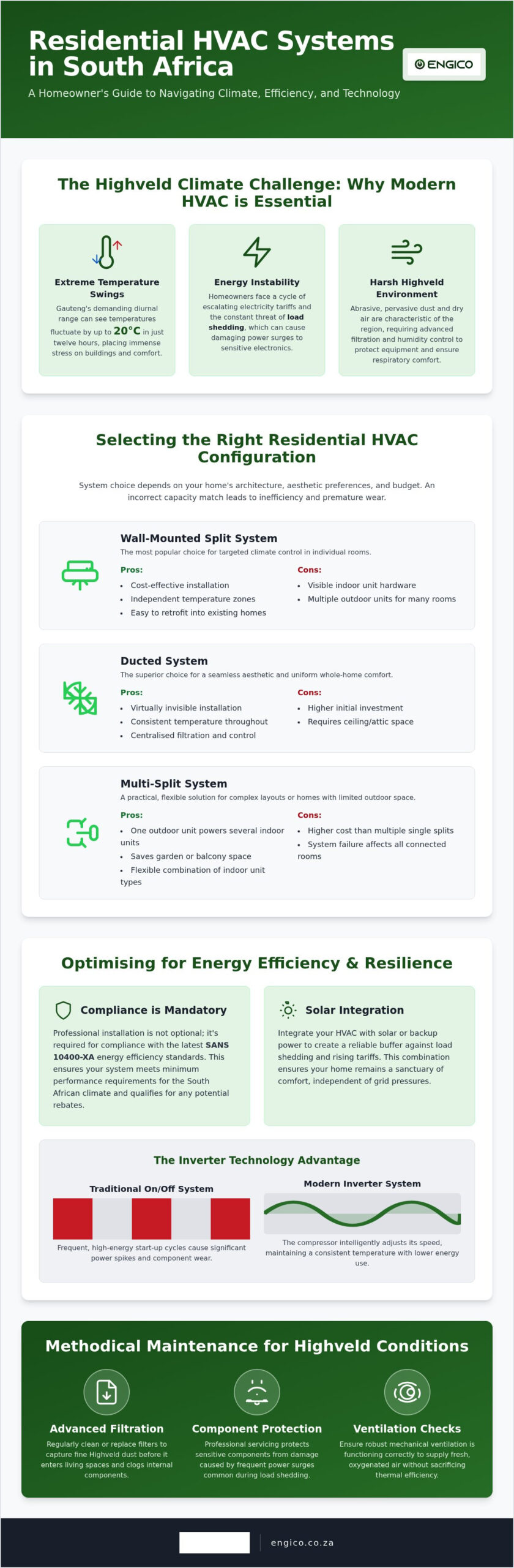
Gauteng homeowners deal with a particularly demanding diurnal temperature range. It’s common for temperatures to fluctuate by 20 degrees within twelve hours. This volatility places immense stress on building structures and human comfort. Additionally, as urban density increases in Johannesburg and Pretoria, indoor air quality has become a primary concern. Modern systems act as a first line of defence, filtering out pollutants and allergens that are prevalent amongst our growing metropolitan areas.
Understanding the Highveld Environment
The Highveld climate is characterised by intense summer radiation and biting, sub-zero winter nights. Whilst many residents focus on cooling, the heating capability of a heat-pump based system is equally vital for Pretoria’s cold snaps. Traditional cooling methods often struggle with the region’s characteristic dry air and pervasive dust. High-performance HVAC units are designed to handle these conditions through:
- Advanced multi-stage filtration that captures fine Highveld dust before it enters the living space.
- Dehumidification and humidification controls that maintain skin and respiratory comfort.
- Robust mechanical ventilation that ensures a constant supply of oxygenated air without sacrificing thermal efficiency.
Ventilation remains the most frequently misunderstood element of residential climate control. A well-designed system ensures that air doesn’t just recirculate but is actively refreshed to maintain a healthy indoor microbiome.
HVAC as a Property Value Asset
Strategic property upgrades in suburbs like Hyde Park and Waterkloof now prioritise energy-efficient climate solutions. Buyers increasingly view a high-quality HVAC installation as a marker of a well-maintained, future-proofed home. There has also been a significant aesthetic shift in the industry. We have moved away from bulky, utilitarian hardware towards sleek, integrated designs that disappear into the ceiling or walls.
Climate Control Value is the precise intersection where year-round thermal comfort meets high-efficiency operation and long-term energy savings.
Selecting the Right Residential HVAC Configuration
Selecting the correct hardware for residential hvac systems South Africa requires a methodical evaluation of your home’s floor plan and volume. It isn’t merely about square meterage. South African architectural trends, particularly in newer estates, often feature high ceilings and expansive glass facades that significantly increase the thermal load. Matching system capacity, measured in British Thermal Units (BTUs), to these specific volumes is essential. A unit that’s undersized will run constantly, failing to reach the set temperature and inflating your energy bills. Conversely, an oversized unit will cycle on and off too frequently, leading to premature wear.
Compliance with South African energy efficiency standards ensures that whichever configuration you choose, the hardware meets the minimum performance requirements for our climate. This is particularly relevant when deciding between localised cooling and centralised climate control.
Wall-Mounted Split vs. Ducted Systems
Wall-mounted split units remain the most popular choice for targeted climate control in individual rooms. They’re cost-effective to install and allow for independent temperature management in bedrooms. However, for those seeking a seamless aesthetic in luxury homes, ducted systems are the superior choice. These systems are virtually invisible, with only discreet grilles visible in the ceiling. While ducted systems require a higher initial investment, they offer a uniform temperature throughout the property. Maintenance for split units involves cleaning filters and coils on each indoor unit, whereas ducted systems require specialised duct cleaning alongside standard mechanical servicing.
Multi-Split Solutions for Complex Layouts
In townhouses or clusters where outdoor space is limited, a multi-split system is often the most practical configuration. This setup allows one outdoor condenser to power several indoor units, preserving your garden or balcony space. It’s a flexible middle ground for homeowners who need multiple zones but lack the roof void required for a full ducted installation. For a deeper look at individual unit benefits, you can read our Guide to Wall Mounted Split Air Conditioners.
For open-plan living areas, ceiling cassettes provide a balanced airflow that wall units often struggle to achieve in large spaces. If you’re building a double-storey home in estates like Waterfall or Midrand, a combination of configurations is often best. Placing a ducted system on the upper floor and split units or cassettes on the ground floor provides a bespoke solution that manages the heat rising through the house. If you’re unsure which layout suits your property, our team can provide a professional assessment of your home’s specific requirements.
Optimising Energy Efficiency: Inverters, Solar, and Load Shedding
Inverter technology has shifted from a premium feature to a non-negotiable standard for residential hvac systems South Africa. Unlike traditional fixed-speed compressors that cycle abruptly between zero and full power, inverters vary their speed to match the cooling or heating demand exactly. This precision aligns with the latest national regulations on energy efficiency, which mandate stricter performance criteria for domestic appliances. While there is an initial ‘Inverter Premium’ regarding the purchase price, the long-term savings on the Highveld are substantial. The reduced energy draw typically offsets the upfront cost within a few years of operation, especially as electricity tariffs continue to climb.
Protecting these sophisticated residential hvac systems South Africa is a primary concern given the frequency of grid instability. Frequent load shedding and subsequent power surges can damage sensitive PCB boards and control modules in modern units. We recommend a methodical approach to electrical protection, including:
- Dedicated surge protection devices installed at the distribution board.
- Voltage stabilisers to maintain a consistent current flow during fluctuations.
- High-quality isolators to prevent damage during the moment of power restoration.
These components act as a reliable buffer, ensuring that voltage spikes don’t compromise the lifespan of your system’s compressor. Taking these precautions ensures your hardware remains a long-term asset rather than a liability during times of power restoration.
Solar-Ready HVAC Systems
Integrating air conditioning with a residential solar PV system requires careful technical selection to avoid overloading your backup power. Standard units often have a high inrush current that can trip home inverters or deplete battery storage rapidly during start-up. We focus on units with low-startup-current profiles, often called ‘soft starters’, which allow the system to ramp up its power consumption gradually. This synergy is particularly effective because peak cooling demand often coincides with maximum solar production during the day. For those interested in how these efficiency principles scale to larger environments, our guide to Smart HVAC Control for Commercial Buildings offers deeper technical insights.
Smart Controls and Building Management
Modern residential systems now incorporate features previously reserved for high-end industrial applications. Homeowners can use mobile apps to pre-cool their living spaces whilst commuting from the Sandton office, ensuring a comfortable environment upon arrival. Zoning strategies further refine this by only directing air to occupied rooms, such as bedrooms at night or home offices during the day. Smart thermostats and Building Management System (BMS) integration can reduce energy waste by up to 30% through precise monitoring and environmental sensors. Automated scheduling prevents peak-tariff energy spikes by ensuring the system does not run during the most expensive billing windows.
Professional Installation and Maintenance in Gauteng
Professional installation of residential hvac systems South Africa is a technical undertaking that extends far beyond mounting hardware on a wall. In the Gauteng region, where seasonal dust storms and high pollen counts are prevalent, the quality of the initial setup determines the system’s entire lifecycle. Attempting a DIY installation or hiring unqualified labour often leads to catastrophic failures. Most manufacturers explicitly state that warranties are void unless a certified professional performs the work. Beyond financial risk, incorrect wiring or poorly secured condensers pose significant fire hazards and structural risks to your property.
Adherence to SANS regulations is mandatory for all new installations. These standards govern everything from the safe handling of refrigerant gases to the specific placement of outdoor units to ensure fire safety and noise compliance. For instance, outdoor units must be positioned to allow for maximum heat rejection whilst remaining accessible for the methodical cleaning required in our dusty environment. “Highveld-proofing” involves elevating the condenser to prevent ground-level debris from clogging the cooling fins, which is a common cause of compressor failure in Sandton and Pretoria homes.
The Installation Checklist
A professional installation follows a disciplined sequence to ensure long-term reliability. We follow a methodical process that prioritises precision at every stage:
- Step 1: Site survey and heat load calculation. We don’t guess based on room size alone. We account for window orientation, insulation levels, and ceiling heights to determine the exact BTU requirement for your specific space.
- Step 2: Electrical capacity check. Our team verifies that your distribution board can handle the increased load, ensuring the circuit breakers are correctly rated for the unit’s startup current.
- Step 3: Strategic placement. Units are positioned for optimal airflow to eliminate “hot spots” whilst ensuring noise levels don’t affect your neighbours or your rest.
Maintenance for Longevity
The harsh Gauteng climate makes seasonal servicing essential. We recommend a comprehensive check in both Spring and Autumn to prepare the system for the extreme temperature shifts of the Highveld. Neglecting this leads to a gradual decline in efficiency and a sharp increase in monthly running costs. Simple tasks, such as cleaning or replacing filters, can save thousands in repair costs by preventing the motor from overworking. For comprehensive care, you should consider our HVAC Maintenance Services for Gauteng Properties.
Ensuring your system is compliant and efficient requires a “safe pair of hands” with local expertise. If your current unit is underperforming or you are planning a new installation, contact our Gauteng specialists for a professional consultation.
The Engico Advantage: Bespoke Residential Solutions
Engico Air Conditioning approaches residential hvac systems South Africa with a commitment to technical precision. We serve the specific needs of Gauteng homeowners, from the leafy suburbs of Sandton and Hyde Park to the expanding estates in Pretoria East. Our methodology involves a thorough assessment of each property’s unique thermal profile. Whether your home requires simple wall-mounted split units for individual bedrooms or complex ducted air conditioning systems for open-plan living, we provide a tailored configuration. We don’t believe in one-size-fits-all hardware; instead, we match the equipment to your lifestyle and the architectural demands of your residence.
Our expertise extends to the integration of Building Management Systems (BMS) for the modern smart home. This allows for a level of control that was previously only available in industrial settings. We ensure your climate control works in harmony with your other home automation, maximising efficiency whilst maintaining the aesthetic integrity of your interior design. Beyond the initial installation, our scheduled maintenance programmes are designed to provide long-term peace of mind. By proactively managing the service requirements of your system, we protect your investment against the premature wear caused by the Highveld’s dry, dusty conditions.
Why Homeowners Choose Engico
Homeowners in Pretoria and Johannesburg view us as a “safe pair of hands” for their climate control investments. Our team brings deep local expertise to every project, understanding exactly how the Highveld climate affects mechanical components. We offer a comprehensive service that covers every stage of the system’s life. This includes:
- Professional supply and installation of energy-efficient units.
- Methodical maintenance and servicing to ensure peak performance.
- Expert repairs using high-quality components and modern standards.
This end-to-end capability ensures that our clients never have to manage multiple providers for their cooling and heating needs. We prioritise transparency, ensuring you understand the long-term value of every recommendation we make.
Getting Started with Your Climate Upgrade
Every successful installation begins with a detailed consultation. We identify your specific needs, such as noise sensitivity in nurseries or the need for solar-compatible hardware in homes with backup power. Our commitment to energy-efficient, modern standards ensures that your upgrade contributes to a lower carbon footprint and reduced monthly utility bills. We focus on delivering a system that integrates seamlessly with your daily routines. To begin your journey towards a more comfortable and efficient home, you can contact Engico Air Conditioning for a professional residential consultation. We will guide you through the selection process with technical expertise and professional reliability.
Future-Proofing Your Home Comfort
The evolution of residential hvac systems South Africa represents a significant shift towards sustainable, resilient home infrastructure. By selecting high-efficiency inverter technology and ensuring your configuration matches your property’s specific thermal load, you create a sanctuary that is immune to external temperature extremes. It’s clear that a methodical approach to maintenance remains the most effective way to protect this investment from the abrasive Highveld environment and the stresses of the national grid.
As specialists in Gauteng Province climate solutions, we provide the technical expertise required to navigate these choices with confidence. Our team offers comprehensive maintenance and repair services designed to ensure your system operates at peak performance for years to come. We are committed to delivering long-term value through precision engineering and professional reliability, acting as a dependable partner for your residential projects.
Book a Residential HVAC Assessment with Engico Today to ensure your home remains perfectly tempered throughout 2026 and beyond. We look forward to partnering with you to achieve the ideal balance of year-round comfort and energy efficiency.
Frequently Asked Questions
Which is the best air conditioning system for a home in South Africa?
The best system depends entirely on your property’s layout and your specific comfort requirements. For targeted cooling in individual bedrooms, wall-mounted split units are the most cost-effective choice. If you require a seamless aesthetic for a larger home in Sandton or Pretoria, ducted residential hvac systems South Africa offer a superior, centralised solution. Multi-split systems provide a flexible middle ground, allowing one outdoor condenser to power several indoor units whilst saving garden space.
How much does it cost to run an air conditioner in Gauteng?
Running costs are primarily determined by the unit’s energy efficiency rating and your local electricity tariff. Modern inverter units are significantly cheaper to operate than older fixed-speed models because they don’t consume peak power during startup. Residents in Johannesburg often find that maintaining a consistent temperature is more economical than frequently turning the unit on and off. Investing in a system with a high seasonal energy efficiency ratio ensures long-term utility savings.
Can I run my HVAC system on a solar and battery backup?
You can certainly run your HVAC system on solar and battery backup provided the hardware is compatible with your inverter’s capacity. We recommend selecting units with low startup currents to prevent tripping your backup system when the compressor engages. Because peak cooling demand in Gauteng often aligns with maximum solar production during the day, this integration is an excellent strategy for reducing your reliance on the national grid whilst maintaining comfort.
How often should I service my residential air conditioner?
We recommend servicing your residential air conditioner at least twice a year, ideally during Spring and Autumn. The Highveld’s dry, dusty climate causes debris to accumulate quickly in the outdoor condenser and indoor filters. Regular maintenance prevents this buildup from forcing the motor to overwork, which reduces energy efficiency and risks premature mechanical failure. Methodical cleaning ensures your system remains reliable during the extreme temperature shifts common in Pretoria and Johannesburg.
What is the difference between an inverter and a non-inverter AC?
The primary difference lies in how the compressor manages power. A non-inverter unit operates at either full power or zero, leading to frequent, noisy cycles and temperature fluctuations. In contrast, an inverter unit varies its motor speed to maintain a precise temperature consistently. This technology is essential for residential hvac systems South Africa in 2026, as it reduces energy consumption and places less strain on your home’s electrical infrastructure during load shedding.
Does a ducted HVAC system require significant renovations?
A ducted installation requires sufficient ceiling void space to accommodate the internal unit and the insulated ducting. While these systems are easiest to install during the construction phase of homes in Waterfall or Midrand, retrofitting is possible in many existing properties. The process involves installing discreet ceiling grilles and a centralised controller. If your roof space is limited, a multi-split system or ceiling cassettes may offer a less invasive alternative for whole-home climate control.
How do I protect my air conditioner from power surges during load shedding?
Protecting your system requires a combination of high-quality isolators and dedicated surge protection devices at your distribution board. Power surges often occur when the grid is restored after load shedding, which can damage the sensitive electronic control boards in modern HVAC units. We also recommend using voltage stabilisers for high-value installations. These components act as a methodical buffer, ensuring that electrical fluctuations don’t compromise the lifespan or performance of your cooling equipment.
Is it better to leave the aircon on all day or turn it on only when needed?
It’s generally more efficient to leave an inverter system running at a steady, moderate temperature throughout the day. This approach prevents the room from heat-soaking, which forces the unit to work at maximum capacity to cool the space down quickly. Modern systems are designed to idle at very low power once the set point is reached. Using smart scheduling to adjust the temperature whilst you’re away from home further optimises energy usage without sacrificing comfort.
Recent Comments