
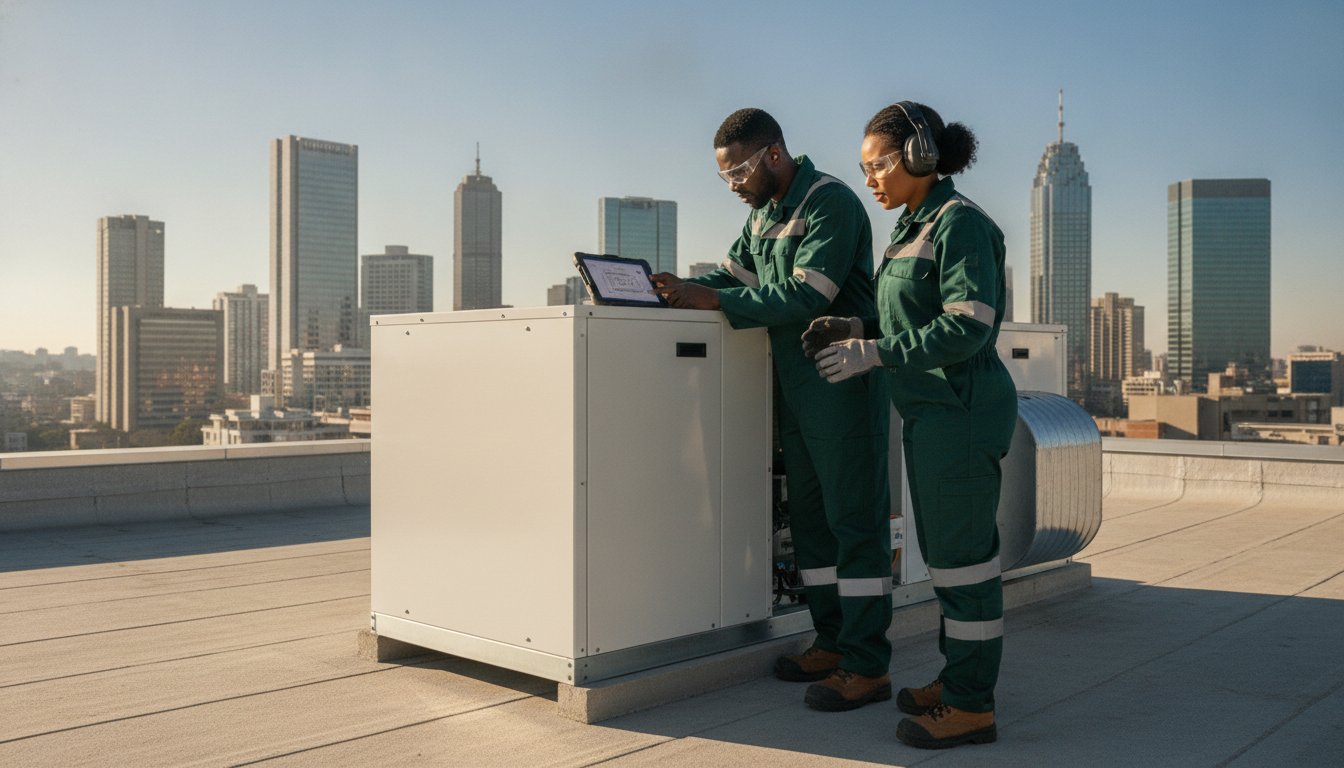
Could your choice of climate control be the silent drain on your office productivity and monthly overheads? Most facility managers in Gauteng recognise that maintaining a consistent temperature across a multi-room layout is a complex, often frustrating challenge. Between the noise of individual units and the rising costs of energy, the pressure to find a sustainable, professional solution has never been higher. You likely feel that a modern workspace deserves a cooling system that is felt but not seen, providing comfort without the clutter of visible machinery.
This 2026 guide demonstrates how ducted air conditioning for office buildings provides a superior, energy-efficient alternative that aligns with the latest SANS 10400-XA standards. By choosing a centralised approach, you can achieve precise climate control while significantly reducing operational expenses. We will explore the technical advantages of zoned cooling, the aesthetic benefits of discreet installations, and how these systems integrate with modern building management technology to ensure long-term reliability for your commercial environment.
Key Takeaways
- Understand how consistent climate control serves as a strategic asset for enhancing employee focus and overall productivity in the modern workspace.
- Discover why ducted air conditioning for office buildings represents the most discreet and energy-efficient cooling solution for modern South African commercial properties.
- Compare the lifecycle costs and acoustic benefits of centralised systems against multiple split units to determine the most cost-effective fit for your facility.
- Gain insights into the technical requirements for Gauteng installations, including structural feasibility and precise heat load calculations to manage local temperature extremes.
- Learn how integrating your HVAC with a Building Management System (BMS) enables predictive maintenance and provides centralised control over multiple office zones.
The Strategic Value of Ducted Air Conditioning for Office Buildings
In the evolving landscape of South African commercial architecture, climate control has transitioned from a basic utility to a critical strategic asset. High-performance ducted air conditioning for office buildings provides a level of environmental stability that individual units cannot match. By integrating these systems into the building’s core design, developers and business owners create a foundation for long-term operational efficiency. Beyond immediate comfort, a centralised system increases the overall valuation of a property, as it represents a permanent, high-quality infrastructure investment that meets modern sustainability standards.
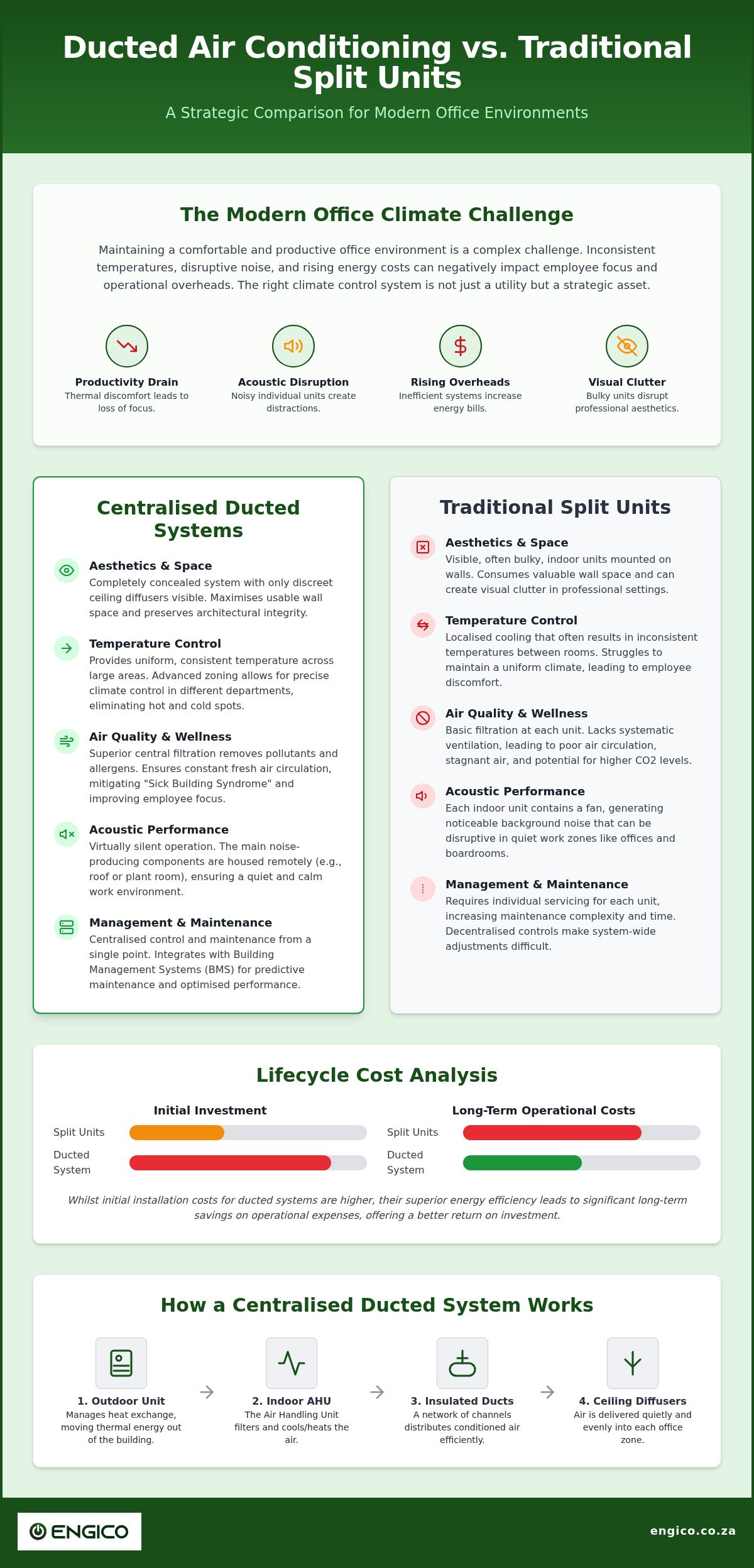
One of the most significant advantages of a centralised ducted system is its ability to mitigate “Sick Building Syndrome.” This condition, often caused by poor ventilation and stagnant air, leads to lethargy and respiratory issues amongst employees. A well-designed system for Heating, ventilation, and air conditioning (HVAC) ensures constant air changes and superior filtration. It doesn’t just cool the air; it cleans it, removing pollutants and allergens that typically circulate in closed office environments.
Enhancing Employee Productivity and Wellness
Thermal discomfort is a leading cause of workplace friction. When one department is shivering whilst another is sweltering, concentration levels drop and disputes arise. Ducted systems eliminate these “hot spots” through precise zoning, allowing for uniform temperatures across different departments. Modern systems also include CO2 monitoring, which introduces fresh outdoor air when carbon dioxide levels rise. This proactive approach to air quality is proven to sharpen focus and reduce absenteeism, as staff are less likely to fall ill from airborne pathogens or suffer from “afternoon fatigue” caused by poor oxygenation.
Aesthetic and Spatial Advantages in Professional Environments
Professionalism is often reflected in the details of an office’s interior design. Visible wall-mounted units can disrupt the clean lines of an executive boardroom or a minimalist reception area. Ducted air conditioning for office buildings offers a discreet alternative, where the only visible components are slim, ceiling-mounted diffusers. This approach provides several practical benefits:
- Maximises usable wall space for shelving, artwork, or large-scale digital displays.
- Preserves the architectural integrity of high-end corporate fit-outs.
- Reduces acoustic disruptions, as the primary mechanical components are housed away from quiet work zones.
By removing visual and auditory clutter, businesses can maintain a sophisticated atmosphere that impresses clients and provides a calm environment for staff. These systems help organise the workflow by ensuring that every square metre of the office remains comfortable and functional throughout the year.
Technical Mechanics: How Ducted Systems Organise Large-Scale Cooling
Ducted air conditioning is a centralised HVAC solution that distributes conditioned air through a network of concealed channels typically located within the ceiling void or floor structure. This configuration relies on a powerful indoor Air Handling Unit (AHU) and an outdoor condenser working in tandem. The AHU is responsible for filtering and cooling the air before a high-pressure fan forces it through the ductwork. Meanwhile, the outdoor unit manages the heat exchange process, ensuring that thermal energy is efficiently moved out of the building. It’s a sophisticated cycle that provides a much more stable environment than individual units scattered across different rooms.
To maintain the system’s performance, these ducts are heavily insulated to preserve thermal energy whilst air is in transit. This insulation is vital for meeting modern Commercial Energy Efficiency standards, as it prevents the cooled air from warming up before it reaches its destination. The system also utilizes return air grilles to pull air back into the AHU. This creates a continuous loop that maintains balanced air pressure, preventing the stuffy atmosphere often found in offices with poor circulation. If you’re looking to upgrade your current infrastructure, it’s often best to consult with a professional team to ensure your ductwork is sized correctly for your building’s specific volume.
The Role of Air Handling Units and Concealed Ductwork
For multi-storey office blocks, the capacity of the AHU must be precisely calculated to handle the total volume of the space. The choice between rigid and flexible ducting also impacts the final result. Rigid galvanised steel ducts are the favourite for main runs because they offer less resistance to airflow and generate less noise. Flexible ducting is typically reserved for the final connections to ceiling diffusers. High-performance fans are critical in these setups to maintain static pressure, ensuring that even the furthest office in the corner receives the same level of airflow as the rooms closest to the central unit.
Advanced Zoning: Personalising Comfort Across Departments
One of the primary reasons to choose ducted air conditioning for office buildings is the ability to implement advanced zoning. By using Variable Air Volume (VAV) boxes, the system can independently adjust the temperature in different areas. This allows for the separation of high-heat zones, such as server rooms, from general open-plan areas where staff comfort is the priority. You can also organise cooling schedules so that meeting rooms or boardrooms are only cooled when they’re occupied. This targeted approach prevents energy waste and ensures that your cooling budget is spent only where it’s actually needed.
Comparative Analysis: Ducted Systems vs. Traditional Split Units
Many developers initially consider wall-mounted split units due to their lower upfront purchase price. However, a thorough lifecycle cost analysis often reveals that ducted air conditioning for office buildings provides superior long-term value. Whilst split units require individual piping and electrical connections for every room, a ducted system consolidates these requirements. This consolidation reduces the complexity of the initial infrastructure and simplifies future reconfigurations. If an office layout changes, moving a ceiling diffuser is significantly less disruptive than decommissioning and reinstalling a wall-mounted unit.
Maintenance complexity is another area where centralised systems outperform multiple split units. Servicing twenty individual split systems involves checking twenty compressors and cleaning dozens of filters, which increases labour costs and the likelihood of overlooked faults. A ducted system offers a single, accessible point of service. This methodical approach ensures that maintenance is more thorough and less intrusive for daily office operations. It’s a more reliable way to manage a large facility without the constant cycle of minor repairs across various rooms.
Efficiency at Scale: Why Ducted Wins for Large Offices
For larger commercial spaces, the Energy Efficiency Ratio (EER) of a single high-capacity ducted unit is typically more favourable than the combined EER of multiple smaller units. Centralised systems also benefit from consolidated drainage and electrical points, which reduces the risk of leaks inside the office. By choosing ducted air conditioning for office buildings, you also significantly reduce the number of outdoor condensers. This preserves the building’s exterior aesthetic and reduces the heat island effect around the property, which is particularly beneficial for high-density business districts.
Noise Reduction and Acoustic Comfort in Open-Plan Offices
Acoustic performance is often the deciding factor for professional firms in Johannesburg and Sandton. In an open-plan environment, the constant hum and cycling of multiple wall-mounted units can create a distracting noise floor. Ducted systems solve this by situating the Air Handling Unit in a remote plant room or a sound-insulated ceiling void. High-quality installations also utilise acoustic lining within the ductwork. This prevents sound from “chattering” between rooms, ensuring that private conversations in a boardroom don’t carry through the vents to the general office floor. This focus on quiet operation creates a stable, professional atmosphere that supports deep work and clear communication.
Planning and Installation: Navigating the Gauteng Commercial Landscape
Successful installation starts with a methodical assessment of the building’s structural integrity. In Johannesburg and Pretoria, engineers must account for varying ceiling heights and existing service routes that may complicate duct placement. Accurate heat load calculations are non-negotiable for ducted air conditioning for office buildings, especially considering the intensification of Gauteng heatwaves. These calculations factor in window orientation, insulation quality, and the heat generated by modern office equipment to ensure the system isn’t under-specified for the local climate.
Coordinating with electrical and plumbing contractors is essential during the primary installation phase. A disciplined approach prevents delays and ensures that drainage and power requirements are met before the final ductwork is sealed. Modern facilities benefit from integrating smart HVAC control for commercial buildings. This provides facility managers with comprehensive oversight and the ability to adjust settings remotely based on real-time occupancy data, which is a significant advantage for large-scale operations.
Load Shedding and Energy Stability: Integrating Back-up Power
South Africa’s energy grid challenges require a forward-thinking approach to system design. It’s vital to size ducted systems to operate efficiently on solar or generator backup to maintain business continuity. Inverter technology is particularly effective here, as it reduces start-up current surges that might otherwise trip a backup power source. By managing load priorities, you can ensure that essential zones, such as server rooms or executive boardrooms, remain cool during outages whilst non-critical areas are temporarily scaled back to preserve battery life.
Retrofitting Older Office Buildings in Johannesburg and Pretoria
Retrofitting older properties presents specific challenges, such as low ceiling heights or heritage building restrictions. In these scenarios, innovative “hideaway” solutions are used to fit equipment into tight spaces without traditional ceiling voids. Our team focuses on minimising business disruption during this process, often scheduling work in phases to keep your office operational. If you’re planning a refurbishment of an existing property, you should request a technical site survey to identify the most efficient installation path for your premises.
Long-Term Performance: Maintenance and BMS Integration
Maintaining ducted air conditioning for office buildings requires a shift from reactive repairs to a disciplined, data-driven strategy. Modern systems utilise advanced sensors that provide real-time feedback on component health, allowing facility managers to identify potential faults before they lead to system failure. This transition from manual oversight to automated climate management ensures that the environment remains stable whilst reducing the workload on internal maintenance teams. By monitoring airflow and temperature differentials across various zones, these sensors enable predictive maintenance that specifically targets components showing signs of wear, preventing minor issues from escalating into major disruptions.
Scheduled interventions are the most effective way to extend the equipment’s operational lifespan. Regular coil cleaning and refrigerant checks prevent the system from overworking, which directly impacts energy efficiency and reduces the risk of compressor failures. Engaging in professional commercial HVAC maintenance in Sunninghill and the wider Gauteng region ensures that your infrastructure remains compliant with local health and safety ventilation regulations. This methodical approach protects your capital investment and maintains the air quality standards necessary for a healthy workforce.
Optimising Efficiency with Building Management Systems (BMS)
Building Management System (BMS) integration represents the pinnacle of commercial climate control. By linking your HVAC infrastructure with lighting and security protocols, you create a holistic ecosystem for total building automation. This allows for the monitoring of energy consumption in real-time, making it simple to identify departmental waste or unoccupied areas that are being cooled unnecessarily. For multi-site facility managers, remote monitoring capabilities provide a centralised dashboard to manage properties across Sandton, Pretoria, and Midrand from a single location. This level of oversight is essential for maintaining the high standards expected in modern corporate environments.
Preventative Maintenance: Protecting Your Capital Investment
A clear cost-benefit analysis shows that investing in HVAC maintenance services for Gauteng properties far outweighs the expense of emergency repairs or premature system replacement. Engico acts as a methodical specialist in this field, providing the technical expertise required to manage complex industrial-grade units and high-performance air handling units. As a “safe pair of hands,” we focus on the broader impact of our work, ensuring that your investment in ducted air conditioning for office buildings continues to deliver value, comfort, and reliability for years to come. Our commitment to professional excellence means your system is managed from inception through to long-term maintenance without fuss.
Future-Proofing Your Commercial Workspace
Selecting ducted air conditioning for office buildings is a strategic commitment to both operational excellence and employee wellbeing. As we have explored, these systems provide a discreet, energy-efficient solution that addresses the specific challenges of the Gauteng climate whilst enhancing property value. By integrating advanced zoning and Building Management Systems, facility managers gain the precision needed to control costs and maintain a stable professional environment. The transition from traditional cooling to a centralised, data-driven approach ensures your infrastructure remains compliant with 2026 energy standards.
With over four years of specialist HVAC experience in Gauteng, Engico provides a safe pair of hands for complex commercial projects. Our expertise in BMS integration and comprehensive maintenance plans ensures zero downtime for your business operations. To begin your transition to a more efficient workspace, you can Request a Professional Site Survey for Your Gauteng Office today. We look forward to partnering with you to create a workspace that supports your long-term success through precision engineering and reliable service.
Frequently Asked Questions
Is ducted air conditioning more expensive to run than split systems?
Ducted systems are typically more energy efficient than multiple split units when cooling large-scale commercial spaces. Whilst a single split unit uses less power, running fifteen or twenty of them simultaneously creates a significant energy drain. A centralised ducted system uses one high-capacity compressor to manage the entire load, which often results in lower overall operational costs. This efficiency is enhanced by modern inverter technology that adjusts power consumption based on real-time demand.
Can I control the temperature in each office room separately with a ducted system?
You can achieve individual room control by integrating a zoned management system into your infrastructure. This allows different departments to set their preferred temperatures without affecting the rest of the building. By using Variable Air Volume (VAV) boxes, the system directs air only where it’s needed. This level of departmental autonomy is a primary reason why many businesses choose ducted air conditioning for office buildings in busy districts like Sandton and Midrand.
How often does a commercial ducted air conditioning system need servicing?
Commercial systems require professional servicing at least twice a year to maintain peak performance. In high-traffic Gauteng offices, quarterly maintenance is often recommended to manage the dust and pollution common in urban centres. Regular checks involve cleaning filters, inspecting refrigerant levels, and testing the drainage system. This proactive approach prevents unexpected downtime and ensures that your capital investment remains protected against the wear and tear of continuous operation.
Is it possible to install ducted air conditioning in an old office building?
Installation in older properties is entirely feasible, though it requires a methodical structural assessment. Many heritage buildings in Johannesburg lack large ceiling voids, so we often utilise “hideaway” units or bulkheads to conceal the ductwork. These creative engineering solutions allow older facilities to benefit from modern climate control without compromising their architectural character. It’s a disciplined way to modernise a workspace whilst maintaining the building’s original aesthetic and structural integrity.
What happens to the ducted air conditioning during load shedding?
Standard systems will cease operation during load shedding unless they are integrated with a robust backup power solution. Many modern Gauteng offices now pair their HVAC systems with industrial generators or large-scale solar arrays. Because ducted systems have high start-up currents, it’s essential to use inverter-driven models that ramp up power gradually. This prevents tripping your backup supply and ensures that essential cooling continues during scheduled power outages in Pretoria or Sandton.
How long does the installation of a ducted system take for a medium-sized office?
A typical installation for a medium-sized office generally takes between one and three weeks. The exact timeline depends on the complexity of the ductwork and whether the building is currently occupied. We often organise the work in phases to minimise disruption to your daily operations. A disciplined project management approach ensures that the indoor units and ceiling diffusers are fitted precisely, allowing your team to return to a comfortable environment as quickly as possible.
Does ducted air conditioning help with office air quality and filtration?
Ducted systems provide superior air quality compared to individual units because they use high-grade centralised filtration. These systems constantly cycle fresh outdoor air into the building, which reduces the concentration of CO2 and airborne pollutants. By maintaining positive air pressure, the system also prevents dust from entering through gaps in the building’s structure. This creates a healthier atmosphere that is proven to reduce absenteeism amongst staff in busy ducted air conditioning for office buildings.
What is the average lifespan of a commercial ducted HVAC system in South Africa?
A well-maintained commercial system typically lasts between fifteen and twenty years. In the harsh South African climate, the longevity of your equipment depends heavily on regular preventative maintenance and the quality of the initial installation. Using high-performance fans and durable ducting materials ensures that the system can withstand the temperature extremes common in Pretoria and Johannesburg. Consistent servicing from a specialist partner like Engico is the most effective way to reach this maximum lifespan.
Recent Comments