By 2026, a home climate control system in South Africa is no longer just a luxury for hot afternoons; it’s a sophisticated energy-management tool. With Eskom tariffs having climbed more than 400% over the last fifteen years, every kilowatt-hour counts. You’ve likely felt the sting of these rising costs and perhaps worry about how localised load reduction might impact your sensitive electronics. Choosing the right residential hvac systems South Africa offers means balancing immediate comfort with long-term financial stability.
This guide provides the clarity you need to select a system that delivers quiet, consistent heating and cooling without draining your bank account. We’ll explore the latest inverter technologies that integrate seamlessly with solar power and backup batteries. You’ll also discover how modern filtration can combat the dry, dusty air of Gauteng winters while adhering to the latest SANS 10400-XA energy efficiency standards. From wall-mounted splits to comprehensive ducted solutions, we’ll help you secure a reliable climate for your home.
Key Takeaways
- Understand why a 4-in-1 climate solution is essential for managing South Africa’s diverse biomes, providing year-round comfort in any province.
- Learn to distinguish between wall-mounted splits, multi-splits, and ducted residential hvac systems South Africa to find the optimal configuration for your home.
- Discover how inverter technology and A++ energy ratings provide long-term value by reducing your monthly electricity expenditure.
- Master the selection process by accurately calculating BTU requirements based on room size, insulation, and sun exposure.
- Recognise why professional maintenance and SANS compliance are vital for ensuring your system remains reliable in challenging local environments.
What are Residential HVAC Systems and Why Do They Matter in South Africa?
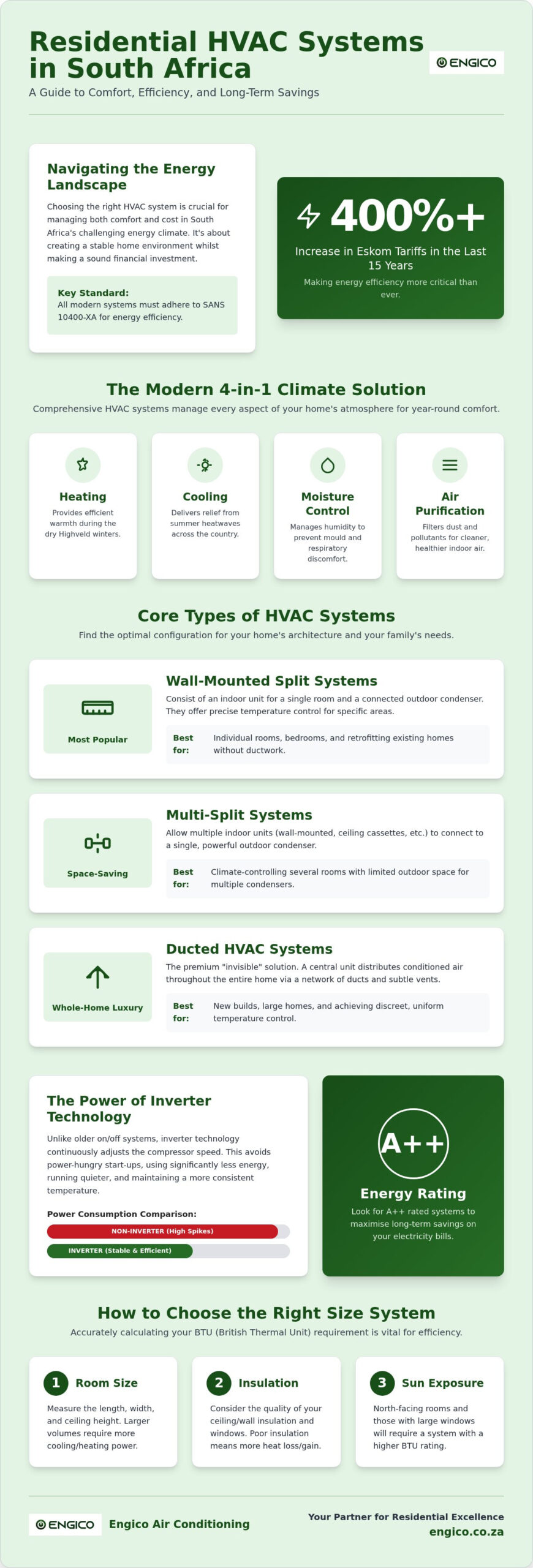
HVAC stands for Heating, Ventilation, and Air Conditioning. While many homeowners use the terms “air conditioning” and “HVAC” interchangeably, they represent different levels of technical capability. A standard air conditioner typically focuses on cooling a single space. In contrast, What is HVAC? refers to a comprehensive system designed to manage every aspect of your home’s atmosphere. For modern residential hvac systems South Africa requires a 4-in-1 approach that addresses heating, cooling, moisture control, and fresh air intake.
In regions like Gauteng, where new residential builds are increasingly airtight to meet energy regulations, natural ventilation often falls short. This makes a managed system essential. It’s no longer just about surviving a February heatwave; it’s about maintaining a healthy indoor environment throughout the year. Sophisticated climate management ensures that your home remains a sanctuary regardless of the external conditions.
The Evolution of Home Climate Control
HVAC vs Standard Air Conditioning
The “V” in HVAC represents ventilation, which is the most overlooked element of home comfort. Proper ventilation ensures a constant supply of fresh, oxygenated air whilst removing stale air and CO2. This process is vital for preventing mould growth and maintaining cognitive health. Integrated residential hvac systems South Africa homeowners choose often provide a better return on investment than separate heaters and coolers. A single, well-maintained unit is more efficient to run and easier to manage. To protect this investment, professional HVAC maintenance services for Gauteng properties are necessary. Regular servicing ensures that filters remain clean and mechanical components operate at peak efficiency, preventing costly breakdowns during extreme weather shifts.
Core Types of HVAC Systems for South African Homes
Selecting the right configuration is a critical decision for any property owner. The market for residential hvac systems South Africa offers several distinct technologies, each suited to different architectural styles and lifestyle requirements. Whether you are retrofitting an existing house in Pretoria or designing a new estate in Johannesburg, understanding these structural differences ensures long-term satisfaction and operational efficiency.
Wall-Mounted Split Systems: Efficiency and Versatility
Wall-mounted split systems remain the most popular choice for individual rooms. These units consist of an indoor evaporator and an outdoor condenser connected by refrigerant piping. They are particularly favoured in Gauteng bedrooms because they allow for precise temperature control in specific areas without the need for extensive ductwork. Installation is relatively straightforward, which makes them an excellent choice for established homes. However, the dusty environment of the Highveld means regular filter cleaning is essential to maintain performance and air quality. For many homeowners, these residential hvac systems South Africa provides are the most cost-effective entry point into modern climate control.
For those who wish to climate-control multiple rooms but have limited outdoor space, multi-split solutions are ideal. These systems allow several indoor units to connect to a single outdoor condenser, reducing the visual clutter of multiple external motors. Alternatively, ceiling cassette units are often preferred for large, open-plan living areas. Their 360-degree airflow pattern is perfect for spaces with high ceilings, providing even distribution that wall units might struggle to achieve in expansive rooms.
Ducted HVAC: Whole-Home Luxury and Discretion
Ducted air conditioning represents the premium, “invisible” solution for entire homes. These systems are integrated into ceiling voids, with only discreet grilles visible in each room. This approach is highly valued by interior designers as it does not disrupt the aesthetic of the space with bulky indoor units. One of the most significant advantages of a ducted system is its zoning capability. You can choose to cool or heat only the rooms currently in use, which significantly reduces energy consumption compared to cooling an entire house at once.
When selecting any of these systems, it is vital to ensure they meet the South African National Standard SANS 941. This regulation establishes the mandatory minimum energy performance standards required for units sold in the country. Adhering to these standards ensures your system is not only legal but also cost-effective to operate over its lifespan. If you are uncertain which configuration best suits your property, you might consider reviewing the various wall-mounted and ducted options to see which fits your specific floor plan.
Energy Efficiency and Load Shedding: Navigating the SA Energy Crisis
Operating residential hvac systems South Africa requires a strategic approach to energy management. With Eskom tariffs rising significantly, the efficiency of your unit directly impacts your monthly household budget. In 2026, an “A++” energy rating is no longer a luxury; it’s a non-negotiable standard for any new installation. These high-efficiency units ensure that your comfort doesn’t come at the expense of financial stability.
Grid instability remains a concern for many homeowners. Whilst national load shedding has decreased, localised load reduction and voltage fluctuations can still damage sensitive electronics. Protecting your investment requires integrated surge protection. Additionally, modern systems are now designed for compatibility with solar PV arrays and backup battery storage. This allows your climate control to remain operational during outages without depleting your battery reserves too quickly.
Understanding Inverter Technology
Inverter technology is the most effective tool for reducing electricity consumption. Unlike traditional fixed-speed motors that constantly cycle on and off, an inverter motor adjusts its speed to maintain a constant temperature. This prevents the “cold blasts” associated with older units and significantly reduces mechanical wear on the compressor. According to the South African Refrigeration and Air Conditioning Contractors Association (SARACCA), using qualified practitioners ensures these complex inverter systems are installed to specification, maximising their lifespan and efficiency.
The long-term cost savings of an inverter unit are substantial. Because the motor doesn’t require a large surge of power to start up repeatedly, it consumes up to 30% less energy than non-inverter alternatives. This efficiency makes it the ideal partner for homes running on limited backup power solutions.
Smart Controls and Building Management
Homeowners can now apply the principles of smart HVAC control for commercial buildings to their private residences. Integrated Wi-Fi modules allow you to monitor and adjust your home climate via a smartphone app. This capability is particularly useful for ensuring the system is turned off when the house is empty or for cooling a room just before you arrive home.
Automated scheduling plays a vital role in managing peak-demand costs. By programming your system to perform heavy cooling or heating during off-peak periods, you can leverage lower electricity rates where applicable. These smart features, combined with high-quality hardware, transform residential hvac systems South Africa into proactive energy-saving assets.
Practical Selection Guide: Choosing the Right System for Your Property
Selecting the most suitable residential hvac systems South Africa provides involves a methodical evaluation of your property’s specific characteristics. It is not merely about choosing a reputable brand; it requires a precise understanding of thermal loads and environmental factors. A systematic approach ensures that your investment provides the intended comfort without unnecessary energy expenditure.
Sizing Your System Correctly
The first step is calculating the required capacity. A British Thermal Unit (BTU) measures the heat energy a system removes per hour, which is a critical metric for Gauteng homeowners to ensure their unit can handle intense solar gain during summer months. An undersized unit will run continuously at maximum capacity, which leads to premature mechanical failure and inflated electricity bills. Conversely, an oversized unit will cycle on and off too frequently, failing to dehumidify the air properly.
- Room Volume: High ceilings, common in modern Gauteng estates, increase the volume of air that needs cooling.
- Sun Exposure: North-facing rooms receive significantly more solar heat than south-facing ones, requiring higher BTU ratings.
- Building Materials: Large glass panes or thatch roofing impact insulation levels and thermal retention.
Installation Considerations in Gauteng
Professional installation is as important as the hardware itself. In South Africa, residential installations must comply with specific municipal regulations and SANS 10400-XA energy efficiency standards. A qualified installer will determine the optimal placement for the outdoor condenser unit. This unit requires adequate airflow to dissipate heat; it should be positioned to minimise noise transfer into living areas or neighbouring properties. Attempting a DIY installation is highly discouraged. It typically voids the manufacturer’s warranty and poses significant electrical safety risks.
When choosing between residential hvac systems South Africa offers, consider the availability of local technical support. International brands with established South African offices provide better access to spare parts and specialised repairs. Always verify that your installer is registered with the relevant industry bodies to ensure compliance with national safety standards. Balancing your initial installation budget with projected monthly running costs is essential for long-term satisfaction. To ensure your system is sized and installed correctly, you can book a technical assessment for your home with our experienced team.
Engico Air Conditioning: Your Partner for Residential Excellence
Engico Air Conditioning operates as a methodical specialist in the local climate control sector. We provide professional supply and installation services for the leading brands of residential hvac systems South Africa homeowners trust for durability and performance. Our team manages every project phase, from the initial technical assessment to the final commissioning of the unit. This comprehensive approach ensures that each installation meets the rigorous SABS requirements for 2026 whilst delivering maximum indoor comfort.
Our expertise covers a broad range of hardware, including wall-mounted split units for individual bedrooms and complex ducted air conditioning systems for large estates. We prioritise high-performance inverter technology to align with modern environmental standards and help manage household running costs effectively. By choosing a partner that understands the technical nuances of various environments, you secure a system built for long-term operational excellence and professional reliability.
Comprehensive Maintenance and Repairs
Regular servicing is the most effective way to prevent unexpected downtime during a severe summer heatwave. Our methodical maintenance programmes are designed to extend the lifespan of your equipment, particularly in the dusty conditions typical of the Gauteng province. We provide technical repairs for clients across Sandton, Pretoria, and Midrand, ensuring that any mechanical issues are resolved with precision. This “safe pair of hands” philosophy underpins our service, as we focus on building trust through transparent communication and reliable results rather than short-term excitement.
Get a Professional HVAC Consultation
Every property has a unique thermal profile that requires a specific technical solution. We assess your home environment by considering factors such as room volume, insulation quality, and sun exposure to recommend the most efficient configuration for your needs. Our quoting process is entirely transparent, providing you with a clear understanding of the installation requirements without hidden costs. Selecting the right residential hvac systems South Africa offers is a significant investment, and professional guidance is essential for achieving the best possible outcome for your property.
Contact Engico for a professional residential HVAC assessment today.
Securing Sustainable Comfort for Your South African Home
Investing in modern residential hvac systems South Africa provides is a decision that balances immediate lifestyle benefits with long-term financial prudence. As we move through 2026, the shift towards A++ energy ratings and advanced inverter technology has become the standard for managing rising utility costs. By prioritising correct system sizing and professional installation, you ensure your equipment operates efficiently without the strain that leads to premature failure. A well-managed climate control solution is an asset that protects your family’s health and your property’s value.
Engico Air Conditioning stands as a dependable partner for homeowners across Gauteng. Our expert installers in Pretoria and Johannesburg are specialists in energy-efficient inverter technology, ensuring your system integrates perfectly with your home’s requirements. We also provide comprehensive maintenance plans for all residential units to keep them running at peak performance in our unique local climate. When you’re ready to upgrade your home environment, you can request a professional residential HVAC quote from Engico. We look forward to helping you create a stable, comfortable sanctuary for the years ahead.
Frequently Asked Questions
How much electricity does a modern residential HVAC system use in South Africa?
Electricity consumption depends on the unit’s capacity and whether it uses inverter technology. A modern 12,000 BTU inverter unit typically consumes between 0.9kW and 1.2kW per hour at peak load, but this reduces significantly once the room reaches the desired temperature. Choosing high-efficiency residential hvac systems South Africa ensures that your monthly Eskom expenditure remains manageable even during peak summer months.
Is a ducted system better than multiple split units for a large home?
The choice depends on your property’s architectural design and your aesthetic preferences. Ducted systems provide a discreet, “invisible” solution with advanced zoning capabilities, which is ideal for new luxury builds. Multiple split units are often more cost-effective for retrofitting established homes where ceiling void space is limited. Whilst ducted systems require a higher initial investment, they offer a seamless finish that individual wall units cannot match.
How often should I service my residential air conditioner in Gauteng?
You should arrange a professional service at least twice a year to maintain peak performance. Gauteng’s environment is particularly dusty, especially during the dry winter months and the pollen-heavy spring season. Regular maintenance prevents debris from clogging the filters and internal coils, ensuring the system doesn’t overwork itself. This proactive approach protects your health and prevents mechanical failures during extreme December heatwaves.
Can I run my HVAC system off my home solar and battery setup?
Yes, modern inverter systems are highly compatible with residential solar PV and battery storage. Because inverters avoid the high “start-up” current of older motors, they don’t place an excessive sudden load on your backup power. It’s essential to ensure your solar installer accounts for the HVAC’s peak consumption. Properly integrated residential hvac systems South Africa allow you to maintain a comfortable climate during daylight hours without drawing from the grid.
What is the lifespan of a residential HVAC unit in South African conditions?
A well-maintained unit typically lasts between 10 and 15 years in local conditions. Environmental factors such as the Highveld’s intense UV radiation and seasonal dust levels can impact the outdoor condenser’s durability. Regular servicing and the use of protective coatings in corrosive environments can extend this lifespan significantly. Units that are undersized for their rooms often fail earlier because they run continuously at maximum capacity to compensate for the heat load.
What happens if my HVAC system is damaged by a power surge during load shedding?
Power surges following load shedding or localised load reduction can cause irreparable damage to sensitive electronic control boards. Most manufacturer warranties don’t cover damage caused by grid instability or lightning strikes. It’s vital to install high-quality surge protection devices at your distribution board or the unit’s power point. This investment protects the sophisticated inverter circuitry from the volatile voltage fluctuations common in the local electrical grid.
Do I need a building permit to install a ducted HVAC system in Johannesburg?
You generally require municipal approval if the installation involves structural changes to your home’s roof or support beams. For new residential developments in Johannesburg, HVAC plans are typically included in the overall building submission to ensure compliance with SANS 10400-XA. If you’re retrofitting a ducted system into an existing house, it’s prudent to consult with a professional installer to verify if your specific alterations necessitate a formal permit.
Recent Comments