
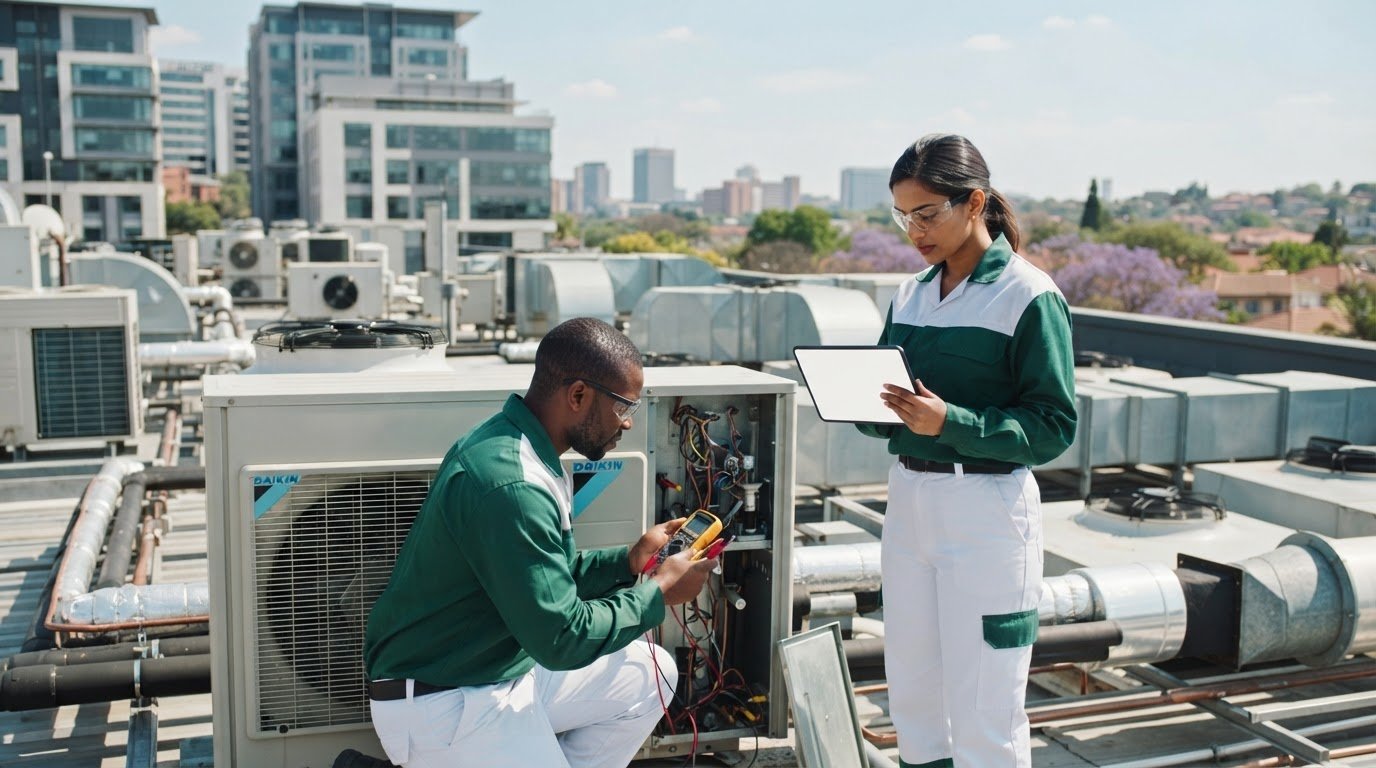
HVAC maintenance is a business continuity measure, not simply an equipment clean. A fault can affect staff comfort, customer experience and day-to-day operations, while a system working harder than it should may also influence energy use. The benefits of regular HVAC maintenance for business become clearer when you connect equipment condition to these practical outcomes.
It’s reasonable to question whether scheduled servicing justifies the time and budget. Planned maintenance gives businesses a clearer picture of system condition and a chance to address developing issues before they disrupt operations. Assess its value using indicators such as energy consumption, recurring faults, temperature consistency and staff comfort, rather than relying on assumptions.
This guide explains the operational and financial reasons to maintain commercial HVAC equipment, which performance measures can show whether a maintenance plan is working, and how to shape a practical approach for premises in Gauteng. It also covers different systems, from split and ducted air conditioning to air handling units and building management system integration, so you can make informed decisions about your equipment and business operations.
Key Takeaways
- Understand the benefits of regular HVAC maintenance for business, from clearer equipment condition to better-informed operational planning.
- Use maintenance records and everyday observations to assess changes in comfort, faults and system performance over time.
- Compare planned servicing with a fault-led approach to see how scheduling and service records can support business continuity.
- Organise equipment by location, operating hours and importance to set practical maintenance priorities across your Gauteng premises.
- Recognise how maintenance needs differ between split, ducted and air handling equipment, and how Engico supports commercial and industrial systems.
Business HVAC Maintenance: What is at Stake?
For a business, heating, ventilation and air conditioning equipment supports more than temperature control. It helps maintain comfortable occupied spaces and provides ventilation as part of the building’s day-to-day operation. The HVAC systems in a small office may differ significantly from those serving a larger commercial or industrial site, so maintenance should reflect the equipment and how the building is used.
HVAC maintenance is planned work to assess and care for equipment, helping businesses make informed decisions about its condition and operation. It doesn’t promise that faults won’t occur or that energy costs will fall by a set amount. Instead, maintenance gives you a clearer basis for prioritising service, planning access and managing assets over time. That is the practical business case behind the benefits of regular HVAC maintenance for business premises.
What does regular HVAC maintenance involve in a business building?
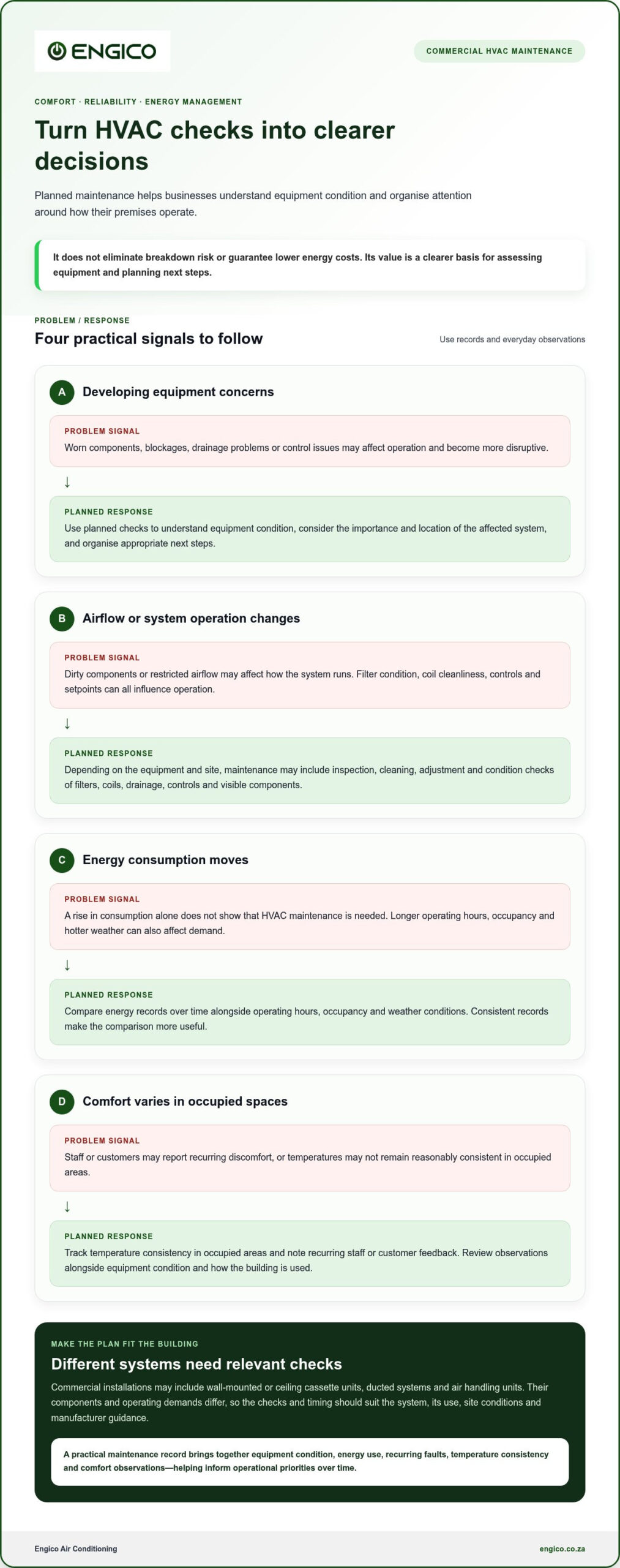
Planned maintenance may include inspection, cleaning, adjustment and condition checks. Depending on the equipment and site, a service may examine filters, coils, drainage, controls and visible components for wear, obstruction or other changes in condition. The scope and timing should suit the system, its use, site conditions and manufacturer guidance. There isn’t one schedule that fits every building.
Commercial installations can include wall-mounted or ceiling cassette units, ducted systems and air handling units. Each has different components and operating demands, so the checks appropriate for one type may not apply in the same way to another. Maintenance is also distinct from repair: planned work assesses the system, while a repair responds to a fault identified during inspection or reported during operation.
Why does HVAC reliability matter to business operations?
Comfortable, well-ventilated spaces support the normal use of offices, retail areas and other workplaces. If cooling or ventilation becomes unreliable, staff may find their working environment uncomfortable, customers may have a different experience during a visit, and routines can be interrupted while the issue is assessed. In some commercial or industrial settings, environmental conditions may also matter to equipment or processes.
The impact depends on the building and the role of each system. A fault in a lightly used area may have different operational consequences from one affecting a busy customer-facing space. Equipment condition and operational importance are therefore useful considerations when setting maintenance priorities.
For Gauteng businesses, the aim is informed asset management: know what equipment is installed, keep a record of its condition and use that information to plan appropriate servicing. Routine maintenance can help identify changes that warrant attention, but it cannot eliminate breakdown risk. Its value lies in giving decision-makers a more structured view of their HVAC assets and their role in everyday operations.
How planned HVAC maintenance supports comfort, reliability and energy management
Planned maintenance gives facilities teams a clearer view of whether HVAC equipment is operating as expected. A technician may identify a filter that needs attention, restricted airflow, drainage issues, visible wear or controls that need further assessment. Reviewing these findings in a planned way makes it easier to consider and schedule the next steps, rather than responding only after comfort or operation is affected.
Planned HVAC maintenance gives businesses earlier visibility of equipment issues, helping them make informed decisions about service before conditions become more disruptive. It can reduce uncertainty, but it can’t prevent every fault or guarantee uninterrupted operation. This visibility can be particularly useful in busy offices, customer-facing spaces or operational areas where equipment depends on stable conditions.
Can regular HVAC maintenance help reduce unexpected disruption?
Yes. Planned checks can reveal developing concerns such as worn components, blockages, drainage problems or control issues. These findings help a business understand the equipment’s condition and consider next steps in context, including the location and importance of the affected system. Maintenance doesn’t remove breakdown risk, but it can give you more opportunity to organise attention around business needs.
How can maintenance support energy management and indoor conditions?
Filter condition, airflow, coil cleanliness, control operation and setpoints can all influence how a system runs. Dirty components or restricted airflow may affect the system’s operation. Cleaning and adjustments suited to the equipment can help restore appropriate conditions, but energy use also depends on the system, building and how it is operated. Don’t treat maintenance as a guaranteed energy-saving measure.
To assess trends, compare energy records over time alongside operating hours, occupancy and weather conditions. A rise in consumption alone doesn’t show that HVAC maintenance is needed: longer operating hours or hotter weather can also affect demand. Consistent records make the comparison more useful.
Comfort is another practical measure. Note whether temperatures remain reasonably consistent in occupied areas and whether staff or customers report recurring discomfort. Occupancy, sunlight, building layout and other conditions also influence comfort, so equipment servicing is one part of the picture. Consider ventilation separately from temperature. Maintenance can help keep relevant components in suitable working condition, but it shouldn’t be presented as a guaranteed medical or health outcome.
For a reference point on structured maintenance practice, ASHRAE Standard 180 addresses inspection and maintenance of commercial building HVAC systems. Businesses in Gauteng can also explore commercial HVAC maintenance support to plan servicing around their equipment and operating requirements.
Planned versus reactive HVAC maintenance: which approach suits a business?
Planned maintenance and reactive servicing address different needs. Scheduled checks give a business a recurring view of equipment condition; reactive work responds when a fault, warning sign or loss of performance appears. Comparing the approaches helps facilities teams manage systems according to their operational importance, rather than relying on a single method for every unit.
What are the practical differences between planned and reactive servicing?
Planned work can be scheduled around site access and business activity. Reactive servicing remains necessary for unexpected faults, but relying on it alone means assessment starts after a symptom appears. The comparison below describes typical differences, not guaranteed outcomes. Actual results depend on system condition, usage and the quality of service records.
| Consideration | Planned maintenance | Reactive servicing |
|---|---|---|
| Visibility of condition | Scheduled checks build a record of observed condition over time. | Information is gathered in response to a fault or reported symptom. |
| Scheduling control | Work can be arranged in advance, with access coordinated around site needs. | Timing is driven by when an issue arises and its operational effect. |
| Disruption risk | Findings can inform decisions about when and how to address concerns. | A fault may affect an occupied or operational area before servicing takes place. |
| Service records | Recurring checks can support a more continuous maintenance history. | Records may focus on individual faults and the actions taken to resolve them. |
Reactive work is appropriate when an unexpected fault needs attention. It is not a substitute for condition checks when equipment plays an important role in business operations. A fault affecting a customer-facing area or a space with operational equipment may need a different priority from one in a less critical location.
How can a business assess whether a maintenance plan is worthwhile?
Review available records before setting or revising a plan. Look for repeat faults, call-outs, comfort complaints, operating hours and the maintenance history of each system. These details can reveal where planned checks may provide useful visibility and where attention should be prioritised.
For energy comparisons, use like-for-like periods where possible and note changes in occupancy, operating hours and weather. This gives context to energy use instead of attributing every change to maintenance. Assess the records alongside day-to-day observations and the operational importance of each area. The benefits of regular HVAC maintenance for business are best judged through evidence that supports better decisions, not assumed savings or a promise of uninterrupted operation.
For practical guidance on servicing commercial equipment in the region, see HVAC maintenance services for Gauteng properties.
How to organise an effective HVAC maintenance approach in Gauteng
A workable maintenance approach starts with a clear picture of the equipment and how each system supports the building. An office in Pretoria, a retail space in Johannesburg, an industrial site in Centurion and a multi-use property may have different operating hours, access requirements and priorities. Grouping equipment by use, location, operating hours and operational importance helps facilities teams plan attention where it matters most.
Use this sequence to establish a practical process:
- Inventory equipment: Record each system type, its location and the areas it serves, including split units, ducted systems and air handling units.
- Assess priorities: Identify spaces where a loss of cooling or ventilation could most affect staff, customers or operations.
- Plan access: Coordinate service visits with occupancy, site procedures and operational constraints.
- Record work: Keep consistent notes on observed condition, issues found and tasks completed.
- Review results: Use service history and operating observations to reassess priorities and future maintenance planning.
Maintenance intervals and task scope should be based on the equipment’s requirements, manufacturer guidance, usage and site conditions. A system operating for extended hours in a demanding environment may need a different approach from equipment serving a lightly used area. The benefits of regular HVAC maintenance for business depend in part on fitting the plan to real operating conditions, rather than applying the same schedule to every unit.
What should a business record before and after maintenance?
Keep a simple, consistent record for each system. Note its type and location, reported symptoms, service date, observations and work completed. Add repeat faults, comfort reports, operating patterns and relevant energy data where available. Over time, these records can show recurring issues and guide priorities. Treat individual readings as one part of the evidence, not a complete diagnosis on their own.
How can maintenance be planned around staff and operations?
Consider occupied areas, business hours, critical rooms and site access procedures when arranging work. This can help reduce clashes with normal activity and make equipment easier to access. For centralised systems, review relevant controls and building management system monitoring as part of the maintenance picture, where applicable. Read more about smart HVAC control for commercial buildings.
Engico provides commercial and industrial air conditioning maintenance across Gauteng. Arrange HVAC maintenance for your business to plan servicing around your equipment and site requirements.
How Engico supports regular HVAC maintenance for businesses
Commercial and industrial buildings rely on HVAC systems with different layouts, operating demands and maintenance requirements. Engico provides maintenance, servicing and repair support for business air conditioning systems, helping organisations understand equipment condition and plan work around site needs. Its services cover air conditioning, air handling equipment and building management system integration for a range of building requirements.
Engico serves businesses across Gauteng, including Pretoria, Johannesburg, Centurion and Sandton. Whether a site has individual units in offices or larger systems serving multiple areas, the maintenance scope is tailored to the installed equipment and conditions at the premises. The aim is not to assume every system needs the same tasks, but to consider its type, use and operational role.
What types of commercial HVAC systems can Engico maintain?
Engico maintains wall-mounted split, multi-split, ceiling cassette and ducted air conditioning systems, as well as air handling units. Their components and functions vary: a ducted installation serving several spaces has different considerations from a wall-mounted unit in a single room. Engico’s servicing and repair work is shaped around the system on site, its configuration and how the building uses it.
What is a practical next step for a Gauteng business?
Before planning maintenance, gather an equipment list and available service history. Note where each system is installed, its operating pattern, recurring concerns and the areas it serves. This gives you a clearer starting point for discussing priorities and arranging work that fits the building’s use. Businesses in the northern Johannesburg area can also read about commercial HVAC maintenance in Sunninghill.
The benefits of regular HVAC maintenance for business depend on a suitable approach to the systems and site, rather than a one-size-fits-all schedule. Engico’s maintenance, servicing and repair support helps businesses manage commercial and industrial equipment across Gauteng. To discuss a maintenance approach for your premises, discuss HVAC maintenance for your business.
Build a more informed HVAC maintenance plan
Regular HVAC maintenance is best treated as part of managing business assets and operations. Planned checks build a clearer picture of equipment condition, while service records, recurring issues and operating patterns can guide future priorities. They can’t guarantee uninterrupted operation or fixed energy savings, but they give businesses a sounder basis for decisions.
The benefits of regular HVAC maintenance for business depend on matching the approach to the equipment, site conditions and importance of each area. A split system in an office, ducted air conditioning serving several spaces and an air handling unit may all need different maintenance considerations.
Engico provides commercial and industrial HVAC maintenance, servicing and repair support for businesses in Pretoria, Johannesburg, Centurion, Sandton and other Gauteng locations. If you’re reviewing your equipment list or maintenance history, take the next step and discuss HVAC maintenance for your business. A practical plan can help you manage your systems with greater clarity and confidence.
Frequently Asked Questions
What are the main benefits of regular HVAC maintenance for a business?
The main benefits of regular HVAC maintenance for business premises include a clearer understanding of equipment condition, better-informed service planning and records that help track recurring issues. Routine checks can identify concerns such as restricted airflow or control problems for assessment. Maintenance can support consistent operation, but it can’t guarantee that faults won’t occur, fixed energy savings or a particular improvement in staff comfort.
How often should a business schedule HVAC maintenance?
There isn’t one interval that suits every business HVAC system. The schedule should reflect equipment type, manufacturer guidance, operating hours, usage and site conditions. A system running for extended hours may have different maintenance needs from one serving a lightly used space. Review the equipment’s service history and observed condition when planning checks, and adjust the approach as operating patterns or building requirements change.
Can regular HVAC maintenance reduce business energy use?
It may support appropriate system operation, but energy reductions aren’t guaranteed. Filter condition, airflow, coil cleanliness, controls and settings can affect how equipment operates, so inspection and suitable cleaning or adjustment may help identify issues that warrant attention. Assess energy records over comparable periods and consider changes in weather, occupancy and operating hours. This provides context instead of attributing every change in consumption to maintenance.
What happens if a business does not maintain its HVAC system?
Without planned condition checks, issues such as visible wear, restricted airflow or drainage concerns may go unnoticed until a symptom appears or operation is affected. The system may then need assessment and repair in response to the fault. Outcomes vary according to equipment condition, use and site conditions. A lack of maintenance doesn’t mean a breakdown is certain, but it can leave businesses with less information for planning service.
Does HVAC maintenance improve indoor air quality in an office?
Maintenance can include checks on filters, airflow and ventilation components, helping a business understand whether relevant equipment needs attention. These checks form part of managing indoor conditions, but they don’t establish that air quality has improved or guarantee a health outcome. Ventilation, occupancy, the building and other sources of indoor pollutants also matter. Treat HVAC servicing as one part of a wider approach to indoor conditions.
Is planned HVAC maintenance better than calling for repairs when needed?
Planned maintenance and reactive repairs serve different purposes. Scheduled checks provide regular information about equipment condition and let a business plan access around site activity. Repairs address faults when they arise and remain necessary for unexpected problems. A planned approach is not a substitute for repairs, and it can’t prevent every fault. Reviewing service history, repeat issues and the operational importance of each system helps guide the balance.
What should a commercial HVAC maintenance plan include?
A practical plan should start with an equipment inventory and priorities based on location, use, operating hours and the importance of each area. It can include scheduled condition checks, suitable cleaning or adjustments, access planning and consistent service records. Record equipment type, symptoms, service dates and completed work, then review recurring faults, comfort reports and relevant energy data. Task scope and intervals should suit manufacturer guidance and site conditions.
Does Engico provide commercial HVAC maintenance in Gauteng?
Yes. Engico Air Conditioning provides maintenance, servicing and repair support for commercial and industrial air conditioning systems in Gauteng. Its coverage includes Pretoria, Johannesburg, Centurion, Menlyn, Farie Glen, Silverton, Waterkloof, Gezina, Doringkloof, Midrand, Waterfall, Sunninghill, Woodmead, Sandton, Randburg, Roodepoort, Fourways and Hyde Park. Support includes split, multi-split, cassette and ducted systems, as well as air handling units.
Recent Comments