
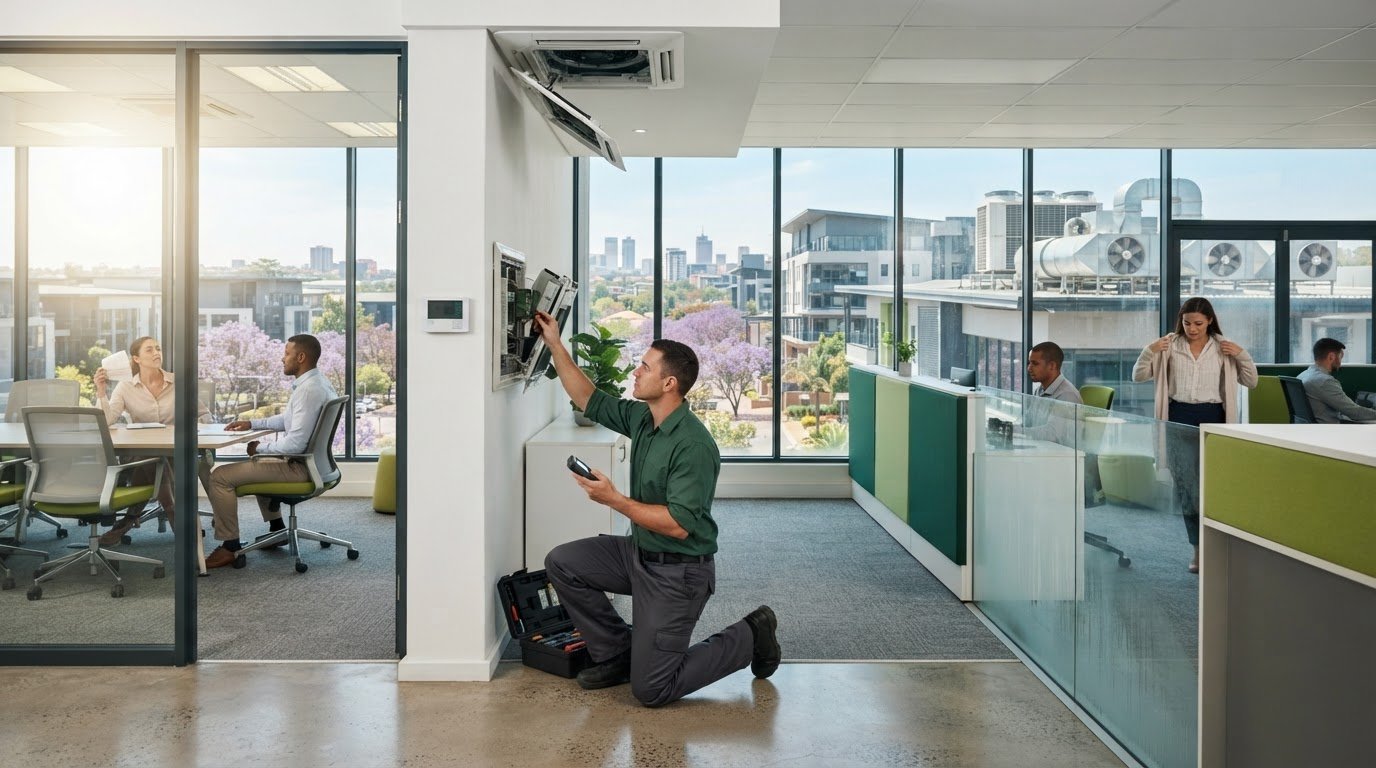
A boardroom stays warm while reception is too cold, or the system makes unfamiliar noises after a fault. These patterns can be signs your commercial HVAC needs repair, especially when they affect staff, customers or daily operations.
Not every change points to a fault, and one symptom can have several possible causes. Note when it happens, which areas are affected and whether the pattern is getting worse. In Gauteng workplaces, unexplained energy use and recurring problems are also reasons to review how the system is performing.
This checklist explains common warning signs, how to judge their urgency and when to arrange a professional assessment instead of attempting repairs. It also shows what to record, including affected rooms, airflow changes, fault patterns and control settings, so a technician can assess the equipment and building requirements with useful context.
Key Takeaways
- Track changes in comfort, airflow, noise, odours, cycling and energy use. Compare affected rooms and operating times.
- The signs your commercial HVAC needs repair show a change in system behaviour, but don’t identify a failed component.
- A system that still runs may not be working properly. Repeated, worsening or multi-zone symptoms need attention.
- Record dates, affected zones, thermostat settings and changes in behaviour to help a technician assess the system.
- Engico assesses symptoms, equipment and building requirements to guide commercial HVAC repair planning across Gauteng.
Signs your commercial HVAC needs repair: a Gauteng business checklist
Start with what staff can observe. Check for:
- Rooms that remain too warm or too cool after normal thermostat adjustments.
- Weak or uneven airflow from supply grilles.
- New banging, grinding, squealing or vibration.
- Unusual odours from the system or vents.
- Repeated start-stop cycles or longer-than-usual run times.
- Energy use that rises without an obvious change in operating hours or building use.
Before drawing conclusions, compare the affected rooms, the times symptoms occur and any recent changes to control settings or operating schedules. Check whether the issue is limited to one area or appears across several zones. A single sign can have several causes, so these observations can guide an assessment but cannot confirm which component, if any, has failed. For a general overview of Heating, ventilation, and air conditioning (HVAC), consider how equipment, air movement and controls work together in a building.
Persistent temperature or airflow changes, unusual sounds or odours, repeated cycling and unexplained increases in energy use are all reasons to arrange a professional assessment.
Are temperatures or airflow inconsistent between commercial areas?
Record rooms that remain uncomfortable despite normal control adjustments. Compare how the supply grilles feel in those spaces with grilles in areas where conditions are normal. Don’t open equipment or adjust internal components to investigate. A problem in one office or meeting room may have a different cause from a pattern across several zones, so note each affected area and whether conditions change at particular times.
Which sounds, odours or operating changes should you record?
Describe new banging, grinding, squealing or vibration. Note where the sound occurs, when it starts and whether it continues throughout a cycle. Report unusual odours promptly rather than trying to identify their source. Track repeated starting and stopping, longer run times and changes in energy use against normal operating hours. Dates, locations and timing give a technician a clearer picture of system behaviour.
These signs your commercial HVAC needs repair are most useful when considered together. Engico Air Conditioning assesses commercial HVAC faults across Gauteng, considering reported symptoms, the affected equipment and building requirements before recommending repair actions.
What commercial HVAC warning signs can reveal about Gauteng building systems
A warning sign is a change you can observe, not proof that a particular component has failed. For example, one area may become uncomfortable because of its control settings, restricted airflow or a change in how the building is being used. Treat the signs your commercial HVAC needs repair as evidence to record and discuss, not as a diagnosis based on symptoms alone.
How can controls, ductwork and air handling affect comfort?
A thermostat or building management system influences when equipment runs and how temperatures are controlled. Settings, schedules or control behaviour may contribute to differences between rooms. Filters, ductwork and supply grilles can also affect airflow, while fans and air handling units move air through parts of the building. A change in fan performance or an airflow restriction may coincide with uneven comfort, but observation alone cannot identify the cause.
Record which zones are affected, the control settings shown and whether the issue follows a particular operating schedule. This can help distinguish a local pattern from one that spans multiple areas. Staff do not need to open equipment or adjust internal components to gather this information.
When might a higher energy bill point to an HVAC fault?
Compare energy use with operating hours, occupancy and weather, as well as any recent changes to schedules or building use. A busier site, longer opening hours or different outdoor conditions can affect how much the system runs. If run times have increased without a clear operational explanation, note when the change began and whether comfort has also shifted.
Longer run times can be a clue, but they do not prove that the system is inefficient or that a specific fault is present. A technician needs to consider the equipment, airflow, controls and building requirements before identifying an appropriate response. A symptom is a reason to investigate, not a diagnosis. Professional assessment helps establish what is happening before repairs are recommended.
For practical guidance on planned care, see the commercial HVAC maintenance guide for Gauteng properties. If recurring symptoms are disrupting building operations, a commercial HVAC repair assessment can help turn observations into a considered next step.
Is it a commercial HVAC repair issue or a temporary comfort problem?
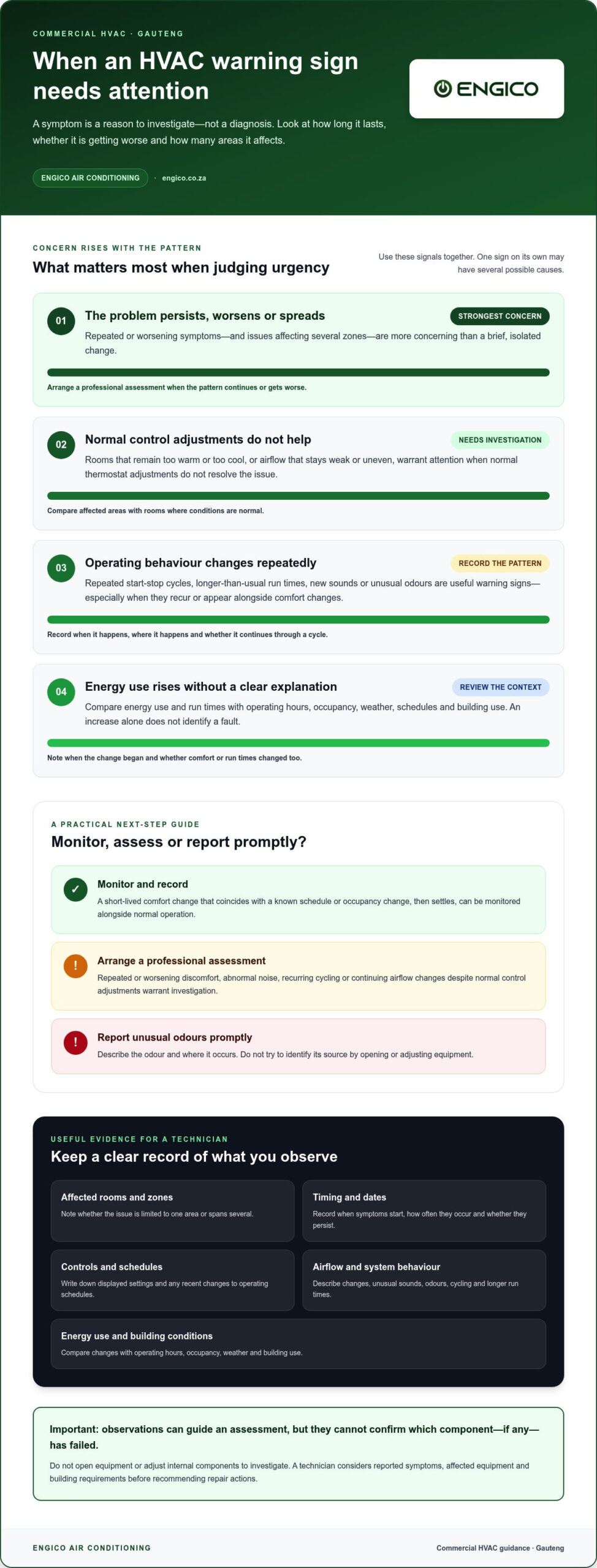
A system that switches on is not necessarily working correctly. It may run while failing to maintain the intended temperature, moving less air than usual or repeatedly starting and stopping. The signs your commercial HVAC needs repair are more concerning when they persist, worsen or affect several areas, rather than appearing briefly and resolving after an explainable change.
Use the pattern and its effect on operations to decide what to do next:
- Monitor and record: A short-lived comfort change that coincides with a known schedule adjustment or change in occupancy, then settles, can be monitored alongside normal operation.
- Arrange professional assessment: Repeated or worsening discomfort, abnormal noise, recurring cycling or airflow changes that continue despite normal control adjustments warrant investigation.
- Report promptly: Sudden loss of cooling, unusual odours or visible leaks should be reported to the responsible facilities contact. Persistent symptoms affecting several zones also need prompt attention.
This is a practical guide to prioritising a response, not a way to diagnose equipment. If a symptom raises a concern under your site’s safety procedures, follow those procedures and notify the responsible person. Don’t open equipment or attempt repairs. Recording when the change began, where it occurs and how it affects staff or operations gives a technician useful context.
Which HVAC changes should prompt a quicker response?
Prioritise a sudden loss of cooling, recurring abnormal sounds and airflow changes that remain or spread to other areas. Report unusual odours or visible leaks promptly rather than trying to identify their source. Follow site safety procedures and keep staff away from equipment if those procedures require it. Leave inspection and repair work to a suitably experienced HVAC technician.
When should a business consider repair versus replacement?
One symptom or the age of a unit alone does not establish that replacement is the right option. A technician can assess the equipment’s condition, the fault, the building’s requirements and available repair options, then explain the findings so the business can make an informed decision. If control behaviour is part of the concern, smart HVAC control for commercial buildings offers related context.
Acting on a persistent or escalating pattern is a measured way to manage risk. It helps the business understand the issue and plan a response without assuming a breakdown is inevitable or that replacement is automatically necessary.
Commercial HVAC warning signs in Gauteng: what to do
Once you recognise a pattern, move from observation to professional assessment in a few clear steps: document the symptoms, consider their effect on operations, report them through the appropriate site channel and arrange an assessment. A concise record helps a technician understand what has changed without treating a symptom as a confirmed fault.
- Document: Note dates, times, affected zones, thermostat settings and changes in system behaviour.
- Assess impact: Record whether the issue affects one room, several areas or essential business activity.
- Report: Share your observations with the responsible facilities contact and follow established site procedures.
- Arrange assessment: Provide the information to a commercial HVAC technician so the system can be assessed before repair recommendations are made.
What information helps a technician assess the fault?
Include the system type, such as a split, cassette or ducted system, if known. Describe the affected areas and symptom timeline, and note relevant changes to operating hours, occupancy, settings or schedules. Share observations about airflow, controls, noises, odours and energy use. State whether the issue affects one zone, several areas or important business activity. Stick to what staff have observed rather than assuming a component has failed.
How can you reduce disruption while arranging an assessment?
Use established site procedures to communicate which areas are affected and manage comfort concerns. Keep thermostat settings consistent where practical, as repeated adjustments can make the original pattern harder to understand. Don’t bypass safety controls, open equipment or attempt repairs without suitable expertise. If possible, make relevant plant areas, control points and service records accessible for the assessment, following your site’s normal access and safety procedures.
For a related local resource, see the guide to commercial HVAC maintenance in Sunninghill. Clear records of the signs your commercial HVAC needs repair help Engico Air Conditioning assess the reported symptoms alongside the equipment and building requirements. Arrange a commercial HVAC repair assessment to plan the next step for your Gauteng business.
Commercial HVAC repair in Gauteng: how Engico helps businesses plan next steps
After recording your observations, the next step is to establish what is causing the change and what response suits the building. Engico Air Conditioning repairs and services commercial air conditioning systems across Gauteng, including ducted and multi-split systems, ceiling cassette units and air handling equipment. The assessment considers the reported symptoms, equipment and site requirements before repair recommendations are made.
What does a commercial HVAC repair assessment consider?
A technician reviews where and when symptoms occur, which equipment serves the affected areas and whether airflow or controls may be relevant. A temperature concern in one zone, for example, may need a different investigation from a change affecting several areas connected to a wider system. The findings help shape an appropriate repair plan. Scope, timing and outcomes depend on the system and what the assessment identifies.
This avoids treating a symptom as a confirmed fault. Sharing records of operating behaviour and affected areas can help focus the assessment, while allowing the technician to consider the building’s practical requirements alongside the equipment.
How can Gauteng businesses plan reliable HVAC service?
For a useful discussion, prepare the system type, a concise symptom timeline and the areas where comfort or operations are affected. Note business operating hours and identify any business-critical spaces, such as customer-facing areas or rooms that support essential daily work. This context helps inform service planning around how the building is used, since the same repair approach will not suit every site.
Engico serves businesses in Pretoria, Johannesburg, Centurion and Sandton, as well as other Gauteng locations. Whether the concern involves ducted air conditioning, a multi-split installation, ceiling cassette equipment or an air handling unit, clear observations help connect the reported issue to the relevant system and building requirements.
If the signs your commercial HVAC needs repair are affecting comfort or operations, discuss the system and assessment findings with Engico to plan a suitable next step. Arrange a commercial HVAC repair discussion with Engico.
Turn HVAC observations into a clear next step
The signs your commercial HVAC needs repair are most useful when you consider their pattern, persistence and effect on building operations. Record what staff notice, including affected areas and changes in system behaviour, then share those details for professional assessment. A running system can still have a fault, and symptoms alone cannot confirm the cause.
Engico provides commercial HVAC service and repairs across Gauteng, including Pretoria, Johannesburg, Centurion and Sandton. Its work covers ducted, multi-split and ceiling cassette systems, as well as air handling equipment. Assessment considers the reported symptoms, relevant equipment and building requirements before repair recommendations are made.
If your system is affecting comfort or daily operations, take the next step with a clear record of what has changed. Arrange a commercial HVAC repair discussion with Engico and plan an informed response for your business.
Frequently Asked Questions
Is uneven cooling a sign that a commercial HVAC system needs repair?
Yes, uneven cooling can be among the signs your commercial HVAC needs repair, particularly if it persists, affects several areas or returns after normal control adjustments. Airflow, controls and equipment can all influence temperatures, so one uncomfortable room does not identify the fault. Record which zones are affected and when the change occurs. If the problem continues or disrupts business operations, arrange a professional assessment to investigate the cause.
Can a commercial HVAC system need repair if it is still running?
Yes. A system can keep operating while struggling to maintain temperature, delivering weaker airflow, cycling repeatedly or making new noises. Running does not confirm that every component is working correctly. Note what has changed, how often it happens and which areas are affected. A professional technician can assess the system and use those observations to determine whether repair or another action is appropriate.
Why has my commercial HVAC energy use increased suddenly?
A sudden change in energy use may relate to operating hours, occupancy, weather, control settings or system performance. Compare usage with those factors before assuming the equipment is faulty. If energy use rises without an obvious operational explanation, record when the increase began and whether it coincides with longer run times or weaker airflow. Share those details when arranging a professional HVAC assessment.
What commercial HVAC noises should I be concerned about?
New or unusually loud banging, grinding, squealing or persistent vibration can indicate that a system needs attention. A sound alone cannot confirm which component is involved. Note where it seems to come from, when it occurs and whether performance changes at the same time. Don’t open equipment to investigate. Report recurring or worsening noise through your site procedures and arrange a professional assessment.
When should I arrange a commercial HVAC repair assessment?
Arrange an assessment if symptoms persist, become more frequent, affect multiple zones or interfere with normal business activity. Report sudden loss of cooling, unusual odours, visible leaks or abnormal sounds promptly through your site procedures. Record the affected areas and changes in system behaviour. A technician can use these observations to investigate the cause and recommend suitable next steps for the equipment and building.
Should I repair or replace a commercial HVAC system?
The right decision depends on the fault, equipment condition, building requirements and repair options identified during an assessment. A single symptom or the system’s age does not automatically mean replacement is necessary. Ask for the assessment findings and practical options to be explained clearly, including how each could address the building’s operational needs. This gives your business a sound basis for deciding how to proceed.
What information should I give a commercial HVAC technician?
Share the system type if known, affected areas, when symptoms began and whether they are worsening. Include observations about temperature, airflow, sounds, odours, controls and operating hours, along with relevant occupancy or schedule changes. Engico serves businesses across Gauteng, including Pretoria, Johannesburg, Centurion, Menlyn, Farie Glen, Silverton, Waterkloof, Gezina, Doringkloof, Midrand, Waterfall, Sunninghill, Woodmead, Sandton, Randburg, Roodepoort, Fourways and Hyde Park. Clear records help inform an assessment.
Recent Comments