
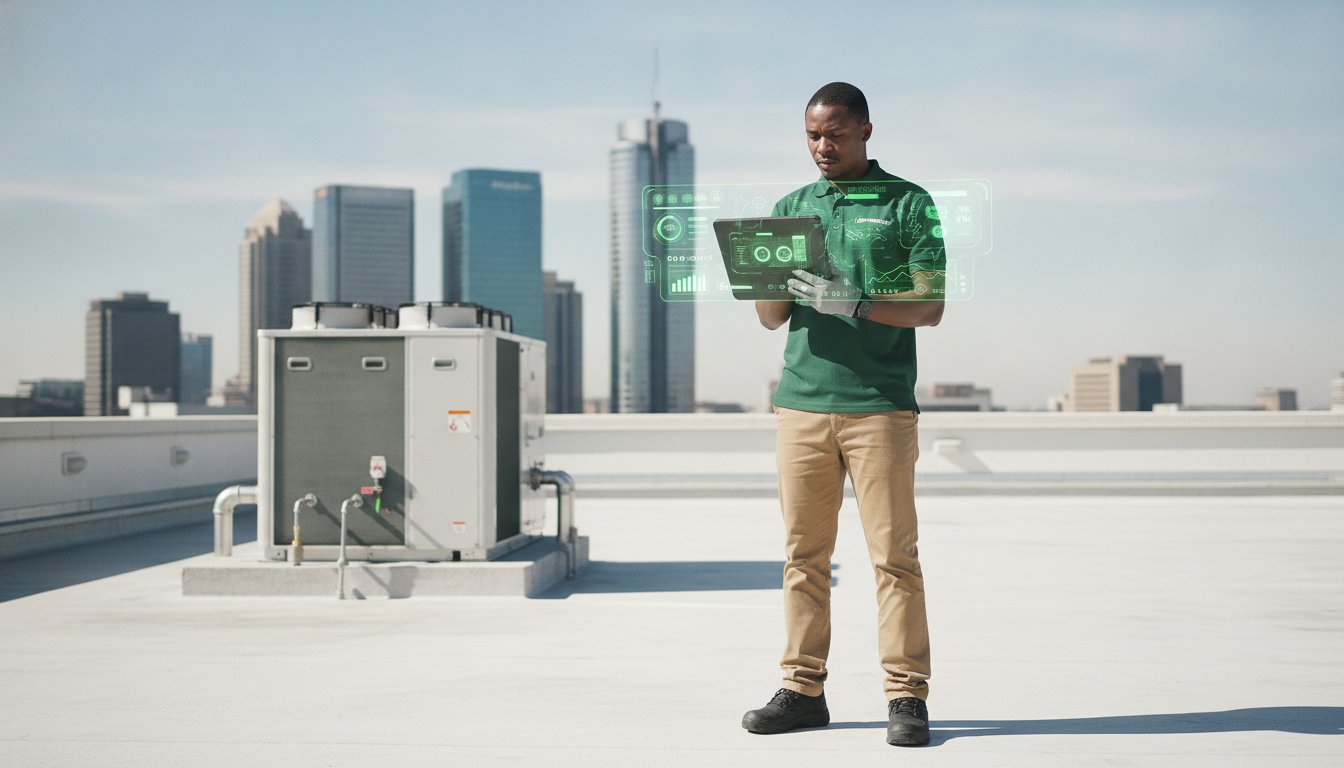
Did you know that HVAC systems typically account for 30% to 60% of a commercial building’s total energy consumption? Much of this expense is often wasted on cooling empty spaces, making smart HVAC control for commercial buildings a vital consideration for modern property management. You likely find it frustrating to manage rising electricity bills whilst dealing with frequent occupant complaints regarding temperature fluctuations. It’s common to worry that modernising an older building management system is too complex or disruptive to be practical.
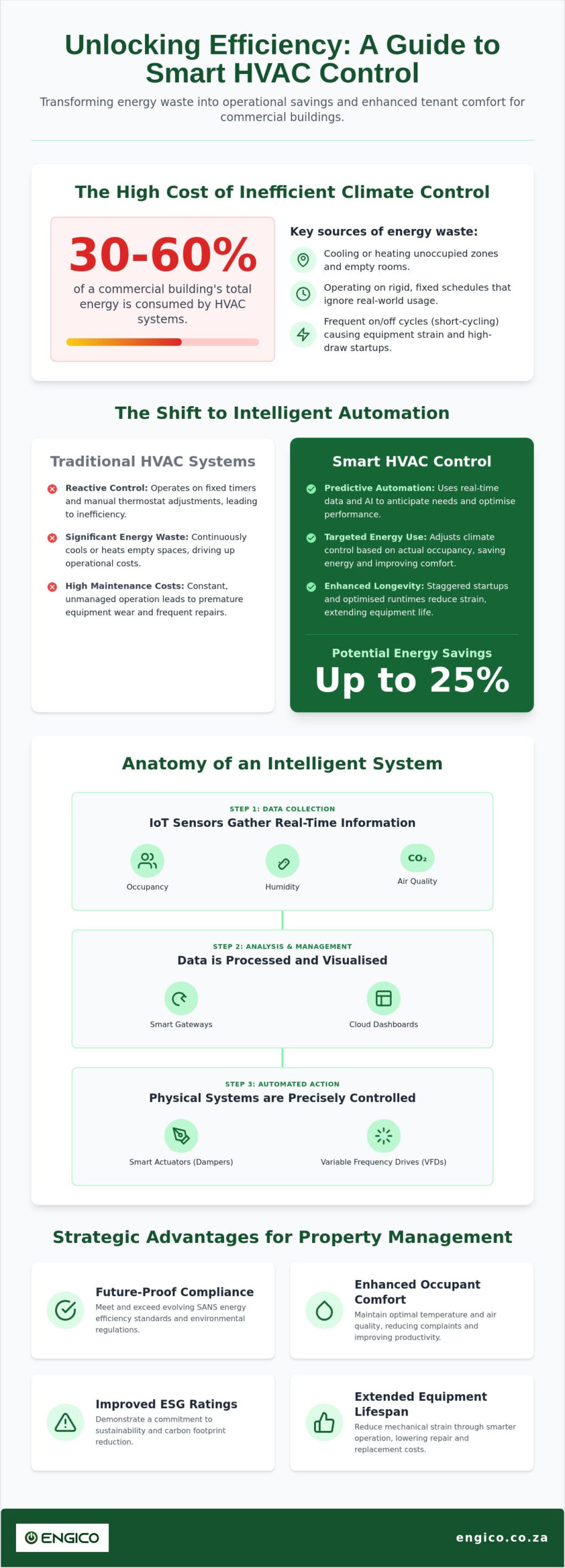
These intelligent systems offer a grounded, reliable solution to reduce energy waste by up to 25% without the need for a full equipment overhaul. This guide explores how automated climate management reduces operational overheads and improves your ESG ratings. We will also examine how these technologies help your property meet the latest SANS energy efficiency standards, providing a stable environment for your tenants and long-term value for your investment.
Key Takeaways
- Understand why traditional fixed schedules lead to significant energy waste and how predictive automation offers a more precise alternative for modern workspaces.
- Discover how smart HVAC control for commercial buildings utilises real-time occupancy data to achieve energy savings of up to 25% whilst enhancing occupant comfort.
- Learn the methodical process of retrofitting legacy systems with modern sensors to improve efficiency without the need for a complete equipment replacement.
- Identify the importance of using open protocols such as BACnet and Modbus to ensure seamless integration with your existing building management system.
- Explore how professional maintenance and local expertise in Gauteng can future-proof your property against evolving SANS regulations and environmental standards.
The Crisis of Inefficient Climate Control in Commercial Property
Traditional HVAC systems are often the primary source of invisible energy waste in commercial properties. Whilst many building owners focus on lighting or insulation, the climate control system remains a significant drain on resources because it lacks the ability to adapt. Most legacy systems operate on rigid, pre-set timers that do not account for the reality of modern, flexible work patterns. This results in empty offices being cooled to the same standard as a fully occupied boardroom, creating a substantial gap between operational costs and actual utility.
In Gauteng, these inefficiencies are particularly costly. Property managers in Johannesburg and Pretoria face the dual pressure of escalating electricity tariffs and the technical strain caused by grid instability. When power is restored following load shedding, unmanaged systems often experience massive surges as every compressor attempts to restart at once. Implementing smart HVAC control for commercial buildings provides the protective logic needed to stagger these startups and manage peak demand effectively. Without this level of oversight, the financial burden of cooling a commercial space becomes increasingly difficult to justify.
Where Your Energy is Actually Going
Energy waste is rarely the result of a single failure; it is usually a cumulative effect of small, unmonitored inefficiencies. Overconditioning empty communal areas or boardrooms during low occupancy is a common culprit. In larger facilities, unoptimised industrial air handling units often suffer from short-cycling, where the system turns on and off too frequently. This behaviour places immense strain on components and wastes energy during the high-draw startup phase. For those managing large-scale operations, ensuring that centralised HVAC for industrial projects includes intelligent oversight is the only way to remain viable in a high-cost energy market.
The Environmental and Financial Cost of Inaction
The consequences of sticking with outdated controls extend beyond the monthly electricity bill. Corporate sustainability reporting now requires detailed evidence of carbon footprint reduction, and an inefficient HVAC system is a major liability for ESG ratings. Poorly managed climate control also leads to premature equipment wear, necessitating frequent and expensive repairs. Additionally, there is a clear link between indoor air quality and employee performance. A modern Building Management System ensures that temperature and ventilation are maintained at optimal levels, preventing the sluggishness and discomfort that often lead to reduced productivity. Investing in smart HVAC control for commercial buildings is therefore a strategic move to protect both your physical assets and your human capital.
What is Smart HVAC Control? Beyond the Thermostat
A sophisticated smart HVAC control for commercial buildings is more than a collection of digital thermostats. It’s a comprehensive network of Internet of Things (IoT) sensors and advanced software that automates climate management based on real-time environmental data. This technology shifts the focus from reactive cooling, where a system responds only after a room becomes too warm, to predictive management. By analysing occupancy patterns and external weather forecasts, the system prepares the building environment before the heat load even peaks.
The hardware facilitating this transition includes smart actuators that precisely adjust air dampers and variable frequency drives (VFDs) that regulate motor speeds. Wireless sensors provide high-resolution data without the need for extensive rewiring. Many modern systems also utilise a “Digital Twin”, which is a virtual model of the building. This digital replica allows facility managers to simulate different scenarios and predict how the HVAC system will perform under varying conditions, ensuring the most efficient operation possible.
The Core Components of an Intelligent System
To achieve this level of precision, the system relies on several key elements. IoT sensors do more than monitor temperature; they measure CO2 levels, humidity, and actual room occupancy. These data points are sent through smart gateways, which act as the essential bridge between the physical air handling units and cloud-based dashboards. Facility managers can then use intuitive user interfaces to monitor performance and adjust settings remotely from any device. For those looking to implement these technologies, professional building management system integration ensures that every component communicates effectively.
How Smart Logic Differs from Programmable Controls
Traditional controls often rely on Level 1 logic, which uses basic timers and fixed schedules. In contrast, Level 3 smart systems use artificial intelligence and machine learning to understand a building’s unique thermal behaviour over time. The system learns how long it takes for a specific floor to cool down and adjusts its startup times accordingly. This prevents energy spikes and reduces mechanical wear. Smart HVAC control is a data-driven ecosystem rather than a single device, synchronising hardware and software to deliver consistent efficiency.
Maximising Efficiency: The ROI of Smart Controls
The financial justification for smart HVAC control for commercial buildings is built upon measurable returns. Traditional systems often represent a fixed operational cost that property owners simply accept as a necessity. Intelligent platforms change this by transforming climate control into a managed asset. The industry promise of a 20-25% reduction in energy consumption is achieved through the precise elimination of cooling for unoccupied zones. Occupancy-based cooling acts as the primary driver of these savings. It ensures that energy is only expended where and when it’s actually required.
Return on investment also comes from the prevention of unexpected expenses. Predictive maintenance alerts detect technical anomalies before they escalate into total mechanical failure. This proactive approach prevents the high costs associated with emergency repairs and operational downtime. Modern smart controls also facilitate improved Indoor Air Quality (IAQ). By monitoring CO2 levels and adjusting ventilation rates automatically, properties can meet modern health and safety standards whilst maintaining high efficiency.
Dynamic Load Management and Demand Response
Intelligent systems allow for dynamic load management, which is essential for navigating complex utility billing structures. By shifting heavy cooling loads to off-peak times, facility managers can significantly reduce demand charges. This logic is particularly effective when integrated with local weather forecasts. Pre-cooling a building in the early morning hours before a Gauteng heatwave allows the structure to maintain its thermal mass more efficiently throughout the day. These technical gains are only sustainable when paired with professional HVAC maintenance services for Gauteng properties, as even the smartest software cannot compensate for neglected hardware.
Zoning and Personalised Comfort
Zoning is a critical factor in maximising ROI, particularly in multi-tenant or open-plan environments. Variable Air Volume (VAV) controllers allow for the creation of micro-climates, which helps to end “thermostat wars” amongst staff. This granular control doesn’t just improve comfort; it provides the data necessary for accurate utility billing. Property owners can justify specific charges for different building zones based on actual consumption rather than simple square-metre estimates. This transparency builds trust with tenants whilst ensuring the building’s operational costs are recovered fairly. For Gauteng businesses looking to quantify these gains, understanding the latest commercial HVAC energy savings Sunninghill trends in low carbon systems provides a practical benchmark for what modern intelligent zoning can achieve.
To explore how specialised technologies like radiant panels can further enhance these zoning strategies, you can learn more about Warmteshop Infrarood verwarming and its role in creating efficient, localised heating solutions.
Building Management System Integration: A Roadmap
Transitioning to smart HVAC control for commercial buildings doesn’t always require the total removal of existing infrastructure. A hybrid approach, where modern controllers are retrofitted to reliable legacy ducted or split units, is often the most methodical path forward. The foundation of this integration lies in open protocols such as BACnet and Modbus. These industry standards ensure that equipment from different manufacturers can communicate within a single, unified environment. By utilising these protocols, property managers avoid vendor lock-in and ensure their building remains adaptable as technology evolves.
Centralising control allows facility managers to view HVAC performance alongside lighting and security data on a single dashboard. This consolidated view provides a comprehensive understanding of how different systems interact; for example, how occupancy sensors for lighting can simultaneously trigger climate adjustments. An HVAC specialist plays a vital role in this process, ensuring that the software-to-hardware communication is seamless and that data packets are correctly interpreted by the central processor. For facilities that include large storage or distribution areas, understanding the principles of warehouse ventilation design South Africa is equally important to ensure these spaces are integrated effectively into the broader building management strategy.
To ensure the wider electrical and security infrastructure of your building is equally robust, you can check out ELVION GROUP for professional installation and technical support.
The demand for such integrated networking and security is also growing in the residential sector, where providers like Home-A-Genius are setting benchmarks for unified automation systems.
In the commercial and hospitality sectors, this digital integration extends to professional display systems; for those looking to modernise their facility’s communication, aviplus.ie offers expert guidance on digital menu boards and screen installations.
Effective property management also relies on clear, data-driven communication with tenants; to refine your outreach strategies, you can discover Enginemailer and its tools for maintaining clean, professional email lists.
Steps to a Successful BMS Integration
A structured roadmap is essential for a project of this complexity. The process typically begins with a thorough audit of existing infrastructure to identify “dark” data points. These are areas where information is being generated by the hardware but isn’t currently being captured by the control system. Following this, it’s important to select a scalable software platform that allows for future expansion as the building’s needs grow. Implementing pilot zones is a recommended strategy, as it allows for the testing of control logic in a controlled area before a full-building rollout is conducted. For Gauteng businesses seeking single-point accountability from design through to commissioning, a turnkey approach to commercial HVAC system design in Gauteng ensures that planning and installation remain fully aligned throughout the project lifecycle.
Overcoming Common Integration Hurdles
Technical integration often brings challenges that require professional oversight. Cybersecurity is a primary concern for cloud-connected systems, necessitating robust encryption and secure access protocols to protect the building’s network. Additionally, facility staff must be trained to interpret and act on the sophisticated alerts generated by smart dashboards. A professional HVAC installer is vital for calibrating smart sensors during integration, as even a minor deviation in sensor placement can lead to inaccurate data and inefficient system behaviour. For property owners seeking a disciplined approach to automation, Engico offers expert Building Management System integration to ensure your project is completed with precision.
Future-Proofing Your Gauteng Property with Engico
Maintaining smart HVAC control for commercial buildings requires more than just high-end software; it demands a local partner who understands the specific environmental and infrastructure challenges of South Africa. In Johannesburg and Pretoria, temperature extremes and power grid instability can place unusual stress on sensitive electronic components. Engico provides the professional reliability needed to manage these complexities. We act as a steady partner, ensuring that your investment in automation continues to deliver performance and savings long after the initial installation is complete.
To ensure your broader IT infrastructure remains powered and operational alongside these systems, you can learn more about Computech-Solutions for reliable hardware and accessories.
The transition toward “Net Zero” commercial buildings is no longer a distant ambition in the South African market. It’s a practical necessity driven by both rising utility costs and evolving carbon disclosure requirements. By combining intelligent technology with methodical specialised service, property owners can significantly reduce their environmental impact. This long-term approach ensures that climate control systems remain efficient, durable, and compliant with current national standards. We focus on providing a “safe pair of hands” for your property, prioritising precision and reliability over short-term trends.
Methodical Support for Modern Systems
Our Gauteng-based teams are trained to manage complex industrial air handling and ventilation systems with precision. We don’t believe in “set and forget” technology. Instead, we advocate for regular health checks of smart sensors and actuators to prevent data drift and mechanical inefficiency. This disciplined maintenance is delivered with a sense of quiet confidence, offering transparent, solution-oriented advice rather than aggressive sales tactics. We focus on getting the job done right, ensuring that every component of your smart HVAC control for commercial buildings operates at its peak capability. Our commitment to professional excellence means we handle projects from inception to completion without fuss. For business owners in the northern suburbs seeking structured upkeep programmes, our dedicated commercial HVAC maintenance Sunninghill resource guide outlines how structured service plans protect your mechanical assets and ensure SANS compliance.
Getting Started with Your Smart Upgrade
Every property has a unique thermal profile and different operational requirements. Whether you manage a high-rise office block in Sandton or a large-scale warehouse in Midrand, we provide tailored solutions that respect your specific budget and objectives. The first step toward a more responsive building is a technical consultation to identify existing inefficiencies and explore potential for integration. We invite you to contact Engico for a professional HVAC audit and smart integration plan today. Our methodical assessment will provide a clear roadmap for modernising your property’s climate control and securing its future value through durable, forward-thinking methods.
Securing the Future of Your Commercial Assets
Adopting smart HVAC control for commercial buildings is a transition from basic temperature management to a data-driven operational strategy. You’ve seen how integrating IoT sensors and open protocols like BACnet can reduce energy waste by up to 25% whilst enhancing occupant comfort. This approach doesn’t just lower immediate utility costs; it protects your mechanical equipment from premature wear and aligns your property with modern ESG standards. It’s a methodical way to ensure your facility remains responsive to the needs of its tenants.
Managing these systems in the unique climate of Johannesburg and Pretoria requires a partner who understands both the technical and local challenges. Since 2022, Engico has served as a specialist in Gauteng commercial HVAC, providing expertise in high-performance industrial ventilation and complex Building Management System integration. We focus on delivering professional, reliable service that prioritises the long-term stability of your facility. We’re here to act as a safe pair of hands for your property’s climate needs.
Optimise your building’s efficiency with Engico’s smart HVAC solutions. Taking this step ensures your property remains competitive, efficient, and ready for the demands of a modern workspace.
Frequently Asked Questions
What is the difference between a BMS and smart HVAC control?
A Building Management System (BMS) is a broad platform that manages multiple building functions, such as lighting, security, and fire safety, whereas smart HVAC control is a specialised component within that system. While a BMS provides the overarching framework, smart HVAC controls use dedicated IoT logic and machine learning to optimise heating and cooling cycles specifically. These controls often integrate into a wider BMS via open protocols like BACnet to provide more granular, data-driven climate management.
Can I install smart controls on an older ducted air conditioning system?
Yes, it is entirely possible to retrofit smart controls onto existing ducted air conditioning systems without replacing the entire mechanical unit. By adding smart dampers, wireless sensors, and modern actuators, we can bring intelligent logic to legacy hardware. This approach is a cost-effective way to implement smart HVAC control for commercial buildings while extending the operational lifespan of your current mechanical assets through more precise usage.
How much energy can a commercial building really save with smart HVAC?
Commercial buildings typically see energy reductions ranging from 20% to 40% after implementing intelligent climate platforms. These savings are achieved by eliminating the cooling of unoccupied spaces and using predictive logic to manage peak loads. Since HVAC systems often account for 30% to 60% of a building’s total energy use, these efficiencies result in a significant decrease in monthly operational overheads and utility expenses.
Is smart HVAC control expensive to maintain?
Smart systems are not necessarily more expensive to maintain, but they do require a more methodical approach to technical support. Instead of reactive repairs, these systems use predictive alerts to identify technical anomalies before a total mechanical failure occurs. This proactive maintenance helps avoid the high costs of emergency call-outs and ensures that sensors and actuators remain calibrated for maximum energy efficiency over the long term. For residential property owners, you can learn more about WellPlumbed to discover how professional heating and plumbing care provides similar peace of mind for domestic systems.
Do smart HVAC systems work during load shedding?
While the physical hardware requires power to run, smart HVAC controls are essential for managing the recovery phase once power is restored. They include protective logic that prevents massive power surges by staggering the startup of different compressors and air handling units. This managed restart protects your equipment from the electrical strain and potential damage typically associated with the South African grid’s frequent switching cycles.
What are IoT sensors and how do they help with cooling?
IoT (Internet of Things) sensors are small, wireless devices that monitor environmental variables such as occupancy, CO2 levels, humidity, and temperature. Unlike a traditional thermostat that only reads a single point, a network of these sensors provides a high-resolution map of the building’s thermal needs. This data allows the smart HVAC control for commercial buildings to direct cooling only to the areas where people are actually present, significantly reducing energy waste.
How long does it take to integrate smart controls into a building?
The time required for integration depends on the building’s size and the complexity of the existing infrastructure, but a standard rollout often takes between a few weeks and several months. The process begins with a technical audit followed by the installation of sensors and controllers in pilot zones. This phased approach allows for the testing of control logic and software communication without causing major disruptions to the building’s daily operations.
Can smart HVAC systems improve air quality in South African offices?
Smart HVAC systems significantly improve indoor air quality by using real-time sensors to monitor CO2 and pollutant levels. When occupancy increases in a boardroom or communal area, the system automatically adjusts ventilation rates to introduce more fresh air. This ensures a healthier environment for staff, which is increasingly important for meeting modern health and safety standards and improving overall employee productivity in the workplace.
Recent Comments