
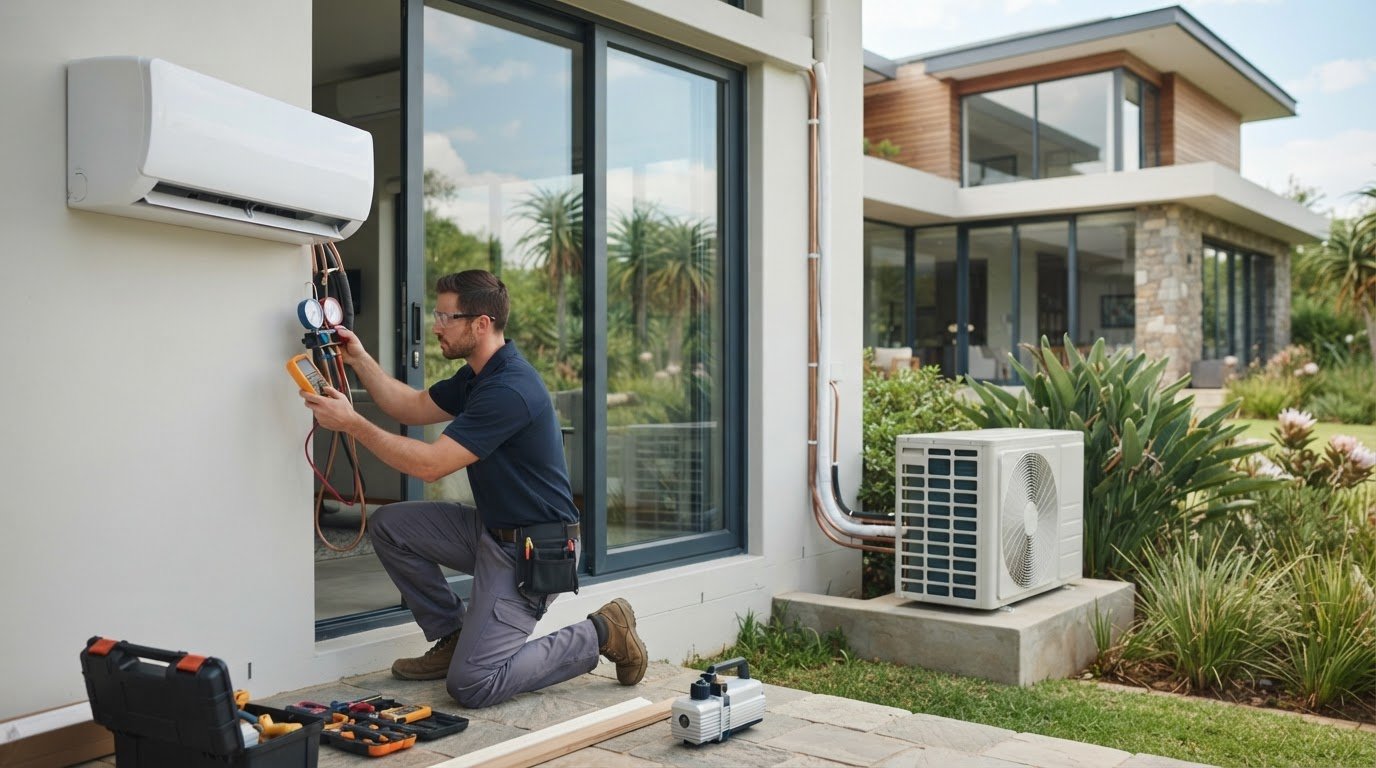
A premium climate control unit cannot compensate for an incorrect capacity calculation or an outdoor condenser placement that falls foul of strict estate rules. When planning a split system air conditioner installation Waterfall homeowners and commercial managers must balance architectural compliance, whisper-quiet operation, and long-term energy efficiency. You already know how rapidly intense Highveld summer heatwaves can elevate electricity bills, particularly within modern properties featuring expansive glazing, open-plan layouts, and high ceilings.
Addressing Homeowners Association guidelines while guarding against the risks of poor workmanship, refrigerant leaks, and inadequate cooling shouldn’t complicate your project. This guide provides the practical clarity you need to make an informed investment, ensuring your chosen inverter system is sized accurately to your room volume and fully compliant with local estate requirements. Ahead, we examine essential sizing criteria, discreet condenser positioning strategies, and the professional installation benchmarks necessary for dependable, year-round comfort.
Key Takeaways
- Understand how reverse-cycle inverter technology delivers energy-efficient thermal stability across Gauteng’s contrasting summer heatwaves and winter chills.
- Determine the exact BTU capacity required for expansive, high-ceiling modern architecture to prevent inefficient short-cycling and excessive running costs.
- Evaluate the practical differences between single split and multi-split systems to minimise external plant clutter and preserve building aesthetics.
- Ensure your split system air conditioner installation Waterfall project complies fully with South African electrical safety standards and local estate architectural rules.
- Discover the benefits of certified technical commissioning and structured preventative maintenance for sustained equipment reliability.
Understanding Split System Air Conditioning for Waterfall Properties
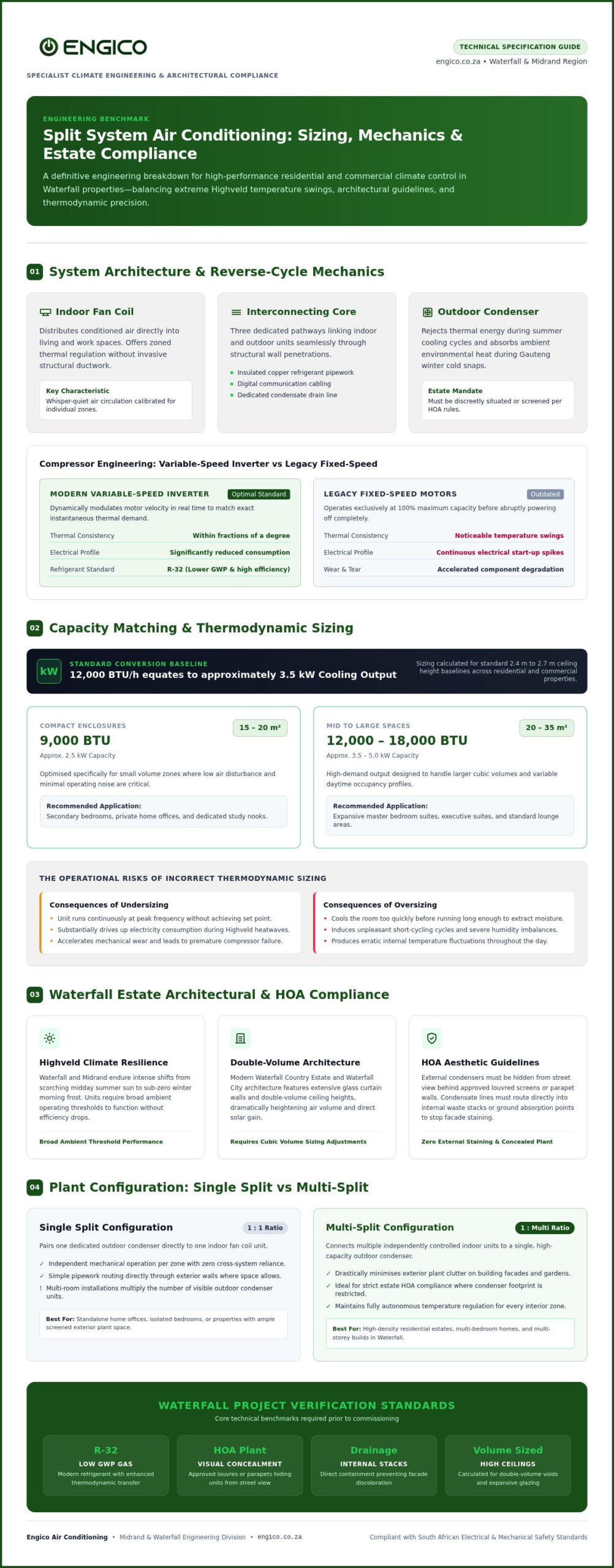
Split system air conditioning separates the thermal cycle into two distinct assemblies: an indoor fan coil that distributes conditioned air, and an outdoor condenser unit that rejects or absorbs heat. Linked by insulated copper refrigeration pipework, communication cabling, and a condensate drain, these systems operate on reverse-cycle heat pump principles. This engineering allows a single unit to extract ambient heat from outdoor air during crisp Gauteng winters and reverse the process during sweltering summers, offering dependable year-round climate control across residential estates and commercial office suites.
While larger industrial developments might employ ducted plant setups or split-system central air conditioners, wall-mounted units remain the benchmark for zoned thermal control in Waterfall properties. They allow independent temperature regulation per zone without demanding extensive duct pathways through structural slabs or bulkheads.
The Mechanics of Modern Inverter Split Systems
Modern split systems rely on variable-speed inverter compressors rather than legacy fixed-speed motors. Traditional compressors run at maximum capacity before shutting down completely, creating noticeable temperature swings and continuous electrical spikes. In contrast, inverter technology modulates compressor speed in real time to match the thermal load of the room.
- Consistent comfort: Maintains target indoor temperatures within fractions of a degree.
- Reduced electrical consumption: Inverter compressors reduce energy usage significantly compared to older fixed-speed units during extended operation.
- Modern refrigerants: Contemporary units utilise lower global warming potential refrigerants like R-32, which improves heat transfer efficiency while reducing environmental impact.
Waterfall Architectural and Environmental Context
Properties across Waterfall and the wider Midrand area present unique climatic and structural demands. Highveld conditions swing from scorching midday sun to winter morning frost, requiring equipment capable of performing reliably under broad ambient temperature thresholds. Modern architecture in developments like Waterfall Country Estate and Waterfall City frequently incorporates high double-volume ceilings and expansive glass curtain walls, dramatically increasing solar gain and air volume.
Executing a compliant split system air conditioner installation Waterfall project requires strict adherence to local Homeowners Association (HOA) architectural guidelines. Estate aesthetic committees regulate exterior visual impact, requiring outdoor condensers to remain concealed from street view behind approved louvred screens or parapet walls. Additionally, condensate drain lines must link directly to internal waste stacks or ground-level absorption points, preventing unsightly facade staining and upholding estate standards.
Capacity and Sizing: Selecting the Correct BTU Rating for Your Space
Cooling capacity is measured internationally in British Thermal Units (BTU), where 12,000 BTU/h equates to roughly 3.5 kW of cooling output. Sizing equipment purely on floor area often results in chronic thermal performance issues. Undersized units run continuously at peak frequency, driving up electricity consumption and accelerating mechanical wear without achieving the set temperature. Conversely, oversized equipment cools the room too quickly without running long enough to extract moisture, causing unpleasant short cycling, humidity imbalances, and temperature fluctuations.
Accurate thermodynamic calculations account for volume, architectural orientation, and occupancy. Proper sizing of your air conditioner guarantees that an inverter compressor can run at its most economical speed, maintaining thermal stability while keeping operating noise down.
Standard Room Size to BTU Matching Framework
Standard ceiling heights of 2.4 to 2.7 metres offer a useful baseline for capacity planning across modern domestic and commercial properties:
- 9,000 BTU (approx. 2.5 kW): Best suited for compact areas between 15 and 20 m², such as secondary bedrooms, private home offices, and study nooks.
- 12,000 to 18,000 BTU (approx. 3.5 to 5.0 kW): Ideal for spaces between 20 and 35 m², including expansive master bedrooms, executive suites, and medium-sized reception rooms.
- 24,000 to 30,000 BTU (approx. 7.0 to 8.5 kW): Engineered for areas from 40 to 60 m², covering large open-plan dining spaces, commercial meeting rooms, and collaborative workspaces.
Thermal Load Variables Beyond Floor Space
Architectural choices across Waterfall regularly require adjustments to standard sizing calculations. High double-volume ceilings alter room volume significantly, meaning a 30 m² room might hold the air volume of a 50 m² space. Generous floor-to-ceiling glass on north- or west-facing elevations introduces intense radiant solar heat, especially during dry Highveld afternoons.
Roof insulation levels and ceiling void ventilation also influence heat transfer through building surfaces. Commercial offices must further account for internal heat gain generated by high-density workstations, network server racks, and meeting room occupancy. Selecting the ideal wall-mounted split unit requires evaluating these structural nuances beforehand. You can explore tailored equipment configurations through Engico Air Conditioning to match your building’s specific thermal dynamics.
Getting these calculations right from the outset protects your equipment investment and ensures that your split system air conditioner installation Waterfall project delivers dependable, economical cooling year after year.
Wall-Mounted Split Versus Multi-Split Configurations
Selecting between single wall-mounted split units and a multi-split configuration represents a major design decision for Waterfall properties. While both solutions deliver efficient reverse-cycle cooling and heating, their architectural footprint and plant space requirements differ substantially. Single split systems pair one indoor fan coil directly with a dedicated outdoor condenser. Multi-split systems connect up to five individual indoor units to a solitary, high-capacity outdoor condenser, altering how plant equipment integrates with your exterior walls.
Single Wall-Mounted Split Systems: Benefits and Limitations
Single split systems remain the standard choice for targeted climate control in individual rooms. Their one-to-one engineering offers straightforward installation pathways and predictable performance:
- Independent operation: Each unit runs on a separate refrigeration circuit, meaning maintenance on one room’s unit never affects climate control in adjacent spaces.
- Cost-effective zone management: Perfect for retrofitting climate control into a dedicated study, master suite, or home cinema room without altering existing home infrastructure.
- Facade clutter in multi-room designs: Installing four or five single split systems across a large home requires four or five outdoor condenser units, creating external plant clustering that often breaches strict estate visual standards.
Multi-Split Air Conditioning: Streamlined Multi-Room Cooling
Multi-split systems resolve exterior spatial constraints by routing multiple indoor refrigeration pipe runs back to a single outdoor plant location. Each indoor unit retains independent thermostatic control, allowing occupants to set different temperatures across bedrooms and shared living areas.
This configuration excels in modern developments like Waterfall Country Estate, Waterfall Village, and Waterfall City, where exterior aesthetic rules limit plant placement. By consolidating outdoor plant into a single condenser footprint, homeowners can tuck the mechanical equipment into an approved service yard, hidden behind architectural screening or placed out of sight within utility alcoves.
Efficiency and Long-Term Reliability Comparison
Operating a multi-split setup requires an understanding of system diversity and mechanical load. An advanced multi-split outdoor unit intelligently modulates its compressor output based on active indoor units. If only one bedroom runs during the night, the compressor drops its frequency down to match that modest demand, conserving energy.
However, multi-split systems introduce a single point of failure: an issue with the outdoor compressor disrupts cooling across every connected room. In contrast, separate single splits offer inherent mechanical redundancy. To protect either arrangement over years of demanding Highveld temperature extremes, engaging qualified HVAC maintenance services for Gauteng properties ensures heat exchangers remain clean, refrigerant pressures stay balanced, and compressor electronics perform reliably.
Carefully weighing architectural layout against mechanical redundancy ensures your split system air conditioner installation Waterfall project meets both your personal comfort expectations and estate property guidelines.
Installation Protocols: Compliance, Aesthetics, and Engineering Standards
Professional installation bridges the gap between premium HVAC equipment and actual real-world performance. In modern developments, air conditioning is far from a casual handyman task. Executing an enduring split system air conditioner installation Waterfall project requires meticulous pre-planning, rigid mechanical engineering, and absolute alignment with South African safety standards. Skipping these steps risks premature compressor failure, ruined interior plasterwork, and expensive compliance disputes with estate management.
Pre-Installation Survey and Position Engineering
A successful project begins with evaluating airflow patterns and structural boundaries. Indoor evaporators must direct supply air evenly across living spaces without creating uncomfortable, direct draughts over desks, beds, or primary seating zones.
- Acoustic and physical dampening: Outdoor condensers require mounting on heavy-duty rubber vibration isolators, whether secured to exterior load-bearing walls or positioned on level concrete ground plinths.
- Architectural trunking: External interconnecting pipework must sit within UV-stabilised, colour-matched architectural trunking, routed neatly along structural lines to satisfy estate design codes.
- Gravity drainage pathways: Condensate lines need a minimum fall of 1:50 to ensure uninterrupted water drainage, avoiding stagnant moisture build-up inside internal drywalls.
Technical Refrigerant Piping and Evacuation Procedures
Refrigeration integrity dictates the working lifespan of modern inverter equipment. Technicians must prepare precision mechanical flare joints using dedicated torque wrenches, preventing micro-fractures that bleed costly refrigerant into the atmosphere over time.
Once pipework runs are secured, dry nitrogen pressure testing verifies that joints remain leak-free under intense operating pressures. Following positive pressure tests, technicians deploy a two-stage rotary vane vacuum pump to pull the circuit down below 500 microns. This step removes non-condensable atmospheric gases and deep moisture. Leaving moisture inside the copper circuits contaminates compressor oil, resulting in acidic corrosion and premature motor burnout. All suction and liquid lines receive independent, closed-cell elastomeric insulation to prevent condensation dripping into ceiling voids.
Electrical Infrastructure and Power Quality Protection
Split systems require dedicated electrical circuits routed directly from the distribution board, protected by appropriately sized circuit breakers and local weatherproof isolator switches situated within arm’s reach of the outdoor condenser. South African electrical regulations mandate these disconnect switches to guarantee technician safety during routine servicing.
Given the sensitivity of contemporary DC inverter printed circuit boards to Highveld electrical storms, integrating robust surge protection devices is vital. Furthermore, systems configured alongside residential solar arrays and battery storage require precise inrush current calculations to prevent inverter trips during transition periods. To ensure your cooling hardware operates reliably under these demanding conditions, contact Engico Air Conditioning to arrange a technical site survey tailored to your property.
Why Partner with Engico Air Conditioning for Your Waterfall Project
Engico Air Conditioning provides turnkey expertise for residential and commercial properties across Midrand and greater Gauteng. Managing estate guidelines and thermal demands requires a seasoned technical partner who prioritises build quality over quick shortcuts. Our methodical approach ensures every split system air conditioner installation Waterfall project meets exact thermodynamic specifications, estate aesthetic standards, and manufacturer protocols for lasting reliability.
Engineering Excellence and Tailored Design
Effective climate control starts long before installation begins. Our certified HVAC specialists conduct comprehensive on-site thermal evaluations, factoring in solar orientation, structural volume, and occupancy loads rather than relying on rough estimates. Technicians deploy high-precision digital manifolds, torque wrenches, and two-stage vacuum pumps to guarantee leak-tight refrigeration circuits. For complex office suites and commercial properties, our technical teams can also implement smart HVAC control for commercial buildings, giving managers centralised scheduling and automated thermal optimisation across multiple operational zones.
Dedicated Post-Installation Servicing and Maintenance
Equipment longevity depends on disciplined preventative aftercare. Over time, dust accumulation across heat exchanger coils and blower wheels degrades the coefficient of performance (COP), increasing energy draw and stressing compressor mechanics.
- Specialised coil treatment: Scheduled chemical coil washing restores airflow and heat transfer efficiency.
- Electrical safety audits: Regular inspection and re-torqueing of terminals protects sensitive inverter electronics against loose connections.
- Warranty protection: Transparent digital service logging ensures compliance with manufacturer warranty conditions.
Drawing on the standards we apply to commercial HVAC maintenance in Sunninghill and surrounding Midrand sectors, our structured service agreements safeguard your cooling equipment throughout its working life.
Initiating Your Waterfall Installation Consultation
Setting up your climate control project begins with a structured on-site evaluation. We review your building layout, assess electrical availability, and map out discreet trunking routes that align with estate requirements. Every project is executed with transparent scopes of work, clean-site protocols, and thorough commissioning handovers. Preparing your property before summer heatwaves arrive ensures your living areas and workspaces remain comfortable and energy-efficient all year round.
Securing Long-Term Climate Comfort in Waterfall
Investing in dependable climate control requires balancing structural aesthetics, precise thermodynamic sizing, and uncompromising mechanical standards. Selecting the correct inverter capacity protects your interior spaces against unpredictable Highveld heatwaves while keeping electrical consumption low. Simultaneously, aligning your outdoor plant layout with local HOA guidelines ensures seamless integration without regulatory delays or aesthetic penalties.
Engico Air Conditioning provides turnkey project support encompassing equipment supply, precision fitting, and structured preventative maintenance. Our specialised HVAC technicians adhere strictly to SANS electrical and refrigerant regulations, bringing proven experience across premier Gauteng residential estates and corporate facilities. When you are ready to proceed with a split system air conditioner installation Waterfall property owners can depend on for whisper-quiet performance, schedule a technical site survey with Engico Air Conditioning. Taking a proactive approach today ensures balanced, energy-efficient comfort through every season.
Frequently Asked Questions
What is the typical lifespan of an inverter split system air conditioner in Waterfall?
A well-maintained inverter split system typically operates reliably for 10 to 15 years in Gauteng conditions. Equipment longevity depends on regular filter sanitisation, preventative coil cleaning, and high-quality initial installation. Ensuring that copper pipework is vacuumed correctly and electrical feeds include surge suppression shields the sensitive inverter circuitry from seasonal Highveld lightning strikes, preserving the compressor and internal electronics over the long term.
Do I require Homeowners Association approval before installing an air conditioner in Waterfall?
Yes, most residential estates across Waterfall enforce strict architectural and aesthetic guidelines. You must submit plans detailing outdoor condenser placement, acoustic decibel ratings, and exterior pipe trunking routes before starting work. Condensers generally need placement in screened service yards or behind approved architectural louvres. Selecting a contractor experienced with split system air conditioner installation Waterfall protocols helps ensure your technical submission gains swift approval without compliance delays.
What is the difference between a standard back-to-back installation and a custom run?
A standard back-to-back setup places the indoor unit on the interior wall directly opposite the outdoor condenser, keeping interconnecting refrigeration lines under three metres. A custom run is necessary when interior aesthetics or estate guidelines forbid mounting the outdoor unit directly outside the room. Custom installations route insulated copper piping, electrical wiring, and gravity condensate drainage through ceiling voids or along discreet exterior facades to reach an approved plant area.
Can a split system air conditioner run effectively off a residential solar and battery system?
Modern inverter units integrate exceptionally well with residential solar and battery storage. Inverter compressors eliminate the intense startup electrical spikes seen in older fixed-speed compressors by ramping up motor speed smoothly. This low inrush current prevents your solar inverter from tripping. Operating your cooling during peak midday sunlight hours allows you to run the system directly off solar generation, drastically lowering grid electricity consumption.
How frequently should a residential split system air conditioner be serviced in Gauteng?
Residential systems require professional servicing at least once a year, preferably in early spring before intense summer temperatures arrive. In high-dust environments or homes with domestic pets, bi-annual servicing is recommended. A proper technical service involves deep chemical coil washing, clearing condensate drainage trays to prevent microbial growth, checking operating refrigerant pressures, and testing electrical terminations to sustain high energy efficiency and validate manufacturer warranties. Long-standing HVAC specialists such as Around the Clock Heating and Air Conditioning similarly emphasise that proactive, routine maintenance is vital for preventing untimely mechanical breakdowns and keeping cooling equipment running smoothly.
How do high ceilings and open-plan designs in modern Waterfall properties affect unit sizing?
High ceilings and expansive architectural voids increase the total cubic volume of air that requires conditioning. Sizing an air conditioner purely by square metres in these homes results in undersized equipment that struggles during peak heatwaves. When planning a split system air conditioner installation Waterfall technicians calculate full cubic volume and solar radiation through extensive glazing, ensuring the selected unit delivers stable cooling without running continuously at high power.
Will an inverter split system effectively heat my home during cold Highveld winters?
Modern reverse-cycle inverter air conditioners provide highly efficient space heating during sub-zero Gauteng winter mornings. Unlike resistive element heaters that convert one unit of electricity into one unit of thermal heat, a heat pump extracts ambient thermal energy from outdoor air. This thermodynamic process delivers up to three to four times more heating energy per kilowatt consumed, providing fast, uniform warmth across your living areas. For broader insights into how residential heat pump and air conditioning systems are implemented in private homes, you can find out more from specialist installers such as D-technix.
Recent Comments