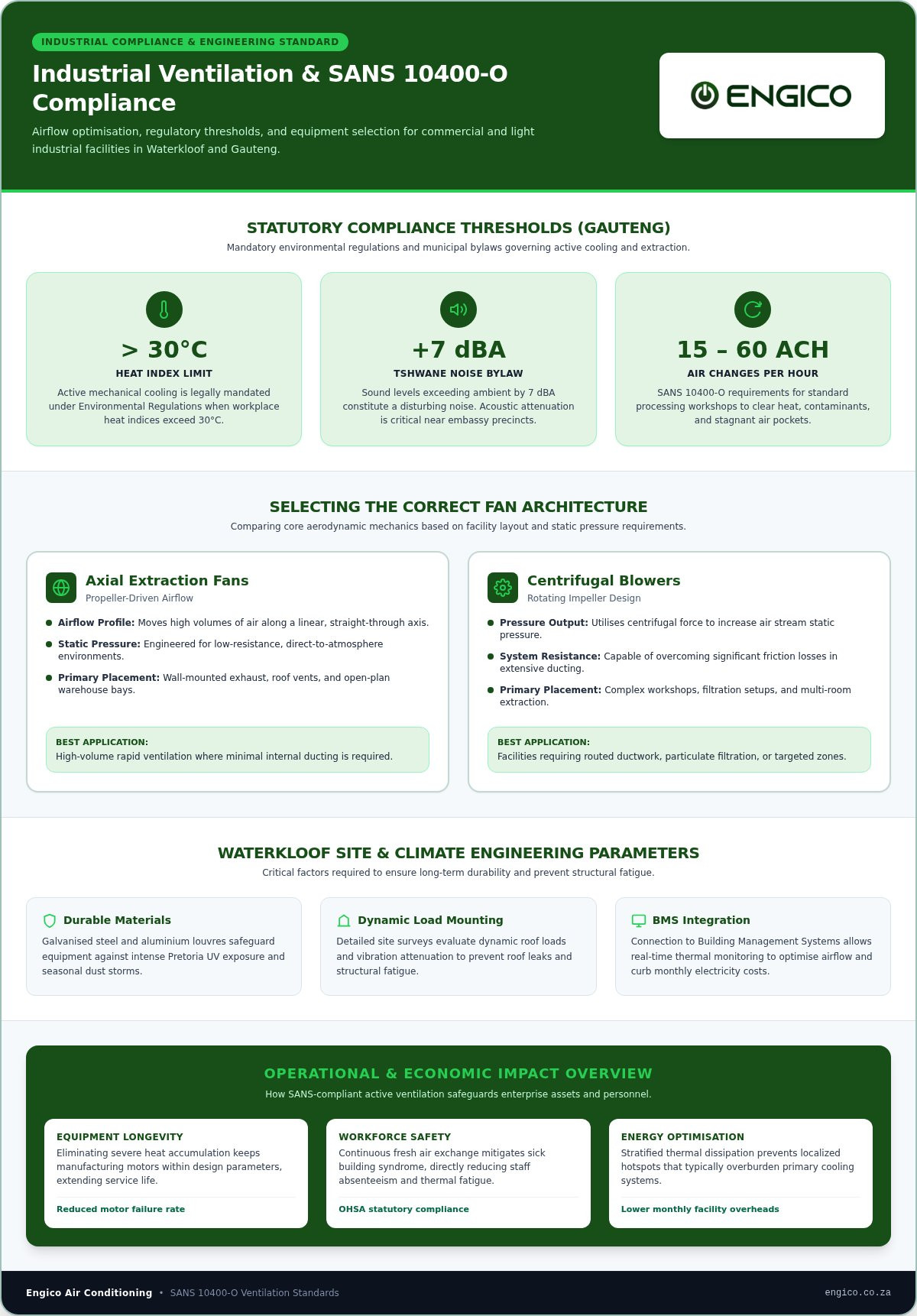
Under the latest Environmental Regulations for Workplaces, an industrial facility in Gauteng that exceeds a heat index of 30°C is legally required to implement active mechanical cooling. For businesses managing warehouses or workshops near the Waterkloof embassy belt, this isn’t just a matter of comfort; it’s a critical compliance requirement. Securing a professional industrial fan installation Waterkloof ensures your operations meet the updated SANS 10400-O standards whilst maintaining the quiet, efficient environment this prestigious area demands.
We understand that navigating rising energy costs and strict Tshwane noise bylaws can feel overwhelming for facility managers. You’re likely looking for a way to reduce ambient temperatures without incurring massive electricity bills or triggering municipal noise complaints. This 2026 guide provides a clear roadmap to selecting durable, SANS-compliant ventilation systems that deliver optimal airflow with minimal business disruption. We will examine how modern equipment and Building Management System integration can transform your facility into a high-performance, energy-efficient workspace that protects both your workforce and your bottom line.
Key Takeaways
- Understand the specific SANS 10400-O requirements to ensure your facility remains compliant with South African health and safety regulations.
- Learn how to calculate the necessary Air Changes per Hour (ACH) to maintain a productive environment during intense Gauteng summer heat.
- Compare the technical advantages of axial and centrifugal fans to determine which configuration suits your warehouse or workshop layout.
- Discover why a professional industrial fan installation Waterkloof requires a detailed site survey to account for local topography and structural integrity.
- Explore how integrating ventilation systems with Building Management Systems (BMS) can significantly lower your facility’s monthly energy expenditure.
Optimising Industrial Airflow in Waterkloof Facilities
Industrial ventilation is the systematic replacement of stale air with fresh air to control temperature and contaminants. In modern South African manufacturing and warehousing, this process is fundamental to maintaining operational safety and regulatory compliance. Gauteng’s climate presents specific challenges, especially during peak summer months when temperatures can push indoor environments beyond safe working limits. Proper airflow management is essential for adhering to the Occupational Health and Safety Act, which requires active cooling measures when the heat index exceeds statutory thresholds.
Facilities in Waterkloof face unique constraints due to the local topography and the suburb’s specific zoning. As a prestigious area featuring a mix of diplomatic missions and light industrial workshops, businesses must manage air exchange without creating noise pollution or structural concerns. A precise industrial fan installation Waterkloof ensures that stale, heated air is exhausted efficiently without impacting the surrounding residential or diplomatic environment. This bespoke approach accounts for local wind patterns and building orientations that generalist installers often overlook.
The Economic Impact of Poor Ventilation
Poor ventilation isn’t just a comfort issue; it’s a financial burden. Excessive heat accumulation causes machinery to operate beyond its design parameters, which shortens the lifespan of motors and increases the frequency of expensive repairs. Amongst staff, stagnant air often leads to “sick building syndrome,” resulting in higher absenteeism and reduced productivity levels. By selecting the most efficient industrial fan configurations, facility managers can lower monthly energy expenditure whilst improving the overall output of their workforce. A well-designed system ensures that air moves effectively through the entire floor space, preventing the hot spots that typically drive up cooling costs.
Why Waterkloof Businesses Prioritise Professional Installation
Choosing a specialist over a generalist contractor prevents common pitfalls such as inadequate ducting or improper mounting. A professional industrial fan installation Waterkloof accounts for the massive dynamic loads these units place on a building’s structure. If a fan isn’t mounted with precision, the resulting vibration can lead to roof leaks or structural fatigue over time. Professional installers ensure that every component meets SANS requirements, providing a “safe pair of hands” for complex projects. For businesses focused on their 2026 growth targets, investing in a methodical, expert installation is the only way to ensure long-term durability and continuous compliance with health and safety standards.
Selecting the Right Industrial Fan: A Buying Guide
Choosing the correct equipment for a facility requires a technical understanding of both airflow dynamics and local regulatory requirements. In South Africa, industrial warehouses must achieve specific Air Changes per Hour (ACH) to remain compliant with SANS 10400-O. For example, a standard processing workshop might require between 15 and 60 air changes per hour depending on the heat or contaminants produced during operations. Adhering to recognised industrial ventilation standards ensures that your facility maintains high indoor air quality whilst managing thermal loads effectively during the intense Gauteng summer.
Material choice is equally vital in the Pretoria environment. Galvanised steel or aluminium louvers are preferred for their durability against high UV exposure and seasonal dust storms common in the region. Because Waterkloof contains high-value residential pockets and diplomatic missions, evaluating noise levels is an essential step in the planning phase. A professional industrial fan installation Waterkloof must prioritise units with lower decibel (dB) ratings or integrated acoustic attenuation. This ensures the facility remains within the City of Tshwane’s noise bylaws, which typically classify any sound exceeding the ambient level by 7 dBA as a disturbing noise.
Axial Fans vs Centrifugal Fans: Key Differences
Axial fans are the most common choice for moving high volumes of air at low pressure. These units work like a propeller, pulling air through the fan in a straight line. They’re ideal for wall-mounted extraction where resistance is minimal. Centrifugal fans, however, excel in systems involving complex ducting or high static pressure. These fans use a rotating impeller to increase the pressure of the air stream. You must also decide between direct-drive systems, which offer higher efficiency and lower maintenance, and belt-driven systems, which allow for easier adjustments to fan speed and performance if your facility requirements change over time.
Essential Features for Industrial Performance
Modern ventilation systems often include Variable Frequency Drives (VFDs). These devices allow for precise airflow control by adjusting the motor speed to match real-time demand. This prevents energy waste when full extraction isn’t required. Industrial louvers play a secondary but critical role by directing airflow and preventing rain or debris from entering the building. For maximum operational efficiency, many businesses are now integrating their ventilation hardware with smart HVAC control for commercial buildings. This allows for automated climate responses based on sensor data. If you’re unsure which configuration best suits your site, our team can help you evaluate your ventilation requirements with a professional site survey.
Critical Considerations for Waterkloof Installations
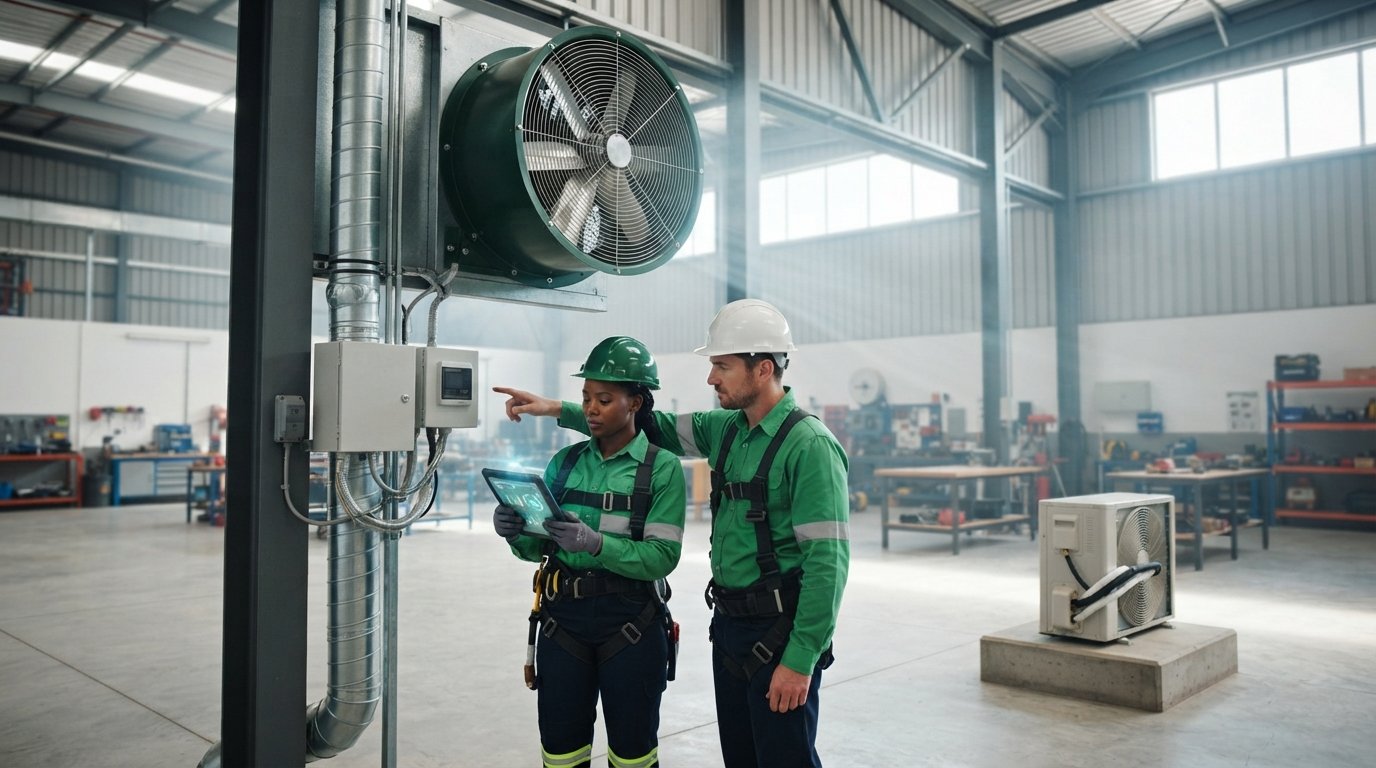
Executing a successful industrial fan installation Waterkloof requires more than just mounting hardware; it demands an understanding of Pretoria’s specific environmental stressors. The Gauteng summer is characterised by intense heat spikes that can quickly turn a poorly ventilated warehouse into a hazardous thermal environment. Strategic fan placement is vital to ensure that air does not simply recirculate but is actively exchanged to lower the internal temperature. Additionally, the high particulate matter and dust common in Gauteng industrial zones necessitate the use of heavy-duty louvers and filtration systems to protect internal machinery and maintain air purity.
Before any equipment is mounted, a methodical structural assessment is essential. Industrial-scale fans and air handling units exert significant static and dynamic loads on a building’s framework. We ensure that roofs and walls are reinforced where necessary to prevent structural fatigue or vibration damage over time. This detailed approach is a core component of effective warehouse ventilation design in South Africa, where local building materials and weather patterns dictate specific engineering requirements.
Climate Adaptation for Gauteng Facilities
Pretoria’s high altitude, sitting at approximately 1,339 metres above sea level, significantly impacts air density. Standard fan performance charts often need adjustment because thinner air requires higher volumetric flow rates to achieve the same cooling effect as at sea level. To manage this efficiently, we often utilise night-purge ventilation strategies. By running fans during the cooler evening hours, we can flush out the heat accumulated in the building’s thermal mass, providing a cooler starting temperature for the next workday. This method balances natural ventilation via louvers with mechanical assistance to reduce the overall load on your HVAC systems.
Environmental and Noise Regulation Compliance
Waterkloof is a unique environment where industrial activity often borders high-end residential estates and diplomatic missions. Navigating local zoning bylaws regarding noise is a non-negotiable part of the installation process. We prioritise the use of silencers and vibration isolators to ensure your ventilation system operates within the strict decibel limits set by the City of Tshwane. Following established workplace mechanical ventilation guidance helps us design systems that provide high-velocity airflow without creating a noise nuisance for the surrounding community. This methodical focus on acoustic attenuation ensures your facility remains a “good neighbour” whilst maintaining peak operational standards.
The Industrial Fan Installation Process
A successful industrial fan installation Waterkloof begins with a rigorous site survey rather than a simple hardware delivery. We calculate the specific aerodynamic requirements of your facility, ensuring that the selected fan provides the necessary static pressure to overcome internal resistance. This phase is critical for determining the exact volume of air that must be moved to maintain a safe and productive environment. Once these calculations are finalised, the focus shifts to the physical mounting and the integration of electrical systems. Our methodical approach ensures that every industrial fan installation Waterkloof project is completed with precision.
Industrial fans typically require a 3-phase power connection to handle the high starting currents and continuous operational loads. We ensure that your electrical distribution board is capable of supporting the new equipment without compromising the building’s existing systems. After the physical installation is complete, we conduct post-installation testing to verify that airflow volumes match our initial design. We measure pressure drops across filters or louvers to ensure they remain within acceptable parameters. This data-driven approach allows us to fine-tune the system for maximum efficiency before handover.
Step-by-Step Installation Roadmap
Our installation process follows a disciplined sequence to minimise disruption to your business operations. It starts with a comprehensive structural analysis to confirm that the roof or wall can handle the dynamic forces of the fan at full speed. We then proceed with professional mounting, using high-quality gaskets and sealants to prevent air leakage and manage vibration. Finally, we commission the system, adjusting Variable Frequency Drives (VFDs) for optimal performance and training your facility staff on correct operation and safety procedures. This ensures your team can manage the equipment with confidence.
Safety Standards and SANS Compliance
Adherence to South African National Standards is a non-negotiable aspect of our service. We ensure that all ductwork and air handling components comply with the SANS 10400-O building regulations. Equally important is ensuring that all electrical work meets the SANS 10142-1:2024 requirements for fixed electrical installations, including the issuance of a mandatory Certificate of Compliance (CoC). Compliance is not a once-off event. It requires ongoing attention. For this reason, we recommend regular HVAC maintenance services for Gauteng properties to ensure your system continues to meet regulatory standards. If you’re ready to upgrade your facility’s airflow, you can contact our technical team for a consultation.
Engico Air Conditioning: Your Industrial Ventilation Partner in Waterkloof
Engico Air Conditioning positions itself as a dependable partner for businesses requiring high-performance airflow solutions. We understand that an industrial fan installation Waterkloof is a significant investment that demands technical precision and long-term reliability. Our team operates with quiet confidence, delivering grounded solutions that address the specific environmental challenges of the Gauteng region. By managing every aspect of the project from the initial aerodynamic assessment to the final electrical sign-off, we provide a seamless experience that prioritises your facility’s operational continuity. We don’t just supply hardware; we engineer systems that integrate with your existing infrastructure to provide a comprehensive climate control strategy.
A Methodical Approach to Ventilation Projects
Every project begins with a focus on transparent communication and detailed planning. We recognise that industrial environments cannot afford lengthy downtimes. Therefore, we organise our project timelines to ensure minimal disruption to your daily operations. Our methodical workflow ensures that your industrial fan installation Waterkloof adheres to the highest professional standards, starting with a thorough site assessment where we identify the specific needs of your floor layout. We then provide comprehensive documentation and all necessary SANS compliance certificates upon completion. This disciplined approach ensures that your ventilation system is not only effective but also legally sound, protecting your business from future regulatory scrutiny. It’s this attention to detail that establishes Engico Air Conditioning as a safe pair of hands for complex industrial projects.
Comprehensive Aftercare and Support
Our commitment to your facility extends beyond the initial installation. We provide tailored maintenance programmes designed to prevent unexpected equipment failure and extend the functional lifespan of your hardware. This proactive strategy is similar to our approach for commercial HVAC maintenance in Sunninghill, where we focus on long-term efficiency and cost reduction for local business owners. We understand that a well-maintained system is an energy-efficient one. Our technicians are trained to identify potential issues before they escalate into costly repairs, ensuring your Waterkloof industrial systems remain in peak condition year-round. Whether you’re looking to integrate your fans with a Building Management System (BMS) or simply need a reliable service partner, we’re here to help. If you’re ready to secure a durable ventilation solution, contact Engico Air Conditioning today for a professional ventilation consultation.
Securing Long-Term Efficiency for Your Waterkloof Facility
Choosing the right ventilation system is a strategic decision that impacts both your operational costs and your regulatory standing. A precision-engineered industrial fan installation Waterkloof ensures that your facility remains compliant with SANS standards whilst managing the unique thermal demands of the Gauteng climate. By integrating modern hardware with Building Management Systems (BMS), you gain granular control over your environment, reducing energy waste and protecting expensive machinery from heat-related wear.
Our Gauteng-based technical specialists provide end-to-end support, from the initial structural assessment to recurring maintenance programmes that extend equipment lifespan. We focus on delivering quiet, reliable performance that respects the local area’s noise bylaws and your business’s 2026 productivity targets. Investing in professional expertise today prevents the costly downtime and compliance risks associated with inadequate airflow management.
Ready to optimise your airflow? Request a Professional Industrial Ventilation Consultation in Waterkloof to ensure your facility is equipped with a high-performance, SANS-compliant ventilation strategy. We look forward to partnering with you to create a safer, more efficient industrial workspace.
Frequently Asked Questions
What are the legal ventilation requirements for warehouses in South Africa?
Under Part O of the National Building Regulations (SANS 10400-O), mechanical ventilation is mandatory if natural openings provide less than 5% of the total floor area. The Occupational Health and Safety Act also requires active cooling if the Wet Bulb Globe Temperature exceeds 30°C. For an industrial fan installation Waterkloof, compliance involves adhering to City of Tshwane noise bylaws to ensure operational levels don’t disturb nearby residents or diplomatic missions.
How do I calculate the number of industrial fans needed for my facility?
You calculate the required airflow by multiplying the facility’s total volume by the necessary Air Changes per Hour (ACH) for your specific sector. A standard warehouse might require 6 to 30 ACH depending on the presence of heat or contaminants. Once the total cubic metres per hour is determined, you divide this by the airflow capacity of a single fan unit to find the total quantity needed for effective circulation across the floor.
What is the difference between axial and centrifugal industrial fans?
Axial fans function like propellers, moving large volumes of air along the fan’s axis at low pressure. They’re best for general extraction through walls where resistance is minimal. Centrifugal fans use an impeller to move air at a 90-degree angle, generating the high static pressure needed for ducted systems. Choosing the right type depends on whether your facility requires simple air exchange or complex air movement through long shafts or filters.
Does Engico provide SANS compliance certificates after installation?
Yes, we provide all necessary documentation to verify that your system meets South African National Standards. Following a professional industrial fan installation Waterkloof, we ensure the project complies with SANS 10400-O for ventilation and SANS 10173 for ductwork. We also coordinate the issuance of an Electrical Certificate of Compliance (CoC) under SANS 10142-1, which is a legal requirement for any fixed electrical installation involving 3-phase power or permanent wiring.
How often should industrial ventilation fans be serviced in Gauteng?
Industrial fans in Gauteng should ideally be serviced every six to twelve months to combat the high dust levels common in the province. Regular maintenance prevents particulate buildup on blades, which can cause imbalances and motor strain. Under South African occupational hygiene standards, systems providing local exhaust ventilation (LEV) require a formal inspection every 24 months. Frequent servicing ensures your hardware reaches its full operational lifespan whilst maintaining peak energy efficiency.
Can industrial fans be integrated into my existing Building Management System?
Modern industrial ventilation systems can be integrated into a Building Management System (BMS). Engico specialises in connecting air handling units and fans via protocols like BACnet or Modbus to allow for automated climate control. This integration enables facility managers to monitor airflow, temperature, and energy consumption from a central interface. Automated adjustments based on real-time sensor data can lead to significant reductions in monthly electricity expenditure for large-scale operations.
What is the typical lead time for an industrial fan installation in Waterkloof?
Lead times for installation vary based on the complexity of the aerodynamic design and the availability of specific fan units. A standard project involves an initial site survey followed by structural assessments before mounting begins. For a precise timeline tailored to your facility, we recommend scheduling a technical consultation. This allows our team to evaluate your site’s specific requirements and provide a methodical roadmap that minimises disruption to your daily business activities.
Do you offer energy-efficient fan options for large-scale factories?
We offer several energy-efficient solutions, including High-Volume Low-Speed (HVLS) fans and units equipped with Variable Frequency Drives (VFDs). VFDs allow you to adjust fan speeds based on actual demand rather than running at full capacity constantly. We also supply equipment with electronically commutated (EC) motors, which consume significantly less power than traditional AC motors. These technologies help large-scale factories reduce their carbon footprint whilst maintaining optimal airflow and thermal comfort for their staff.
Recent Comments