
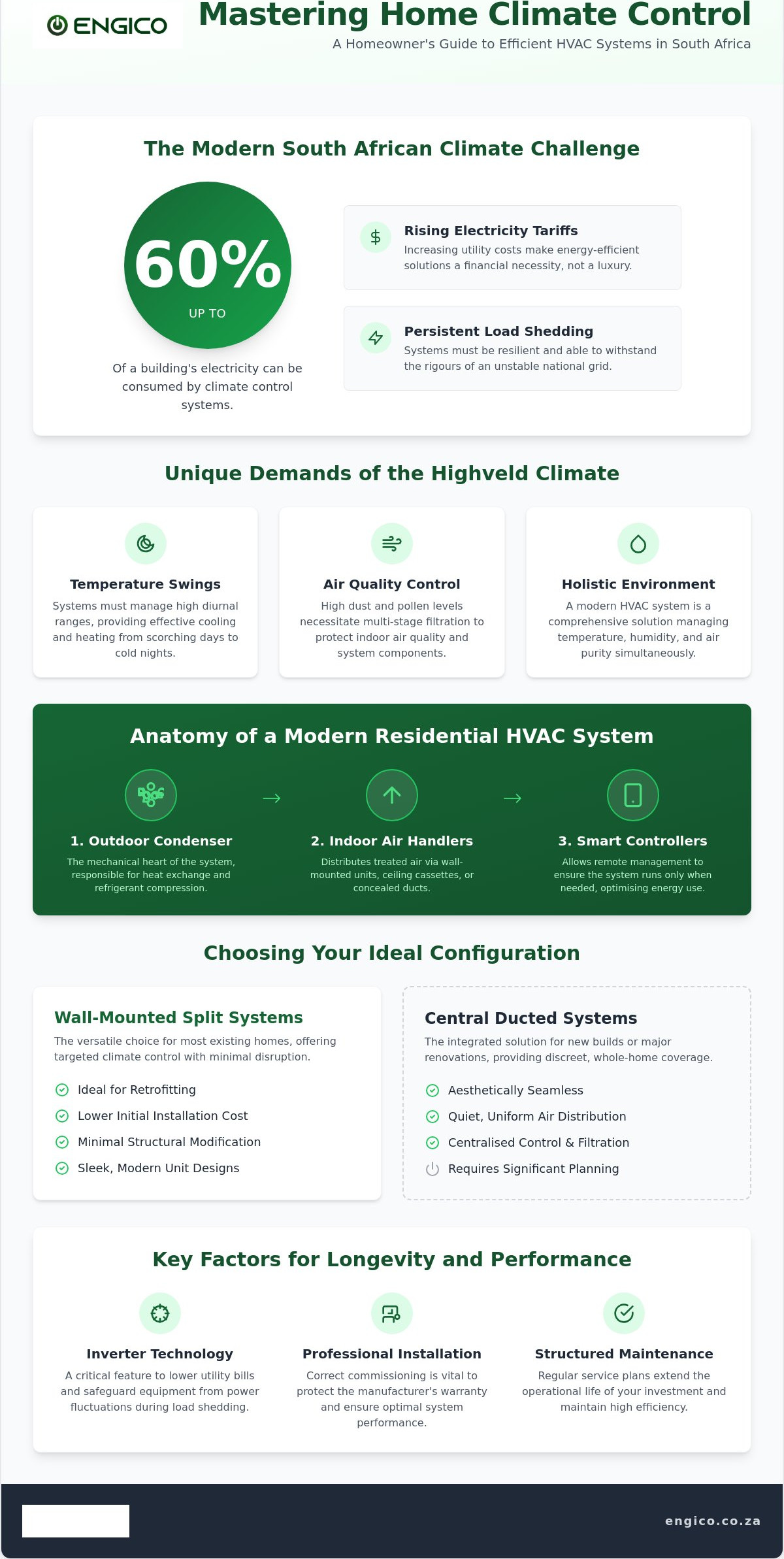
Did you know that climate control systems can account for up to 60% of a building’s total electricity consumption in South Africa? For many Pretoria residents, the combination of rising electricity tariffs and the persistent challenge of load shedding makes choosing the right cooling solution a high-stakes financial decision. You likely want a home that remains a sanctuary of cool, quiet comfort, yet you’re understandably concerned about the impact on your monthly utility bills. Selecting the right residential hvac systems South Africa requires a methodical balance of energy efficiency, performance, and durability against local power constraints.
This guide provides the technical clarity you need to master home climate control, covering everything from selecting units that meet the latest energy standards to ensuring they survive the rigours of the national grid. We’ll examine why wall-mounted split units have become the preferred choice for the Gauteng climate and how modern inverter technology protects both your comfort and your long-term property value. By the end of this article, you’ll understand how to navigate current energy regulations to achieve a more sustainable and cost-effective home environment.
Key Takeaways
- Understand how a holistic approach to climate control manages the specific temperature and humidity fluctuations unique to the South African Highveld.
- Compare the installation complexities and aesthetic outcomes of wall-mounted split units versus ducted configurations to find the ideal solution for your home.
- Learn why inverter technology is a critical requirement for residential hvac systems South Africa to lower utility bills and safeguard equipment during power outages.
- Identify property-specific considerations for Gauteng residences, including compliance with noise regulations in high-density living environments.
- Discover how professional commissioning and structured maintenance plans protect your manufacturer warranty and extend the operational life of your system.
Understanding Residential HVAC Systems in the South African Context
HVAC stands for Heating, Ventilation, and Air Conditioning. It isn’t just a single appliance; it’s a comprehensive approach to managing your indoor environment. For homeowners investigating residential hvac systems South Africa, it’s helpful to move beyond the idea of a simple “aircon” unit. A truly integrated system manages temperature, moisture levels, and air purity simultaneously. This holistic view is essential for Understanding HVAC Systems in a domestic setting, where long-term comfort depends on more than just a blast of cold air during a summer heatwave.
The South African Highveld presents a unique set of challenges for climate control. Pretoria and Johannesburg experience high diurnal temperature ranges, where a scorching 30°C midday can plummet to single digits by evening. Standard cooling-only units often leave residents shivering in the early hours or struggling with dry, “stuffy” air during the winter months. Modern systems are engineered to handle these shifts, providing efficient heating alongside cooling to maintain a stable indoor environment throughout the year.
The Core Components of a Modern Home HVAC System
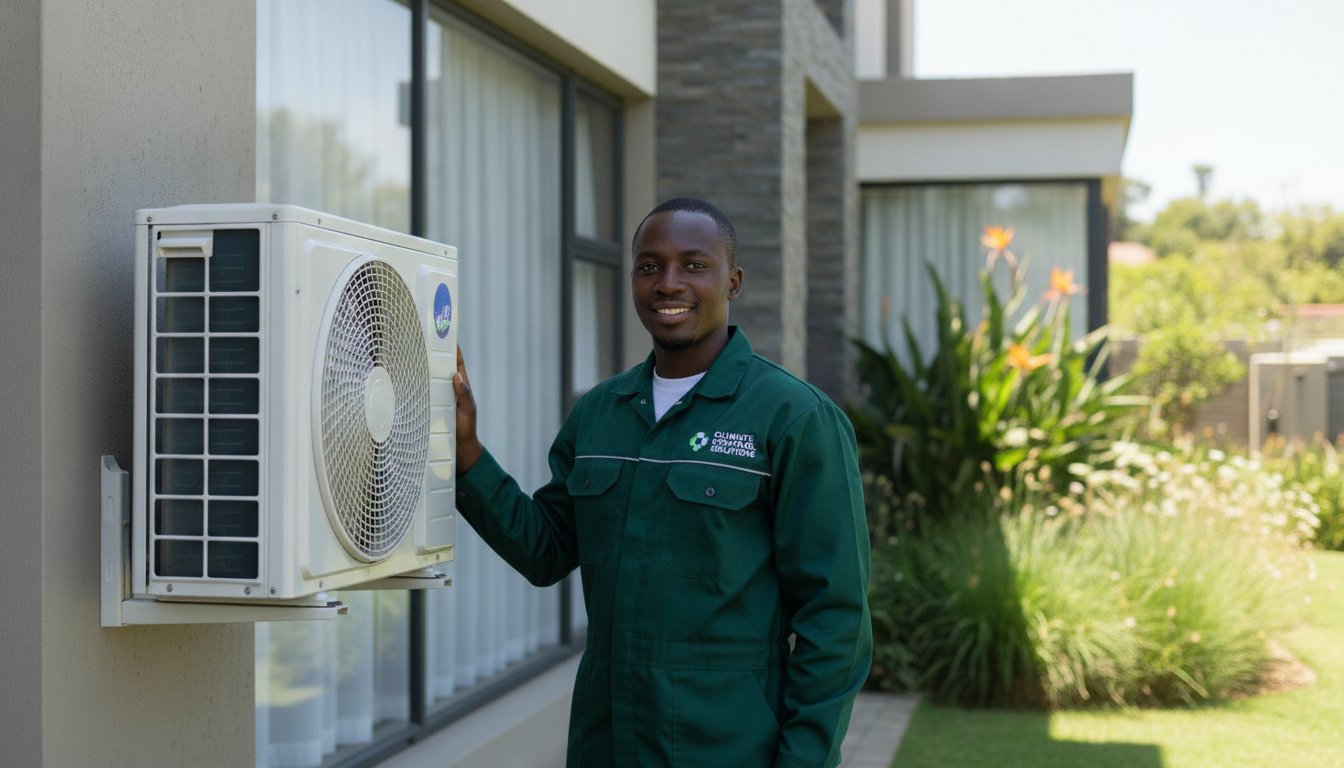
A reliable residential setup consists of three primary elements that work in unison. The outdoor condenser unit serves as the mechanical heart, responsible for heat exchange and refrigerant compression. Inside, the indoor air handlers distribute the treated air; these can be wall-mounted split units, ceiling cassettes, or concealed ducted systems. Finally, smart controllers allow you to organise your home temperature remotely, ensuring the system only runs when necessary to manage electricity consumption effectively.
In urban Gauteng environments, air quality is a growing concern. Dust levels on the Highveld are notoriously high, particularly during the dry winter season. Integrated residential hvac systems South Africa incorporate multi-stage filtration that captures particulate matter, pollen, and urban pollutants. This is a significant shift from older technology that merely moved air; today’s systems act as a protective barrier for your home’s indoor air quality, which is vital for families with respiratory sensitivities.
Why Standard Units Often Fail in the Gauteng Climate
Many off-the-shelf units struggle because they aren’t designed for the local environment’s specific stressors. High dust concentrations can quickly clog inferior filters, leading to reduced efficiency and premature compressor failure. Additionally, without proper ventilation integration, rooms often become uncomfortably oxygen-depleted during the winter when windows remain closed. A professional approach ensures that the system’s capacity matches the building’s thermal load, preventing the “short-cycling” that often plagues undersized or poorly planned installations in Pretoria’s larger homes.
Comparing HVAC Configurations: Split Units vs Ducted Systems
Selecting the correct configuration for residential hvac systems South Africa often involves a balance between immediate practical needs and long-term architectural goals. While Pretoria’s established suburbs frequently favour retrofitted split units, newer developments in Gauteng often opt for centralised ducted solutions. Each approach offers distinct advantages regarding airflow management, installation complexity, and visual presence within the home.
The choice typically depends on whether you are upgrading an existing property or starting a new build. For many homeowners, the primary concern is achieving a quiet, energy-efficient environment without undergoing extensive structural renovations. Understanding how these systems differ in performance and cost is the first step toward a successful installation.
Wall-Mounted Split Systems: The Versatile Choice
Wall-mounted units are the most frequent selection for existing Pretoria residences because they require minimal structural modification. Installation is typically direct; a small aperture for refrigerant piping and electrical cabling is usually the only physical requirement. This makes them significantly more affordable in terms of initial capital outlay compared to comprehensive ducted alternatives. Modern manufacturers have also redesigned these units to be sleeker and more compact, ensuring they complement contemporary interior decor, much like the high-quality flooring options available at Home Expo Asia, rather than detracting from it. They are particularly effective for cooling specific high-use areas like master bedrooms or home offices.
Ducted HVAC: The Premium Whole-Home Solution
For those undertaking major renovations or new builds, ducted residential hvac systems South Africa provide an “invisible” climate control solution. The primary equipment is concealed within the ceiling void, with only discreet diffusers visible in each room. This configuration is popular amongst architects in Sandton and Pretoria East estates where maintaining architectural purity is a priority. Beyond aesthetics, ducted systems allow for sophisticated zoning. This capability enables you to cool only the living areas during the day and the bedrooms at night, which maximises energy efficiency across larger floor plans. While the initial investment is higher, the centralised control and uniform air distribution add significant long-term value to the property.
Multi split air conditioning systems serve as a functional middle ground for Gauteng residences. These allow several indoor units to connect to a single outdoor condenser, which is ideal for homes where roof space is insufficient for large ducting but cooling is required across multiple separate rooms. This setup maintains the individual control of a split unit whilst reducing the number of outdoor units cluttering your property’s exterior. If you are unsure which configuration suits your building’s layout, consulting with an experienced specialist can help clarify the most cost-effective path forward for your specific property.
Energy Efficiency and the Load Shedding Factor
Energy costs and grid stability are the two most significant factors influencing the selection of residential hvac systems South Africa. While older, fixed-speed units were once the standard, the current economic environment makes them increasingly obsolete. Inverter technology has become a non-negotiable requirement for Pretoria homeowners. Unlike traditional compressors that operate on an all-or-nothing basis, inverters adjust their motor speed to match the cooling demand. This prevents the massive energy spikes associated with starting a motor from a standstill, which is where most electricity is consumed.
The frequent cycle of load shedding introduces mechanical stress that most international manufacturers didn’t originally account for. When power is abruptly cut, the refrigerant pressures in the system don’t have time to equalise. If power returns immediately, the compressor may attempt to start against high pressure, leading to motor burnout. Selecting a system with a built-in restart delay is a critical safeguard. For those transitioning to hybrid or off-grid solar setups, modern HVAC units with low start-up currents are essential to avoid tripping sensitive battery inverters.
Maximising SEER Ratings in South Africa
The Seasonal Energy Efficiency Ratio (SEER) measures the cooling output of a system divided by its total energy input over a typical season. In South Africa, the SEER rating serves as a direct indicator of how many units of cooling or heating you receive for every Rand spent on electricity. Modern high-efficiency systems often achieve ratings double those of units installed just a decade ago. Transitioning from an old Class D unit to a modern Class A++ inverter system can reduce the climate control portion of your utility bill by up to 30%. This makes the initial capital investment in a premium unit far more logical when viewed over a five-year operational window.
Protecting Your Investment from Power Surges
Gauteng’s power grid is prone to voltage fluctuations and “dirty” power, especially during the switching phases of load shedding. Standard residential units are vulnerable to these surges, which can fry sensitive electronic control boards. Installing high-quality voltage protectors or surge arrestors at the distribution board is a necessary precaution. Most smart residential hvac systems South Africa now include software-based protection that monitors incoming voltage. These systems will refuse to start if the current is unstable, protecting the motor from damage. Regular maintenance also plays a role; clean filters ensure the motor doesn’t have to work harder than necessary when it’s drawing power from a backup battery or generator system.
A Property-Specific Resource for Gauteng Homeowners
Pretoria’s residential landscape is diverse, ranging from compact townhouses in Fourways to expansive estates in Waterkloof. Each environment dictates a specific technical approach to residential hvac systems South Africa. Properties in the Johannesburg CBD or Rosebank often contend with the “Heat Island” effect. This occurs when dense urban materials like concrete and asphalt trap heat, keeping local temperatures higher than in leafy suburbs. Systems in these urban cores must be sized with higher cooling capacities to maintain comfort during peak summer months, even when the floor area suggests a smaller unit.
HVAC for Apartments and Townhouses (Sandton & Rosebank)
High-density living in areas like Sandton or Rosebank requires a focus on space efficiency and noise mitigation. Multi split air conditioning systems are particularly effective here because they allow multiple indoor units to connect to a single outdoor condenser, saving precious balcony space. Modern units feature noise-dampening technology to ensure compliance with body corporate regulations and to maintain positive relationships with neighbours living in close proximity. In these high-traffic areas, advanced air filtration is also essential to manage the influx of urban pollutants and road dust.
Climate Control for Large Estates (Waterkloof & Bryanston)
Large-scale properties in Waterkloof or Bryanston typically feature high ceilings and open-plan architectures that present unique thermal challenges. Ducted systems are the preferred choice for these homes, providing uniform air distribution without disrupting the interior design. These systems can be integrated into Building Management Systems (BMS), allowing homeowners to automate climate schedules alongside lighting and security. To maintain kerb appeal, outdoor units are strategically positioned or screened to ensure the home’s exterior remains uncluttered and professional.
Selecting the right partner for your installation is as critical as the equipment itself. Before committing to a project, use this checklist to evaluate an installer’s local track record:
- Registration: Confirm they are registered with the South African Refrigeration and Air Conditioning Contractors’ Association (SARACCA).
- Local References: Request examples of completed projects in your specific suburb to ensure they understand local building styles.
- Commissioning Standards: Ask for a detailed commissioning report that includes refrigerant charge levels and electrical draw measurements.
If you’re ready to enhance your home’s comfort with a system tailored to your property, you can request a professional site assessment to determine the ideal configuration for your specific needs.
Professional Installation and Maintenance in South Africa
Securing the long-term performance of residential hvac systems South Africa requires more than just high-quality hardware. It demands a methodical approach to installation and ongoing care. Many homeowners are tempted by uncertified installers to save on initial costs; however, this almost always voids manufacturer warranties. Major brands require a Certificate of Compliance and proof of professional commissioning to honour any future claims. Beyond the legalities, a professional installation ensures that the system operates at its peak efficiency from day one, preventing the common issues of refrigerant leaks and electrical faults that plague DIY attempts.
Effective climate control also involves responsible refrigerant management. Modern systems use specific gases that must be handled with precision. Even a minor leak doesn’t just reduce cooling performance; it forces the compressor to work harder, which significantly increases your monthly electricity bill. A professional technician uses specialised leak detection equipment to ensure the sealed system remains intact, protecting both your investment and the environment.
What to Expect During a Professional Installation
The process begins with a comprehensive site survey. Rather than simply measuring square metreage, a specialist calculates the total heat load of each room. This calculation considers window orientations, insulation quality, and even the number of occupants. Once the hardware is in place, the system undergoes rigorous pressure testing and vacuuming. This stage is vital to remove moisture and non-condensable gases from the copper piping. Without this step, the internal components will eventually corrode, leading to catastrophic failure. Finally, the installation team provides user training to ensure you can organise your controllers for maximum energy efficiency. To understand the full scope of legal requirements and technical standards your installer must meet, reviewing a professional checklist for aircon installers in Gauteng will help you ask the right questions before work begins.
The Engico Air Conditioning Maintenance Advantage
The South African Highveld is a challenging environment for mechanical equipment. The dry, dusty winters and high pollen counts in spring can quickly clog the fine fins of an outdoor condenser. When airflow is restricted, the system draws more power to achieve the same cooling result. Engico Air Conditioning recommends a bi-annual maintenance programme to prepare your system for the Gauteng summer and winter peaks. This proactive approach identifies potential component wear before it leads to a breakdown during a heatwave.
During a standard service, technicians deep-clean the internal filters and external coils, check electrical connections for signs of heat stress, and verify that the condensate drains are clear of obstructions. This methodical upkeep ensures that your home remains a sanctuary of quiet comfort throughout the year. To ensure your system remains in peak condition, you can book a professional health check through our dedicated service department.
Securing Long-Term Comfort and Efficiency in Pretoria
Achieving the perfect indoor climate in Gauteng requires a deliberate strategy that accounts for both the Highveld’s temperature extremes and the practicalities of the national power grid. Selecting the right residential hvac systems South Africa involves balancing immediate cooling performance with long-term resilience. By prioritising high-efficiency inverter technology and a configuration suited to your property’s specific layout, you can significantly reduce monthly utility costs whilst enhancing your home’s market value.
The success of your investment ultimately rests on precision engineering and a commitment to methodical maintenance. Engico provides a stable partnership for homeowners, offering expert installation of wall-mounted and ducted systems alongside comprehensive maintenance and repair programmes tailored to the local environment. You can Request a Professional HVAC Assessment for Your Gauteng Home to ensure your property is equipped with a reliable, future-proof solution. Taking this step now ensures your home remains a sanctuary of quiet, energy-efficient comfort regardless of the season.
Frequently Asked Questions
What is the best HVAC system for a home in South Africa?
The ideal choice depends on your property’s architectural design and your specific comfort requirements. Wall-mounted split units are the most popular choice for retrofitting existing homes due to their versatility and ease of installation. For new builds or major renovations, ducted residential hvac systems South Africa offer a superior, centralised solution that maintains aesthetic purity whilst providing uniform air distribution across all rooms.
How much does it cost to install residential air conditioning in Gauteng?
Installation costs vary significantly based on the type of system selected and the structural requirements of your home. Factors such as the unit’s cooling capacity, the length of the refrigerant piping, and whether you choose a split or ducted configuration will influence the final investment. A professional site assessment is necessary to provide an accurate estimate that accounts for the specific thermal load and electrical needs of your property.
Does load shedding damage my air conditioning system?
Frequent power outages can cause mechanical stress and electronic failure if the system isn’t properly protected. When power returns, voltage spikes may damage sensitive control boards, whilst abrupt cuts prevent refrigerant pressures from equalising. To safeguard your equipment, it’s essential to install high-quality surge protectors and select units with built-in restart delays that prevent the compressor from starting under dangerous conditions; for those interested in best practices for rapid-response repairs, antonplumbinghvac.com illustrates the comprehensive support model required to handle such system emergencies.
What is the difference between a split unit and a ducted HVAC system?
A wall-mounted split unit consists of an indoor air handler and an outdoor condenser connected by piping, designed to cool specific areas. In contrast, a ducted system is centralised, with the main unit concealed in the ceiling void and air distributed through discreet vents. Ducted systems are typically preferred for whole-home climate control, whereas split units offer a more cost-effective and flexible solution for individual rooms.
How often should I service my home HVAC system in Johannesburg?
We recommend a professional service at least twice a year, ideally before the peak summer and winter seasons. The Gauteng Highveld is particularly dusty, which can lead to clogged filters and coils that force the motor to work harder. Regular maintenance ensures that your residential hvac systems South Africa remain energy-efficient and prevents minor wear from escalating into costly mechanical failures.
Can I run my residential HVAC system on a solar or battery backup?
Modern inverter-based units are highly compatible with solar and battery systems because they have low start-up currents. Unlike older non-inverter models that cause massive power surges when they turn on, inverter systems ramp up speed gradually. This prevents the backup inverter from tripping, although you must still ensure your battery capacity is sufficient to handle the continuous operational load of the air conditioner.
Is it cheaper to leave the aircon on all day or turn it on only when needed?
For modern inverter units, it’s often more efficient to leave the system running at a stable, moderate temperature. This allows the inverter to operate at a low, energy-saving speed once the desired climate is reached. Turning the system off and on forces it to work at maximum capacity to cool a heat-saturated room, which often consumes more electricity than maintaining a consistent environment.
What size air conditioner do I need for a 20 square metre bedroom?
A standard 20 square metre bedroom typically requires a unit with a capacity of 9,000 to 12,000 BTU. However, this requirement can change based on the room’s orientation to the sun, the size of the windows, and the quality of the ceiling insulation. A professional heat load calculation is the only way to ensure the unit is correctly sized to provide efficient cooling without wasting energy.
Recent Comments